



Animal bones and ancient environment at Diaoyu Fortress site in Chongqing
Received date: 2024-01-08
Revised date: 2024-05-17
Online published: 2025-07-18
Supported by
Major Project of Chongqing Social Science Foundation(2022ZDSC14)
Copyright
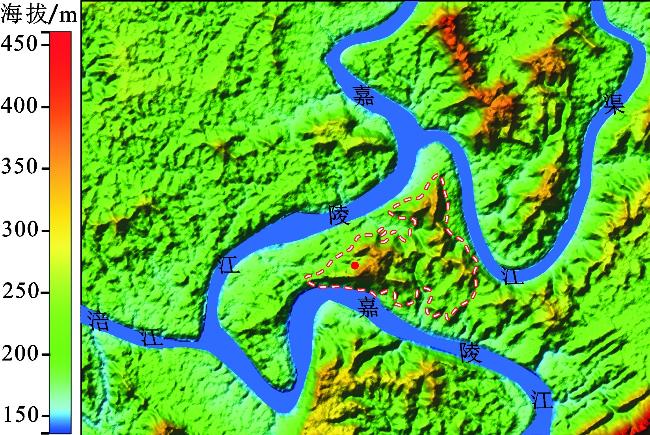
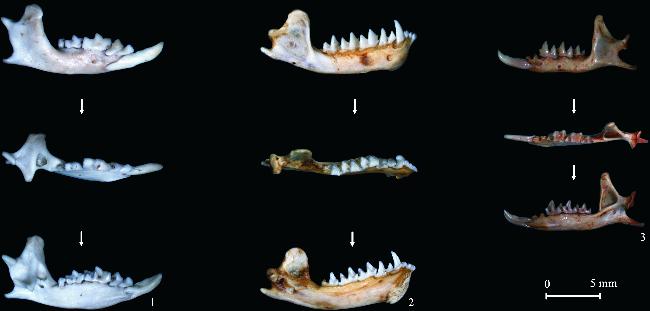
In the 13th century, Mongol troops swept across the Eurasian continent. Nevertheless, the soldiers and civilians at Diaoyu Fortress in Chongqing tenaciously defended against the Mongol Army for 36 years. It effectively hindered the westward advance of the Mongolian army, thus slowing down the decline of the Southern Song Dynasty. Diaoyu Fortress is situated on Diaoyu Mountain, adjacent to Dongcheng Peninsula in Hechuan District, Chongqing City. It guards the confluence of the Jialing River, the Qujiang River, and the Fujiang River, featuring rugged terrain. It is among the designated “Eight Key Fortresses” in the Sichuan defense system during the Song Dynasty. Its geographical coordinates range from 106°17′32″E to 106°19′22″E and 29°59′30″N to 30°01′15″N. In the 2019 archaeological excavation of the Fanjiayan Yashu site, the research group employed flotation on soil from the Southern Song deposit unearthed from F15. 3 classes, 5 orders, 5 families, 6 genera, and 6 species of animals were identified. This marks the first acquisition of animal bone remains in the Diaoyu Fortress archaeological process. Based on the previous historical documentary research and archeaological excavation of cultural relics remain, this study introduces scientific archeaological technique and method into the research field of Diaoyu Fortress, including flotation and zooarchaeology. From a zooarchaeological perspective, it suggests that the ancient environment of Diaoyu Fortress exhibited characteristics of a south subtropical zone climate. Plant growth here was flourishing, with multiple maturation cycles in a year or perennial growth. Precipitation was significant, water supply abundant, and the biological carrying capacity was high. These factors were crucial for sustaining subsistence and securing water for daily life in the fortress. During the siege of Diaoyu Fortress, there should have been poultry-raising and fishing in this fortress, and a variety of coexisting small mammals such as insectivora and chiroptera, which should be also hunted. Based on these premises, one can reasonably conclude the reasons Diaoyu Fortress could withstand for an extended period without surrendering. The fortress benefited from a favorable local ecological environment—the south subtropical zone climate, which aided in sustaining a subsistence economy, ensuring ample water supply, and other advantageous conditions. Combined with the treacherous terrain and the loyalty and courage of soldiers and civilians, the defense of Diaoyu Fortress constituted a miracle in world history: the fortress withstood the sieges of the enemy army for nearly half a century.

Chen Yuzhi , Wu Xianzhu . Animal bones and ancient environment at Diaoyu Fortress site in Chongqing[J]. GEOGRAPHICAL SCIENCE, 2025 , 45(7) : 1626 -1634 . DOI: 10.13249/j.cnki.sgs.20231239
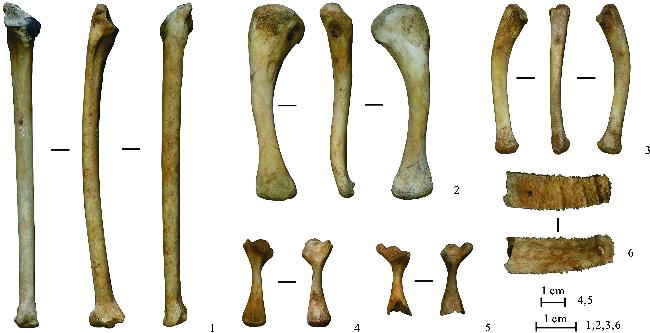
图3 钓鱼城遗址雁形目、鸡形目和龟鳖目骨骼标本1.D2019F15:G04 家鹅左尺骨 (后侧−腹侧−前侧),left Ulna of Anser cygnoides domesticus (posterior-dorsal-anterior); 2. D2019F15:G05家鸡左肱骨(后侧−腹侧−前侧), left humerus of Gallus gallus domesticus (posterior-dorsal-anterior);3. D2019F15:G06家鸡右股骨(前侧−外侧−后侧), right femur of Gallus gallus domesticus (anterior-lateral-posterior); 4. D2019F15:G011中华鳖右股骨(背侧−腹侧), right femur of Pelodiscus sinensis (dorsal-ventral);5. D2019F15:G012中华鳖左肱骨(背侧−腹侧), left humerus of Pelodiscus sinensis (dorsal-ventral);6. D2019F15:G015中华鳖右肋板, Right costal of Pelodiscus sinensis Fig. 3 Skeletal specimens of Anseriformes, Galliformes and Testudines from Diaoyu Fortress site |
| 1 |
重庆市文物考古研究院, 钓鱼城古战场遗址博物馆. 钓鱼城遗址考古报告集[M]. 北京: 科学出版社, 2021: 1-380
Chongqing Institute of Cultural Relics and Archaeology, Diaoyucheng Ancient Battlefield Site Museum. Archaeological report collection of Diaoyucheng Fortress site. Beijing: Science Press, 2021: 1-380.
|
| 2 |
武仙竹, 马江波, 袁东山. 重庆南宋府衙遗址骨制品及其埋藏背景[J]. 第四纪研究, 2016, 36(2):312-321.
Wu Xianzhu, Ma Jiangbo, Yuan Dongshan. Chongqing Southern Song Dynasty Yashu site unearther bone artifacts and its buried background[J]. Quaternary Sciences, 2016, 36(2):312-321.
|
| 3 |
袁东山. 遗产要素真实性支撑下的钓鱼城突出普遍价值论要[J]. 中国文化遗产, 2022(6):46-56.
Yuan Dongshan. Discussions about the outstanding universal value of Diaoyucheng supported by authentic heritage elements[J]. China Cultural Heritage, 2022(6):46-56.
|
| 4 |
赵尔宓. 四川爬行类原色图鉴[M]. 北京: 中国林业出版社, 2003: 68
Zhao Ermi. Coloured atlas of reptiles of Sichuan. Beijing: China Forestry Publishing House, 2003: 68.
|
| 5 |
张泽. (万历)合州志[M]//日本藏中国罕见地方志丛刊. (隆庆)楚雄府志, (万历)同仁府志, (万历)合州志, (康熙)涪州志. 北京: 书目文献出版社, 1992: 279-280
Zhang Ze. (Wanli) Hezhou County annals//Japanese collections of rare Chinese County annals. (Longqing) Chuxiongfu County annals, (Wanli) Tongrenfu County annals, (Wanli) Hezhou County annals, (Kangxi) Fuzhou County annals. Beijing: Bibliography Publishing House, 1992: 279-280.
|
| 6 |
王珍燕. 蒙宋钓鱼城之战36年攻守之谜[J]. 河南科技大学学报(社会科学版), 2014, 32(5):13-16.
Wang Zhenyan. Reasons why the war of Diao-Yu Fortress lasted 36 years[J]. Journal of Henan University of Science & Technology (Social Science), 2014, 32(5):13-16.
|
| 7 |
蔡亚林. 重庆合川钓鱼城城防设施的考古学观察[J]. 四川文物, 2018(5):79-87.
Cai Yalin. Archaeological observation of the defense of Diaoyucheng in Hechuan of Chongqing[J]. Sichuan Cultural Relics, 2018(5):79-87.
|
| 8 |
丁一汇. 中国气候[M]. 北京: 科学出版社, 2013: 409-411
Ding Yihui. Climate in China. Beijing: Science Press, 2013: 409-411.
|
| 9 |
黄万波, 方其仁. 巫山猿人遗址[M]. 北京: 海洋出版社, 1991: 54-57
Huang Wanbo, Fang Qiren. Wushan hominid site. Beijing: Ocean Press, 1991: 54-57.
|
| 10 |
武仙竹, 王照魁. 重庆丰都瓦啄嘴遗址的小哺乳动物[J]. 人类学学报, 2018, 37(3):452-466.
Wu Xianzhu, Wang Zhaokui. Small mammalian remians from the Wazhuozui site in Fengdu, Chongqing[J]. Acta Anthropologica Sinica, 2018, 37(3):452-466.
|
| 11 |
胡雅丽, 武仙竹. 巴东店子头遗址发掘简报[J]. 江汉考古, 2004(3):28-36.
Hu Yali, Wu Xianzhu. Excavation bulletin of Badong Dianzitou site[J]. Jianghan Archaeology, 2004(3):28-36.
|
| 12 |
武仙竹, 卢德佩. 卜庄河遗址动物群研究报告[M]//国务院三峡工程建设委员会办公室, 国家文物局. 秭归卜庄河. 北京: 科学出版社, 2008: 836-878
Wu Xianzhu, Lu Depei. Faunal research report on Buhezhuang site//Executive Office of the Three Gorges Project Construction Committee of the State Council, State Administration of Cultural Heritage. Zigui Buhezhuang. Beijing: Science Press, 2008: 836-878.
|
| 13 |
武仙竹. 长江三峡动物考古学研究[M]. 重庆: 重庆出版社, 2007: 263-265
Wu Xianzhu. Zooarchaeologic study of the Three Gorges of Yangtze River. Chongqing: Chongqing Publishing Group, 2007: 263-265.
|
| 14 |
武仙竹, 邹后曦, 滕明金. 巫山蓝家寨遗址啮齿目动物研究报告[J]. 边疆考古研究, 2015(1):351-358.
Wu Xianzhu, Zou Houxi, Teng Mingjin. The research report of the rodent animals in the Blue Lan Village Sites[J]. Research of China’s Frontier Archaeology, 2015(1):351-358.
|
| 15 |
武仙竹, 马江波, 邹后曦. 我国城市考古中翼手目遗骸的首次发现及其生态、资源域分析[J]. 第四纪研究, 2017, 37(1):187-195.
Wu Xianzhu, Ma Jiangbo, Zou Houxi. The first discovery of Chiroptera remains in Chinese urban archaeology and its ecology, site catchment analysis[J]. Quaternary Sciences, 2017, 37(1):187-195.
|
| 16 |
闫妍, 莫金宇, 靳佳, 等. 西南喀斯特地区与非喀斯特地区气象干旱时空特征及其对植被的影响[J]. 地理科学, 2024, 44(7):1275-1285.
Yan Yan, Mo Jinyu, Jin Jia et al. Spatio-temporal patterns of meteorological drought and impact on vegetation in Karst region and non-Karst region of southwest China[J]. Scientia Geographica Sinica, 2024, 44(7):1275-1285.
|
| 17 |
Domínguez García Á C, Laplana C, Sevilla P. Early reliable evidence of the Etruscan shrew (Suncus etruscus) in southwestern Europe during ancient times. Reconstructing its dispersal process along the Mediterranean Basin[J]. Quaternary Science Reviews, 2020, 250: 106690.
|
| 18 |
潘清华, 王应祥, 岩崑. 中国哺乳动物彩色图鉴[M]. 北京: 中国林业出版社, 2007: 26
Pan Qinghua, Wang Yingxiang, Yan Kun. A field guide to the mammals of China. Beijing: China Forestry Publishing, 2007: 26.
|
| 19 |
武仙竹, 邹后曦, 黄秒斌. 巫山蓝家寨遗址发现食虫目和翼手目动物[J]. 重庆师范大学学报(自然科学版), 2014, 31(1):37-41.
Wu Xianzhu, Zou Houxi, Huang Miaobin. Insectivora and Chiroptera animals excavated in Wushan Lanjiazhai site[J]. Journal of Chongqing Normal University (Natural Science), 2014, 31(1):37-41.
|
| 20 |
薛泽, 李雪冬, 费龙, 等. 干旱对中国东北黑土区不同植被总初级生产力的时滞与累积效应[J]. 地理科学, 2024, 44(11):2060-2071.
Xue Ze, Li Xuedong, Fei Long et al. Time lag and cumulative effects of drought on the gross primary productivity of different vegetation types in the black soil region of northeast China[J]. Scientia Geographica Sinica, 2024, 44(11):2060-2071.
|
| 21 |
乔鹏飞, 李传华, 钟诗瑶, 等. 2001—2020 年气候时空相对变化对植被的影响——以中国西北干旱半干旱区为例[J]. 地理科学, 2025, 45(4):1105-1117.
Qiao Pengfei, Li Chuanhua, Zhong Shiyao et al. Effects of relative change of climate in time and space on vegetation from 2001 to 2020: A case study of arid and semi-arid regions of northwest China[J]. Geographical Science, 2025, 45(4):1105-1117.
|
| 22 |
北京农业大学农业气象专业农业气候教学组. 农业气候学[M]. 北京: 农业出版社, 1987: 70-239
Agri-climate Teaching Group of Agri-meteorology Major in Beijing Agricultural University. Agricultural Climatology. Beijing: Agriculture Press, 1987: 70-239.
|
| 23 |
许文锋, 张乐满, 范依捷, 等. 1470年以来长江流域降水重建及其特征分析[J]. 地理科学, 2024, 44(11):2029-2038.
Xu Wenfeng, Zhang Leman, Fan Yijie et al. Precipitation reconstruction and its characteristics in the Yangtze River Basin since 1470[J]. Scientia Geographica Sinica, 2024, 44(11):2029-2038.
|
| 24 |
Reumer J W. Shrews (Mammalia, Insectivora, Soricidae) as paleoclimatic indicators in the European Neogene[C]//Agusti J et al. The evolution of Neogene Terrestrial Ecosystems in Europe. Cambridge: Cambridge University Press, 1999.
|
| 25 |
武仙竹, 袁东山, Drozdov N I. 重庆老鼓楼衙署遗址四川短尾鼩(Anourosorex squamipes)研究报告[J]. 第四纪研究, 2015, 35(1):199-208.
Wu Xianzhu, Yuan Dongshan, Drozdov N I. Anourosorex squamipes research report at the Laogulouyashu site, Chongqing[J]. Quaternary Sciences, 2015, 35(1):199-208.
|
| 26 |
聂永刚, 胡锦矗, 陈锋华. 微尾鼩的食性与防治初探[J]. 皖西学院学报, 2006, 22(2):73-75.
Nie Yonggang, Hu Jinchu, Chen Fenghua. Study on the food analysis and control about Anourosorex squamipes[J]. Journal of West Anhui University, 2006, 22(2):73-75.
|
| 27 |
陈星, 刘正祥, 杜春红, 等. 云南省农耕区小型兽类群落结构及分布格局[J]. 应用生态学报, 2019, 30(6):2039-2048.
Chen Xing, Liu Zhengxiang, Du Chunhong et al. Community structure and distribution pattern of small mammals in agricultural area of Yunnan Province, China[J]. Chinese Journal of Applied Ecology, 2019, 30(6):2039-2048.
|
| 28 |
Andrew T Smith, 解焱. 中国兽类野外手册[M]. 长沙: 湖南教育出版社, 2009: 314
Andrew T Smith, Xie Yan. A guide to the mammals of China. Changsha: Hunan Education Publishing House, 2009: 314.
|
| 29 |
王酉之, 胡锦矗. 四川兽类原色图鉴[M]. 北京: 中国林业出版社, 1999: 101
Wang Youzhi, Hu Jinchu. Picture book of Sichuan mammals’ primary colors. Beijing: China Forestry Publishing House, 1999: 101.
|
| 30 |
孔飞. 陕西黄河滩中华鳖(Pelodiscus sinensis)生态学研究[D]. 海口: 海南师范大学, 2020: 25-69
Kong Fei. Study on the ecology of Chinese softshelled Turtle (Pelodiscus sinensis) in the Yellow River Beach, Shaanxi Province, China. Haikou: Hainan Normal University, 2020: 25-69.
|
| 31 |
郑修贤,张森楷.中国地方志集成•重庆县志辑12•民国新修合川县志(三)[M].成都:巴蜀书社,1992:443
Zheng Xiuxian, Zhang Senkai. Collection of local chronicles of China• Collection of county chronicles of Chongqing 12•Newly revised annals of Hechuan County in the Republic of China (Part III). Chengdu: Bashu Publishing House, 1992:443.
|
| 32 |
武仙竹, 马江波. 三峡地区古代居住环境中的食虫目动物伴栖现象[J]. 三峡生态环境监测, 2016, 1(2):44-51.
Wu Xianzhu, Ma Jiangbo. Phenomenon of insectivora animals cohabit with human in the ancient living environment of Three Gorges region[J]. Ecology and Environmental Monitoring of Three Gorges, 2016, 1(2):44-51.
|
| 33 |
明)徐光启. 农政全书[M]. 长沙: 岳麓书社, 2002: 677-679
Xu Guangqi. Nongzhengquanshu. Changsha: Yuelu Publishing House, 2002: 677-679.
|
/
| 〈 |
|
〉 |