



Advances in critical heritage studies trends and geography of heritage: Paradigms and issues
Received date: 2024-08-23
Online published: 2025-12-15
Supported by
National Natural Science Foundation of China(42401283)
National Natural Science Foundation of China(42271240)
Philosophy and Social Sciences Foundation of Guangdong(GD25YGG09)
Philosophy and Social Sciences Foundation of Guangzhou(2024GZYB16)
Copyright
Amid the accelerating forces of globalization and modernity, worldwide discourses and practices of heritage have given rise to complex political, social, cultural, and spatial phenomena at community, national (region), and global scales. As the most recent paradigm in global heritage studies, critical heritage studies, a profound reflection on the phenomenon and nature of heritage, re-examines the subjectivity of heritage and investigates the political-economic and socio-cultural mechanisms that shape heritage construction from multiple perspectives. Drawing on its strong tradition of exploring human-environment relationships, human geography has contributed significantly to the theoretical advancement of critical heritage studies—particularly through an emphasis on the interactive processes of heritage-making and the spatiotemporal heterogeneity among heritage, place, and subjectivities. This paper offers a systematic review of the interwoven trajectories of critical heritage studies and heritage research in human geography, demonstrating that geography of heritage has developed two emerging research paradigms: constructivist and relational approaches. It further synthesizes key academic debates on four core themes: heritage identity and governance, heritage tourism and heritage authenticity, everyday life and living heritage, and the hybridity of natural and cultural heritage. The study argues that the parallel evolution of critical heritage studies and heritage geography aligns closely with geography’s “cultural turn” and “relational turn”, thereby fostering the formation of a more expansive interdisciplinary framework for heritage research. The interweaving of critical heritage trends and heritage geography research has had a profound impact on essential heritage issues and revealed that an increasing number of heritage practices demonstrate various possibilities. Heritage protection is no longer just about avoiding potential “risks”, but rather an active commitment to shaping a diverse and inclusive “future of heritage”. It should be noted that the differences in the humanistic environment, urban-rural development background and political and economic systems between China and the West have resulted in heritage geographical phenomena emerging in China that differ from those in the Western context. When applying critical heritage studies to examine the geography of heritage in China, the right of different cultures to coexist and the importance of local culture should be emphasised. Looking ahead, the geography of heritage in China should deepen its engagement with issues of cultural diversity, social equity, and sustainable development as shaped by heritage practices, thereby contributing a robust scientific basis for China’s people-centered heritage conservation in the new era.
Key words: critical heritage studies; geography of heritage; subjectivity; place
Lu Jun , Cai Haohui , Tao Wei . Advances in critical heritage studies trends and geography of heritage: Paradigms and issues[J]. GEOGRAPHICAL SCIENCE, 2025 , 45(11) : 2531 -2542 . DOI: 10.13249/j.cnki.sgs.20240867
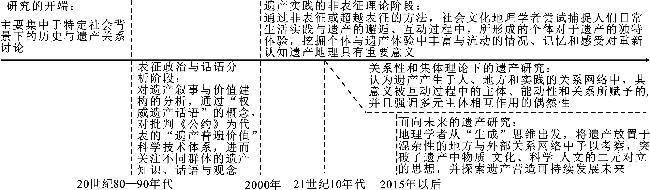
表1 批判性遗产研究思潮下遗产地理研究的理论基础与范式转变Table 1 Theoretical basis and paradigm shift of the geography of heritage under critical heritage studies trends |
| 主要理论 | 表征理论与话语理论 | 非表征理论 | 关系理论 |
| 主要观点 | a. 解读空间或景观背后的文化意义与文化政治 b. 文化遗产话语所体现的社会不公平与权力关系 | a. 从现象学角度挑战话语与表征的霸权 b. 追求尽可能地呈现鲜活、生动的生活世界 c. 关注日常经验、人类身体与情感的经历对遗产的共同创造 | a. 打破文化与物质、主体与客体的二元论 c. 转向文化遗产的关系性本体论 b. 认为非人类的物质能动性(影响人类的情感感知能力) |
| 范式归属 | 建构主义范式 ①采取相对主义的本体论和主观主义的认识论 ②对当时社会语境下的历史与遗产之间关系的探讨 ③从表征的角度,尝试探究遗产的空间与景观的文化意义与文化政治 | 关系主义范式 ①采取关系性的本体论和互动的认识论 ②从非表征的角度,尝试分析主体与遗产互动中的感知与体验 ③从行动者网络和集合理论的角度,探究遗产的物质能动性以及遗产与人类/非人类行动者之间关系的新观点 | |
| 研究方法 | 民族志、扎根理论、批判话语分析 | 展演性的民族志方法、参与者旅行日志、眼动实验、神经科学方法等 | 多点民族志、集合理论方法、物质追踪方法 |
| 关注重点 | 考察围绕遗产营造的社会背景和权力结构 | 关注于人与遗产互动中情感、身体、实践、展演和日常生活等意义涌现 | 理解人类与非人类作为双重主体对遗产的建构,探求人类与非人类、文化与自然和谐共存的可能性 |
表2 1996年以来西方批判性遗产研究思潮下遗产地理研究的共被引文献和关键词Table 2 Co-cited literature and key words of the geography of heritage under western critical heritage studies trends since 1996 |
| 共被引文献 | 关键词 | ||||||
| 频次 | 中心性 | 发表年份 | 文献作者 | 频次 | 中心性 | 关键词 | |
| 注:表内数据根据Web of Science数据库(https:// webofscience.clarivate.cn/ wos/woscc/summary/ b1638d48-d1ac-4edd- | |||||||
| 45 | 0.10 | 2001 | Harvey D C | 34 | 0.59 | cultural heritage | |
| 39 | 0.04 | 2007 | Logan WS | 15 | 0.25 | heritage tourism | |
| 35 | 0.05 | 2010 | Gibson L | 12 | 0.17 | politics | |
| 31 | 0.06 | 2004 | Ashworth G | 12 | 0.06 | critical heritage studies | |
| 25 | 0.02 | 2014 | Bicknell J | 9 | 0.02 | local heritage | |
| 22 | 0.02 | 2006 | Poria Y | 9 | 0.01 | heritage value | |
| 22 | 0.10 | 2006 | Laurajane S | 5 | 0.02 | biocultural heritage | |
| 19 | 0.03 | 2010 | Waterton E | 5 | 0.06 | everyday heritage | |
| 18 | 0.13 | 2013 | Winter T | 4 | 0.10 | cultural practice | |
| 15 | 0.05 | 2019 | Gentry K | 2 | 0.03 | perceptions | |
| 15 | 0.1 | 2015 | Harrison R | 2 | 0.02 | future | |
| [1] |
Rabbiosi C. The Frictional Geography of cultural heritage, Grounding the Faro Convention into urban experience in Forlì, Italy[J]. Social & Cultural Geography, 2022, 23(1): 140-157.
|
| [2] |
Butler-Warke A, Warke M R. Foundation stone of empire: The role of Portland stone in ‘heritage’, commemoration, and identity[J]. Transactions of the Institute of British Geographers, 2021, 46(4): 958-972.
|
| [3] |
Harrison R. Heritage: Critical approaches[M]. Oxon: Routledge, 2013.
|
| [4] |
Graham B, Ashworth G, Tunbridge J. A Geography of Heritage[M]. London: Routledge, 2016.
|
| [5] |
Tunbridge J E, Ashworth G J. Dissonant heritage: The management of the past as a resource in conflict[M]. Chichester: Wiley, 1996.
|
| [6] |
Corsale A, Iorio M. Transylvanian Saxon culture as heritage: Insights from viscri, Romania[J]. Geoforum, 2014, 52: 22-31.
|
| [7] |
Smith L. Uses of heritage[M]. London: Routledge, 2006.
|
| [8] |
Gentry K, Smith L. Critical heritage studies and the legacies of the late-twentieth century heritage canon[J]. International Journal of Heritage Studies, 2019, 25(11): 1148-1168.
|
| [9] |
Tunbridge J E, Ashworth G J, Graham B J. Decennial reflections on a Geography of Heritage (2000)[J]. International Journal of Heritage Studies, 2013, 19(4): 365-372.
|
| [10] |
聂芹, 满旺, 袁莹, 等. 基于社交媒体大数据的闽南非物质文化遗产时空扩散及对地理环境的响应[J]. 地理科学, 2023, 43(8): 1392-1400.
Nie Qin, Man Wang, Yuan Ying et al. Spatio-temporal evolution of Minnan intangible cultural heritage and the response to geographical environment based on social media big data. Scientia Geographica Sinica, 2023, 43(8): 1392-1400.
|
| [11] |
张朝枝, 屈册, 金钰涵. 遗产认同: 概念、内涵与研究路径[J]. 人文地理, 2018, 33(4): 20-25.
Zhang Chaozhi, Qu Ce, Jin Yuhan. Heritage identity: Concept connotation and research approaches. Human Geography, 2018, 33(4): 20-25.
|
| [12] |
魏雷, 朱竑. 地理学视角下非物质文化遗产的跨地方实践[J]. 地理学报, 2022, 77(2): 492-504.
Wei Lei, Zhu Hong. The translocal practices of intangible cultural heritage in the perspective of Geography. Acta Geographica Sinica, 2022, 77(2): 492-504.
|
| [13] |
Lowenthal D. The past is a foreign country[M]. Cambridge: Cambridge University Press, 1985.
|
| [14] |
Hewison R. The heritage industry: Britain in a climate of decline[M]. London: Methuen, 1981.
|
| [15] |
Wu Chenhui. The politics of heritage and place-making in Tanmen, China[J]. Environment and Planning C: Politics and Space, 2023, 41(6): 1243-1260.
|
| [16] |
Melis C, Wise N, Badurina J D. Geo-political complexities of governmentality and Balkanism: Deconstructing UNESCO world intangible cultural heritage discourses[J]. Political Geography, 2022, 95: 102578.
|
| [17] |
Crang M, Tolia-Kelly D P. Nation, race, and affect: Senses and sensibilities at national heritage sites[J]. Environment and Planning A: Economy and Space, 2010, 42(10): 2315-2331.
|
| [18] |
Harvey D. Landscape and heritage: Trajectories and consequences[J]. Landscape Research, 2015, 40(8): 911-924.
|
| [19] |
Waterton E. A more-than-representational understanding of heritage?The ‘past’ and the politics of affect[J]. Geography Compass, 2014, 8(11): 823-833.
|
| [20] |
Dittmer J, Waterton E. “You’ll go home with bruises”: Affect, embodiment and heritage on board HMS Belfast[J]. Area, 2019, 51(4): 706-718.
|
| [21] |
Harrison R. On heritage ontologies: Rethinking the material worlds of heritage[J]. Anthropological Quarterly, 2018, 91(4): 1365-1383.
|
| [22] |
Bowers T. Heterotopia and actor-network theory: Visualizing the normalization of remediated landscapes[J]. Space and Culture, 2019, 21 (3): 233-246.
|
| [23] |
Harrison R, DeSilvey C, Holtorf C et al. Heritage futures: Comparative approaches to natural and cultural heritage practices[M]. London: UCL Press, 2020.
|
| [24] |
Harvey D C. Heritage pasts and heritage presents: Temporality, meaning and the scope of heritage studies[J]. International Journal of Heritage Studies, 2001, 7(4): 319-338.
|
| [25] |
Waterton E, Watson S. The palgrave handbook of contemporary heritage research[M]. London: Palgrave Macmillan, 2015.
|
| [26] |
While A, Short M. Place narratives and heritage management: The modernist legacy in Manchester[J]. Area, 2011, 43(1): 4-13.
|
| [27] |
El-Husseiny M, Hafez N. Conserving by aesthetics, conserving by development: The rescaling and worlding of global south heritage[J]. International Journal of Cultural Policy, 2020, 26(6): 820-839.
|
| [28] |
Hammond T. Heritage and the middle east: Cities, power, and memory[J]. Geography Compass, 2020, 14(2): e12477
|
| [29] |
Oakes T. Resourcing culture: Is a prosaic ‘third space’ possible in rural China?[J]. Environment and Planning D: Society and Space, 2009, 27(6): 1074-1090.
|
| [30] |
Fauveaud G, Esposito A. Beyond official heritage agendas: The third space of conservation practices in Phnom Penh, Cambodia[J]. Urban Studies, 2021, 58(12): 2473-2489.
|
| [31] |
Farrelly F, Kock F, Josiassen A. Cultural heritage authenticity: A producer view[J]. Annals of Tourism Research, 2019, 79: 102770.
|
| [32] |
Richards G. Cultural tourism: A review of recent research and trends[J]. Journal of Hospitality and Tourism Management, 2018, 36: 12-21.
|
| [33] |
Poria Y, Butler R, Airey D. The core of heritage tourism[J]. Annals of Tourism Research, 2003, 30(1): 238-254.
|
| [34] |
Zhang Rouran, Smith L. Bonding and dissonance: Rethinking the interrelations among stakeholders in heritage tourism[J]. Tourism Management, 2019, 74: 212-223.
|
| [35] |
Su Junjie. Managing intangible cultural heritage in the context of tourism: Chinese officials’ perspectives[J]. Journal of Tourism and Cultural Change, 2020, 18(2): 164-186.
|
| [36] |
Fraser R. Cultural heritage, ethnic tourism, and minority-state relations amongst the Orochen in northeast China[J]. International Journal of Heritage Studies, 2020, 26(2): 178-200.
|
| [37] |
Poulios I. The past in the present: A living heritage approach[M]. Meteora, London: Ubiquity Press, 2014.
|
| [38] |
Yelmi P. Protecting contemporary cultural soundscapes as intangible cultural heritage: Sounds of Istanbul[J]. International Journal of Heritage Studies, 2016, 22(4): 302-311.
|
| [39] |
Beel D, Wallace C. Gathering together: Social capital, cultural capital and the value of cultural heritage in a digital age[J]. Social & Cultural Geography, 2020, 21(5): 697-717.
|
| [40] |
Davis L, Thys-Şenocak L. Heritage and scent: Research and exhibition of Istanbul’s changing smellscapes[J]. International Journal of Heritage Studies, 2017, 23(8): 723-741.
|
| [41] |
Chen Zhengfu, Ren Xiaodong, Zhang Zaijie. Cultural heritage as rural economic development: Batik production amongst China’s Miao population[J]. Journal of Rural Studies, 2021, 81: 182-193.
|
| [42] |
Pauls H, Walby K. Military, meaning, and tactical myopia: Representations of weapons at the Royal Canadian Artillery Museum[J]. International Journal of Heritage Studies, 2020, 26(11): 1109-1122.
|
| [43] |
Nustad K G. Notes on the political ecology of time: Temporal aspects of nature and conservation in a South African World Heritage Site[J]. Geoforum, 2020, 111: 94-104.
|
| [44] |
Connolly C. Urban political ecologies of heritage: Integrating cultural and natural landscapes in Penang, Malaysia[J]. Transactions of the Institute of British Geographers, 2020, 45(1): 168-180.
|
| [45] |
Horowitz L S. Rhizomic resistance meets arborescent assemblage: UNESCO world heritage and the disempowerment of indigenous activism in new Caledonia[J]. Annals of the American Association of Geographers, 2016, 106(1): 167-185.
|
| [46] |
Min Qingwen, Zhang Yongxun, Jiao Wenjun et al. Responding to common questions on the conservation of agricultural heritage systems in China[J]. Journal of Geographical Sciences, 2016, 26(7): 969-982.
|
| [47] |
Reisman E. Protecting provenance, abandoning agriculture?Heritage products, industrial ideals and the uprooting of a Spanish turrón[J]. Journal of Rural Studies, 2022, 89: 45-53.
|
| [48] |
Mustafa D, Khan M S, De Nardi H et al. Hydro-heritage for healing?Examining the gendered experience of water in post-conflict Swat, Pakistan[J]. Environment and Planning E: Nature and Space, 2024, 7(2): 498-516.
|
| [49] |
彭兆荣. 遗产: 反思与阐释[M]. 昆明: 云南教育出版社, 2008
Peng Zhaorong. Heritage: Reflection and interpretation. Kunming: Yunnan Education Press.
|
| [50] |
韦俊峰, 明庆忠. 自然的社会建构中“人−自然−地方”关系网络——龙脊梯田农业文化遗产案例[J]. 地理科学, 2025, 45(4): 711-720.
Wei Junfeng, Ming Qingzhong. “Human-nature-place” network in social construction of nature: A case study of agricultural heritage of Longji Rice Terraces[J]. Geographical Science, 2025, 45(4): 711-720.
|
| [51] |
唐晓峰, 周尚意, 李蕾蕾. “超级机制”与文化地理学研究[J]. 地理研究, 2008, 27(2): 431-438.
Tang Xiaofeng, Zhou Shangyi, Li Leilei. The concept of super-organism in the study of Cultural Geography. Geographical Research, 2008, 27(2): 431-438.
|
| [52] |
吴晨辉, 张争胜. 南海《更路簿》“遗产化”的路径和机制[J]. 地理科学, 2022, 42(6): 1055-1063.
Wu Chenhui, Zhang Zhengsheng. The heritagization of local relics: A case study of Genglubu. Scientia Geographica Sinica, 2022, 42(6): 1055-1063.
|
| [53] |
张朝枝, 杨继荣. 建构与协商: 文化遗产与旅游的关系再认识[J]. 旅游学刊, 2022, 37(11): 75-84.
Zhang Chaozhi, Yang Jirong. Construction and negotiation: Reflections on relationship between cultural heritage and tourism. Tourism Tribune, 2022, 37(11): 75-84.
|
/
| 〈 |
|
〉 |