



居民日常出行时空集聚视角下的城市交通拥堵形成机制研究——以广州为例
作者简介:古 杰(1984-),男,河南省郸城县人,博士研究生,主要从事城市地理学研究。E-mail: gujie198410@sina.com
收稿日期: 2011-11-14
要求修回日期: 2012-01-12
网络出版日期: 2012-06-04
基金资助
国家自然科学基金项目(40971098)、中央高校基本科研业务费专项资金(101gpy02)、广州市科技计划项目(2010Y1-C131)资助
Formation Mechanism of Traffic Congestion in View of Spatio-temporal Agglomeration of Residents’ Daily Activities:A Case Study of Guangzhou
Received date: 2011-11-14
Request revised date: 2012-01-12
Online published: 2012-06-04
Copyright
随着大城市的迅速蔓延与扩张,市内交通拥堵日益成为世界大城市在发展过程中面临的重要问题,亦成为众多学科研究的热点话题。运用时间地理学的研究方法,以城市居民日常活动的时空集聚为基本研究视角,选取广州作为案例,探讨城市内部交通拥堵形成的机制。研究结果表明,运动型时空共存是产生交通拥堵的根本原因,而出行路径的时空集聚必然造成运动型时空共存。广州市居民的出行行为由于受到时空约束的作用下,造成出行路径的时空集聚,城市的空间结构和路网结构进一步强化其集聚效应,从而形成出行路径的时空共存,并引发交通拥堵。本文的基本结论是城市居民的日常活动受到时间和空间两种因素的共同约束,当两种约束条件达到一定的程度时将产生时空集聚和运动型时空共存,并最终形成交通拥堵。良好的交通管理手段只能促使交通拥堵的状况趋于好转,本质上难以解决交通拥堵问题。城市空间结构、交通线路、交通管制、交通供需状况在一定程度上通过影响居民日常出行路径的时空共存而加剧或缓解交通拥堵现象。所以,在城市交通供需状况处在一种基本合理的水平下,解决大城市交通拥堵问题的根本出路在于降低居民日常活动的运动型时空共存。
古杰 , 周素红 , 闫小培 , 邓丽芳 . 居民日常出行时空集聚视角下的城市交通拥堵形成机制研究——以广州为例[J]. 地理科学, 2012 , 32(8) : 921 -927 . DOI: 10.13249/j.cnki.sgs.2012.08.921
With the rapid spread and expansion of big cities, the increasing of traffic congestion is one of the main problems in the process of urban development, which becomes a hot research topic. With the time geography method, this article discusses the formation mechanism of traffic congestion under the perspective of spatio-temporal agglomeration of residents’ daily activities with a case of Guangzhou. The results show that, motile co-existence is the root cause of traffic congestion, while the agglomeration of spatio-temporal paths cause motile co-existence. Guangzhou residents’ activities are conditioned by space and time constraints, which forms the motile co-existence. The urban space and road structure enhance the agglomeration of spatio-temporal paths, so as to form the coexistence of daily activities and traffic congestion. Therefore, path cluster is the fundamental cause of traffic congestion under the constraints of time and space. In conclusion, residents’ daily activities are constrained by time and space, when the constraint reaches to a certain degree, the spatio-temporal agglomeration and motile co-existence will be produced, and finally forms traffic congestion. Good traffic management can only make traffic congestion tend to get better but cannot solve the problem of traffic congestion in essence. The structure of urban space, traffic lines, traffic control, and the situation of transportation supply and demand in some degree affect traffic congestion through motile co-existence. With the situation of transportation supply and demand at a roughly balanced level, the basic measures to solve the problem of traffic congestion lies in resolving the agglomeration of residents’ daily activities.
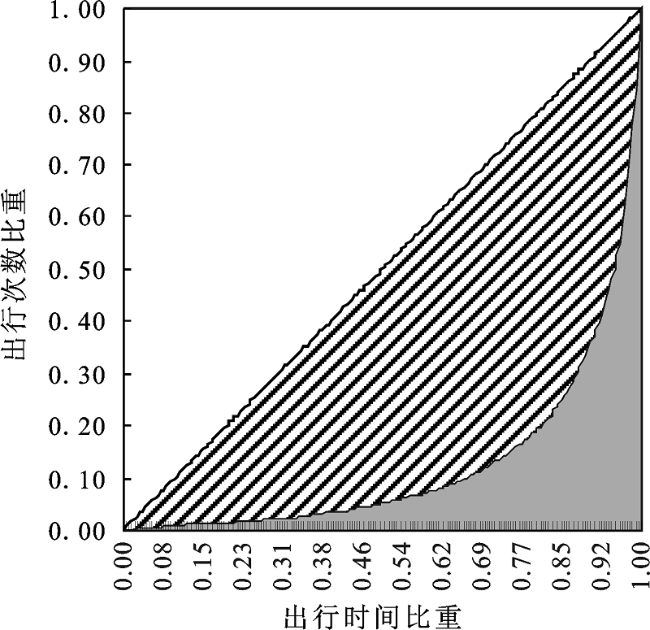
Fig. 1 Lorenz Curve of residents’ daily travel in Guangzhou图1 广州市居民日常出行时间的洛伦茨曲线 |
Table 1 Investigation place and numbers of daily travel表1 问卷调查点及居民出行次数 |
| 调查地点 | 问卷 数目(份) | 日出行次数 (次) | 调查地点 | 问卷 数目 | 日出行次数 | ||||||
|---|---|---|---|---|---|---|---|---|---|---|---|
| 2 | 3 | 4 | >4 | 2 | 3 | 4 | >4 | ||||
| 中山六路 | 75 | 42 | 0 | 26 | 7 | 冼村 | 80 | 56 | 6 | 13 | 5 |
| 龙津西路 | 78 | 1 | 2 | 39 | 36 | 建设新村 | 80 | 37 | 3 | 29 | 11 |
| 东晓路 | 79 | 65 | 4 | 9 | 1 | 中大西区 | 78 | 25 | 1 | 41 | 11 |
| 天河东路 | 78 | 44 | 1 | 26 | 7 | 同德围 | 79 | 46 | 4 | 24 | 5 |
| 员村 | 79 | 26 | 1 | 45 | 7 | 华南新城 | 79 | 66 | 9 | 3 | 1 |
| 棠下 | 197 | 119 | 15 | 53 | 10 | 总计 | 982 | 527 | 46 | 308 | 101 |
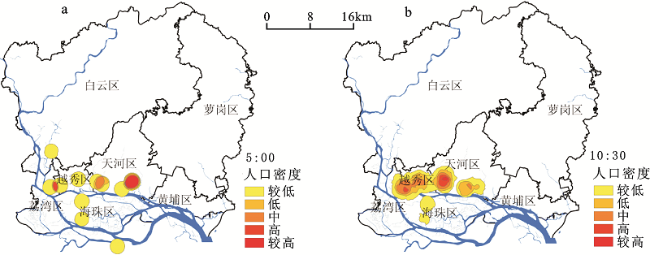
Fig.2 Population density at 5:00 and 10:30图2 时间断面人口密度特征 |
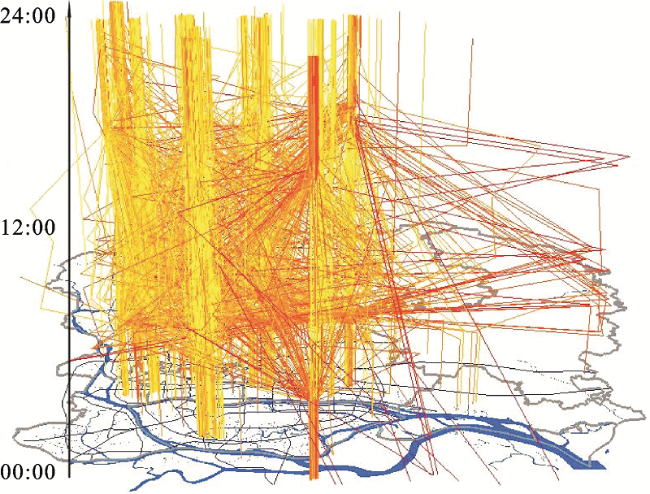
Fig.3 The space-time paths of daily travel of a sample in Guangzhou图3 广州市居民日常活动的时空路径 |
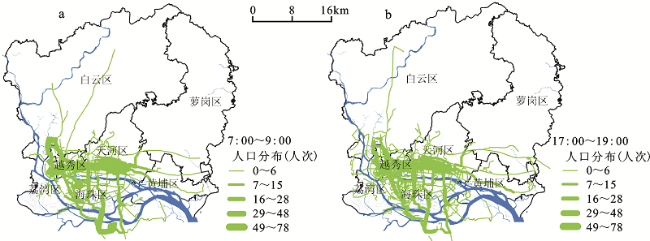
Fig. 4 Population distribution of unit road in travel peak time图4 出行高峰时段人口在单位路段上的分布 |
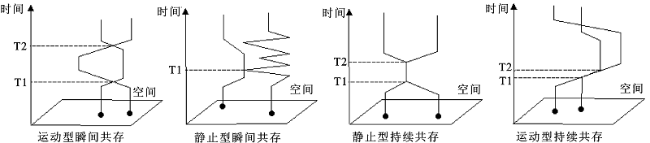
Fig. 5 Four basic patters of spatio-temporal coexistence图5 时空共存的四种基本变形 |
The authors have declared that no competing interests exist.
| [1] |
|
| [2] |
|
| [3] |
|
| [4] |
|
| [5] |
|
| [6] |
|
| [7] |
|
| [8] |
|
| [9] |
|
| [10] |
|
| [11] |
|
| [12] |
|
| [13] |
|
| [14] |
|
| [15] |
|
| [16] |
|
| [17] |
|
| [18] |
|
| [19] |
|
| [20] |
|
| [21] |
|
| [22] |
|
| [23] |
|
| [24] |
|
| [25] |
|
| [26] |
|
| [27] |
|
| [28] |
|
/
| 〈 |
|
〉 |