



基于DFRI碱基理论的传统村落景观基因推演与修复
|
彭科(1992—),男,湖南衡阳人,讲师,硕士,主要从事聚落文化景观的保护与开发研究。E-mail: 649235219@qq.com |
收稿日期: 2022-08-14
修回日期: 2022-10-11
录用日期: 2023-01-04
网络出版日期: 2023-06-26
基金资助
国家自然科学基金项目(41871133)
国家自然科学基金项目(42071195)
教育部人文社会科学研究项目(16YJAZH006)
湖南省教育厅科学研究项目(21B0636)
湖南省社会科学规划基金项目(20JD007)
国家社会科学基金项目(17ZDA166)
传统村镇文化数字化保护与创意利用技术国家地方联合工程实验室开放基金(2022HSKFJJ004)
传统村镇文化数字化保护与创意利用技术国家地方联合工程实验室开放基金(2022HSKFJJ002)
传统村镇文化数字化保护与创意利用技术国家地方联合工程实验室开放基金(2022HSKFJJ005)
版权
Deduction and restoration of traditional village landscape genes based on ''DFRI Base'' theory
Received date: 2022-08-14
Revised date: 2022-10-11
Accepted date: 2023-01-04
Online published: 2023-06-26
Supported by
National Natural Science Foundation of China(41871133)
National Natural Science Foundation of China(42071195)
Humanities and Social Science Research Foundation of the Ministry of Education of China(16YJAZH006)
Scientific Research Fund of Hunan Provincial Education Department(21B0636)
Philosophy and Social Science Fund Project of Hunan Province(20JD007)
National Social Science Foundation(17ZDA166)
Open Fund Project of National Local Joint Engineering Laboratory on Digital Preservation and Innovative Technologies for the Culture of Traditional Villages and Towns(2022HSKFJJ004)
Open Fund Project of National Local Joint Engineering Laboratory on Digital Preservation and Innovative Technologies for the Culture of Traditional Villages and Towns(2022HSKFJJ002)
Open Fund Project of National Local Joint Engineering Laboratory on Digital Preservation and Innovative Technologies for the Culture of Traditional Villages and Towns(2022HSKFJJ005)
Copyright
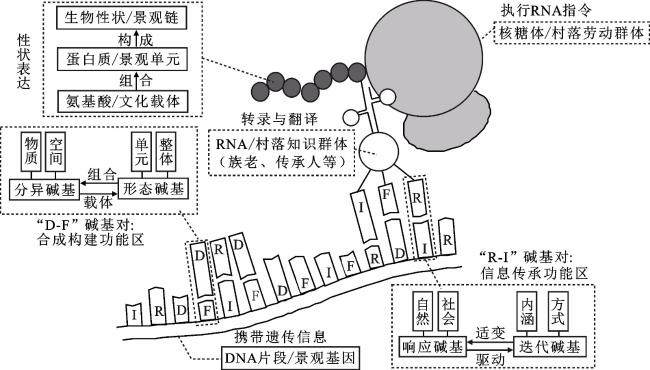
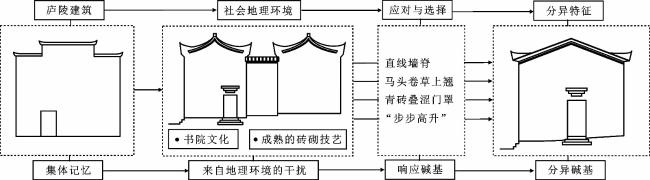
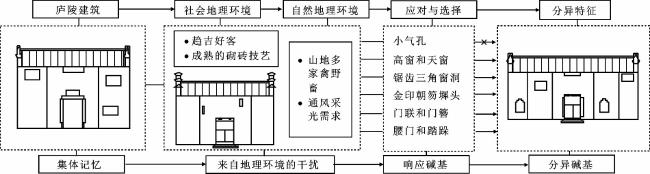
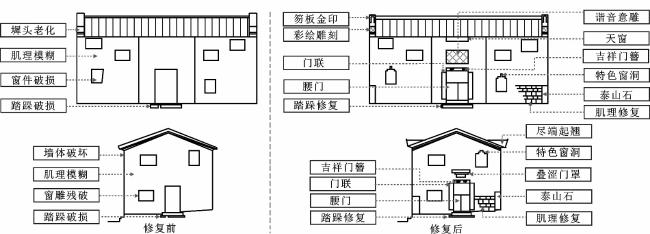
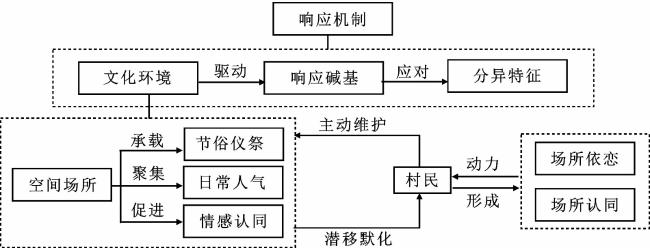
采用对比与类别的方法,定义了景观基因的4种功能“碱基”,解析其遗传表达机制,并以汝城县永丰村的景观基因修复为例开展实证研究。研究结论如下:① 景观基因由分异、形态、响应、迭代4种碱基排列组合而成,其排列顺序决定了村落景观的遗传信息。② 景观基因序列在横向上满足碱基的两两配对规律,在纵向上能体现村落演化的时序性与过程性。③ 通过景观基因的测序推演,总结了永丰村文化载体的分异特征,以此修补缺失的分异碱基。④ 通过形成场所依恋和建立场所认同可以恢复文化环境,重新建立永丰村的“响应-环境”平衡,以此激活响应碱基。⑤ 在传统村落景观破碎化严重的情况下,可以通过DFRI碱基理论推演与修复景观基因。
彭科 , 刘沛林 , 杨立国 , 邓运员 . 基于DFRI碱基理论的传统村落景观基因推演与修复[J]. 地理科学, 2023 , 43(6) : 981 -991 . DOI: 10.13249/j.cnki.sgs.2023.06.005
Through the research methods of comparison and category, this article generalized the existing theoretical concepts to define four ''base'' of landscape genes, and analyzed its genetic expression mechanism. Based on the theory of landscape gene base, this research team carried out an empirical study on the restoration of landscape gene in Yongfeng Village, Rucheng County, Chenzhou City, Hunan Province. The research conclusion verifies the scientificity and applicability of the theory: 1) The landscape genes of traditional villages are composed of the arrangement of four bases: Differentiation base, form base, response base and iteration base, which sequence arrangement can determine the genetic information such as landscape morphogenesis, information translation and information inheritance in the cultural landscape of traditional villages. 2) In the horizontal direction, one base in the landscape gene sequence is paired with another fixed base, which shows that the landscape gene bases also satisfy the pairing law as biological gene bases. In the vertical direction, the order of landscape gene bases can reflect the diachronic and process of the evolution of traditional village cultural landscape. 3) Through the determination and deduction of landscape gene sequence, this research summarized the differentiation characteristics of cultural carriers in Yongfeng Village, which were used to restructure the missing differentiation bases of local landscape gene. 4) The cultural environment can be restored through the formation of place attachment and the establishment place identity, and the restoration of the cultural environment can be conducive to reestablish the balance between gene response and environmental effects in Yongfeng Village, which is the key to activate the response base. 5) The traditional village landscape gene extraction work often faces the situation that the traditional village landscape is seriously damaged. At this time, the deduction of landscape gene sequence and the restoration of the transmission path of genetic information can be achieved through the DFRI base theory, and finally reconstruct the broken cultural landscape of traditional village.
| [1] |
李雪, 李伯华, 窦银娣, 等. 中国传统村落文化景观研究进展与展望[J]. 人文地理, 2022, 37(2): 13-22+111.
Li Xue, Li Bohua, Dou Yindi et al. Progress and prospect of research on traditional villages cultural landscape in China. Human Geography, 2022, 37(2): 13-22+111.
|
| [2] |
陶伟, 陈红叶, 林杰勇. 句法视角下广州传统村落空间形态及认知研究[J]. 地理学报, 2013, 68(2): 209-218.
Tao Wei, Chen Hongye, Lin Jieyong. Spatial form and spatial cognition of traditional village in syntactical view: A case study of Xiaozhou Village, Guangzhou. Acta Geographica Sinica, 2013, 68(2): 209-218.
|
| [3] |
马航. 中国传统村落的延续与演变——传统聚落规划的再思考[J]. 城市规划学刊, 2006(1): 102-107.
Ma Hang. Persistence and transformation of Chinese traditional villages—Rethinking the planning of traditional settlements. Urban Planning Forum, 2006(1): 102-107.
|
| [4] |
王云才, 郭焕成, 杨丽. 北京市郊区传统村落价值评价及可持续利用模式探讨——以北京市门头沟区传统村落的调查研究为例[J]. 地理科学, 2006, 26(6): 735-742.
Wang Yuncai, Guo Huancheng, Yang Li. The discussion on evaluation and sustainable development models of traditional villages in western mountainous area of Beijing—A case study of traditional villages in Mentougou District of Beijing. Scientia Geographica Sinica, 2006, 26(6): 735-742.
|
| [5] |
潘颖, 邹君, 刘雅倩, 等. 乡村振兴视角下传统村落活态性特征及作用机制研究[J]. 人文地理, 2022, 37(2): 132-140+192.
Pan Ying, Zou Jun, Liu Yaqian et al. A study on the living state and mechanism of traditional villages from the perspective of rural revitalization. Human Geography, 2022, 37(2): 132-140+192.
|
| [6] |
李伯华, 李珍, 刘沛林, 等. 聚落“双修”视角下传统村落人居环境活化路径研究——以湖南省张谷英村为例[J]. 地理研究, 2020, 39(8): 1794-1806.
Li Bohua, Li Zhen, Liu Peilin et al. Activation path of human settlement environment of traditional villages from the perspective of ''double repair'': A case study of Zhang-Guying Village in Hunan Province. Geographical Research, 2020, 39(8): 1794-1806.
|
| [7] |
张睿婕, 高元, 李佳奇. 近30年来中国传统村落的研究热点、进程及展望——基于CiteSpace的可视化解析[J]. 现代城市研究, 2021(11): 1-7+15.
Zhang Ruijie, Gao Yuan, Li Jiaqi. The research hotspots, progress and prospects of traditional Chinese villages in the past 30 years: Visual analysis based on CiteSpace method. Modern Urban Research, 2021(11): 1-7+15.
|
| [8] |
何依, 孙亮. 基于宗族结构的传统村落院落单元研究——以宁波市走马塘历史文化名村保护规划为例[J]. 建筑学报, 2017(2): 90-95.
He Yi, Sun Liang. A study on the courtyard unit of traditional settlements based on clan structure as exemplified in Zoumatang Village, Ningbo. Architectural Journal, 2017(2): 90-95.
|
| [9] |
李伯华, 郑始年, 窦银娣, 等. “双修”视角下传统村落人居环境转型发展模式研究——以湖南省2个典型村为例[J]. 地理科学进展, 2019, 38(9): 1412-1423.
Li Bohua, Zheng Shinian, Dou Yindi et al. Transformation and development mode of traditional village human settlement environment from the perspective of ''double repairs'': A case study of two typical villages in Hunan Province. Progress in Geography, 2019, 38(9): 1412-1423.
|
| [10] |
刘磊. 基于“簇-群”联结的传统村镇风貌解析与修复——以李渡口村为例[J]. 中国园林, 2018, 269(5): 28-32.
Liu Lei. Analysis and restoration of traditional villages and towns based on "Cluster-group" connection—Taking Lidukou Village as an example. Chinese Landscape Architecture, 2018, 269(5): 28-32.
|
| [11] |
向远林, 曹明明, 秦进, 等. 基于精准修复的陕西传统乡村聚落景观基因变异性研究[J]. 地理科学进展, 2020, 39(9): 1544-1556.
Xiang Yuanlin, Cao Mingming, Qin Jin et al. Study of traditional rural settlements landscape genetic variability in Shaanxi Province based on accurate-restoration. Progress in Geography, 2020, 39(9): 1544-1556.
|
| [12] |
翟洲燕, 常芳, 李同昇, 等. 陕西省传统村落文化遗产景观基因组图谱研究[J]. 地理与地理信息科学, 2018, 34(3): 87-94+113.
Zhai Zhouyan, Chang Fang, Li Tongsheng et al. A novel method for the function of road accessibility based on space syntax. Geography and Geo-Information Science, 2018, 34(3): 87-94+113.
|
| [13] |
杨立国, 刘沛林, 林琳. 传统村落景观基因在地方认同建构中的作用效应——以侗族村寨为例[J]. 地理科学, 2015, 35(5): 593-598.
Yang Liguo, Liu Peilin, Lin Lin. The effect of traditional village landscape genes in construction place identity: Taking the Dong Minority village as an example. Scientia Geographica Sinica, 2015, 35(5): 593-598.
|
| [14] |
蒋思珩, 樊亚明, 郑文俊. 国内景观基因理论及其应用研究进展[J]. 西部人居环境学刊, 2021, 36(1): 84-91.
Jiang Siheng, Fan Yaming, Zheng Wenjun. Research progress on landscape's gene theory and its utilization in China[J]. Journal of Human Settlements in West China, 2021, 36(1): 84-91.
|
| [15] |
赵鹤龄, 王军, 袁中金, 等. 文化基因的谱系图构建与传承路径研究——以古滇国文化基因为例[J]. 现代城市研究, 2014(5): 90-97.
Zhao Heling, Wang Jun, Yuan Zhongjin et al. Research on genetic pedigree chart construction and transmission path—A case study of ancient Dian culture gene. Modern Urban Research, 2014(5): 90-97.
|
| [16] |
郭睿, 郑伯红. 城市文化风貌物质载体的量化研究[J]. 经济地理, 2020, 40(11): 208-214+224.
Guo Rui, Zheng Bohong. Quantitative research on the material carrier of urban cultural features. Economic Geography, 2020, 40(11): 208-214+224.
|
| [17] |
王萍, 刘敏. 地理要素在传统无形文化传承中的空间印迹——以山西省非物质文化遗产为例[J]. 地理研究, 2020, 39(8): 1807-1821.
Wang Ping, Liu Min. The spatial influence of geography on the inheritance of traditional intangible culture: A case study of intangible cultural heritage in Shanxi Province. Geographical Research, 2020, 39(8): 1807-1821.
|
| [18] |
田毅. 汾河流域传统民居的环境选择与适应性研究[J]. 干旱区资源与环境, 2019, 33(9): 99-107.
Tian Yi. Environmental selection and adaptability of traditional dwellings in Fen River Basin. Journal of Arid Land Resources and Environment, 2019, 33(9): 99-107.
|
| [19] |
何田, 廖和平, 孙平军, 等. 西南山区贫困家庭劳动力转移特征及乡村振兴响应策略[J]. 地域研究与开发, 2021, 40(3): 145-150.
He Tian, Liao Heping, Sun Pingjun et al. Characteristics of labor transfer of poverty-stricken families and response strategies for rural revitalization in southwest mountainous areas. Areal Research and Development, 2021, 40(3): 145-150.
|
| [20] |
胡最, 邓运员, 刘沛林, 等. 传统聚落文化景观基因的符号机制[J]. 地理学报, 2020, 75(4): 789-803.
Hu Zui, Deng Yunyuan, Liu Peilin et al. The semiotic mechanism of cultural landscape genes of traditional settlements. Acta Geographica Sinica, 2020, 75(4): 789-803.
|
| [21] |
曾诗晴, 谢彦君, 史艳荣. 从城市意象到街道体验——城市旅游多层级消费决策中的景观迭代过程[J]. 旅游学刊, 2022, 37(1): 68-84.
Zeng Shiqing, Xie Yanjun, Shi Yanrong. From city image to street experience: Landscape iteration in urban tourists' consumption decisions. Tourism Tribune, 2022, 37(1): 68-84.
|
| [22] |
柏贵喜. 文化基因的类型及其识别原则——基于民族工艺文化的一种构说框架[J]. 中南民族大学学报(人文社会科学版), 2021, 249(6): 57-64.
Bo Guixi. The research of types and identification principles of cultural genes: A constructive framework based on national craft culture. Journal of South-Central University for Nationalities (Humanities and Social Sciences), 2021, 249(6): 57-64.
|
| [23] |
孔翔, 卓方勇. 文化景观对建构地方集体记忆的影响——以徽州呈坎古村为例[J]. 地理科学, 2017, 37(1): 110-117.
Kong Xiang, Zhuo Fangyong. Roles of cultural landscapes in the construction of local collective memory: A case study of Chengkan Village. Scientia Geographica Sinica, 2017, 37(1): 110-117.
|
| [24] |
汝城县志编纂委员会. 汝城县志: 1989—2002[M]. 北京: 方志出版社, 2008: 36-37.
General Editorial Board of Records of Rucheng County. Records of Rucheng County: 1989—2002. Beijing: China Local Records Publishing, 2008: 36-37.
|
| [25] |
孙永胜, 佟连军. 东北限制开发区域开发强度与生态环境的时空耦合关系研究[J]. 地理科学, 2021, 41(4): 684-694.
Sun Yongsheng, Tong Lianjun. Spatio-temporal coupling relationship between development strength and eco-environment in the restricted development zone of Northeast China. Scientia Geographica Sinica, 2021, 41(4): 684-694.
|
| [26] |
李伯华, 郑始年, 刘沛林, 等. 传统村落空间布局的图式语言研究——以张谷英村为例[J]. 地理科学, 2019, 39(11): 1691-1701.
Li Bohua, Zheng Shinian, Liu Peilin et al. Pattern language of the spatial arrangement of traditional villages: A case study of Zhangguying Village. Scientia Geographica Sinica, 2019, 39(11): 1691-1701.
|
| [27] |
汝城县志编纂委员会. 汝城县志[M]. 长沙: 湖南人民出版社, 1997.
General Editorial Board of Records of Rucheng County. Records of Rucheng. Changsha: Hunan People's Publishing House, 1997.
|
| [28] |
肖方远. 吉安县志[M]. 南昌: 江西人民出版社, 2008.
Xiao Fangyuan. Records of Ji'an County. Nanchang: Jiangxi People's Publishing House, 2008.
|
| [29] |
李星梦. 庐陵文化大观[M]. 南昌: 江西人民出版社, 2019: 272-277.
Li Xingmeng. Grand view of Luling culture. Nanchang: Jiangxi People's Publishing House, 2019: 272-277.
|
| [30] |
黄浩. 江西民居[M]. 南昌: 中国建筑工业出版社, 2008: 10-11.
Huang Hao. Jiangxi folk house. Nanchang: China Architecture & Building Press, 2008: 10-11.
|
| [31] |
胡师正. 湘南传统人居文化特征[M]. 长沙: 湖南人民出版社, 2008: 45-57.
Hu Shizheng. The characteristics of traditional human settlement culture in Southern Hunan. Changsha: Hunan People's Publishing House, 2008: 45-57.
|
| [32] |
余意峰, 张春燕, 曾菊新, 等. 民族旅游地旅游者原真性感知、地方依恋与忠诚度研究——以湖北恩施州为例[J]. 人文地理, 2017, 32(2): 145-151.
Yu Yifeng, Zhang Chunyan, Zeng Juxin et al. Examining the structural relationships of authenticity perception, place attachment and destination loyalty: An empirical study of Enshi Prefecture in Hubei. Human Geography, 2017, 32(2): 145-151.
|
| [33] |
冯悦, 王凯平, 张云路, 等. 乡村公共空间与场所依恋研究综述: 概念、逻辑与关联[J]. 中国园林, 2021, 37(2): 31-36.
Feng Yue, Wang Kaiping, Zhang Yunlu et al. An overview of research on rural public space and place attachment: Concepts, logics, and associations. Chinese Landscape Architecture, 2021, 37(2): 31-36.
|
| [34] |
鲁可荣, 曹斐浩. 乡村传统民俗文化的集体记忆重构及价值传承——以妙源村“立春祭”为例[J]. 浙江学刊, 2020(2): 225-231.
Lu Kerong, Cao Feihao. Collective memory construction of rural traditional folk cultures and its value inheritance: A case study of ''sacrifice in spring'' in the Miaoyuan Village. Zhejiang Academic Journal, 2020(2): 225-231.
|
| [35] |
何诗, 阴劼. 认知地图的地理学研究进展与展望[J]. 地理科学进展, 2022, 41(1): 73-85.
He Shi, Yin Jie. Cognitive map research in the field of geography: A review and prospect. Progress in Geography, 2022, 41(1): 73-85.
|
/
| 〈 |
|
〉 |