



能源贫困研究进展:生成逻辑和地方效应
|
黄曼丽(1999—),女,湖南湘阴人,博士研究生,主要从事能源地理和社会文化地理研究。E-mail: 1483957284@qq.com |
收稿日期: 2024-09-22
修回日期: 2025-03-27
网络出版日期: 2025-11-10
基金资助
国家自然科学基金项目(42271240)
国家自然科学基金项目(42401283)
版权
Progress and prospects of research on energy poverty: Generative logic and place effects
Received date: 2024-09-22
Revised date: 2025-03-27
Online published: 2025-11-10
Supported by
National Natural Science Foundation of China(42271240)
National Natural Science Foundation of China(42401283)
Copyright
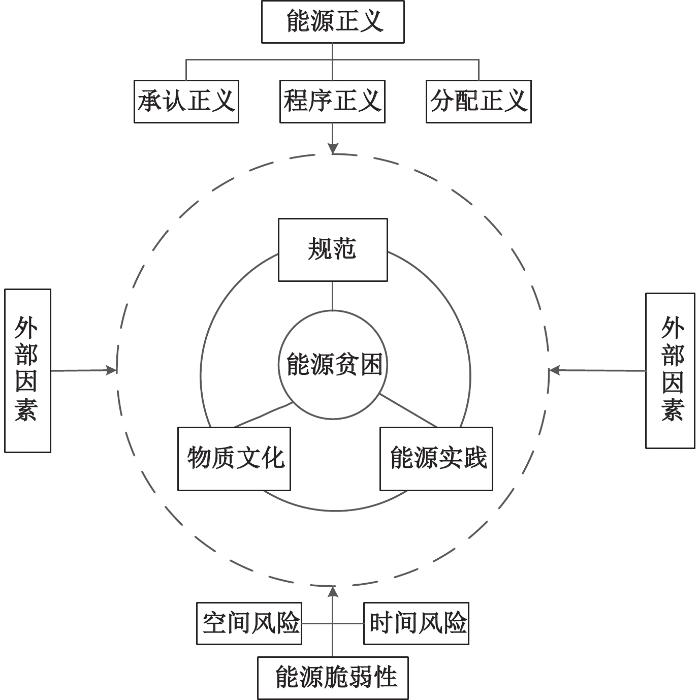
能源贫困是21 世纪全球人类面临的严峻挑战,是发达国家和发展中国家共同面临的重要难题,消除能源贫困已被列入联合国可持续发展目标。能源贫困研究长期由自然科学、工程科学和经济统计学主导,但能源贫困不仅是技术和经济问题,还是具有鲜明地理空间属性的政治、文化、社会和区域问题。本文回顾并对比国内外地理学视角下能源贫困的研究进展,从生成逻辑、识别测量、应对策略和地方效应4大方面系统梳理能源贫困的主要研究议题。结果表明:能源贫困的解释框架主要来源于能源交叉性方法、能源文化框架、能源脆弱性和能源正义理论,四者综合构成能源贫困的生成逻辑框架;能源贫困识别与测量面临区域差异、数据获取、指标设置的挑战;政策和权力与能源贫困存在复杂的双向反馈机制;能源贫困对物质景观、地方身份和社会情感具有再造和重构效应。结合中国实际,本文还探讨了能源贫困研究对实现“双碳”目标、能源转型和共同富裕的重要价值。
黄曼丽 , 陶伟 . 能源贫困研究进展:生成逻辑和地方效应[J]. 地理科学, 2026 , 46(1) : 79 -91 . DOI: 10.13249/j.cnki.sgs.20241071
Energy poverty is a serious challenge facing mankind globally in 21 century and an important problem faced by both developed and developing countries. How to eliminate energy poverty has been included in the United Nations' Sustainable Development Goals. Energy poverty research has long been dominated by natural sciences, engineering sciences, and economic statistics, but energy poverty is not only an engineering and economic issue but also a political, cultural, social, and regional issue with distinct geospatial attributes. Geography, with its unique spatial perspective and the advantages of comprehensive, regional, and cross-disciplinary thinking, is not only able to draw a multi-scale spatiotemporal map of energy poverty but also to explore the influencing factors of energy poverty and the political-spatial practices of multiple subjects in a specific space and time. This paper utilizes bibliometric methods to review and compare research progress on energy poverty from a geographical perspective both domestically and internationally and systematically categorize the main research topics of energy poverty from 4 aspects, namely, generative logic, identification and measurement, influencing mechanisms, and local effects. The results show that: 1) The explanatory framework of energy poverty is mainly explained by energy intersectionality, the energy cultural framework, energy vulnerability, and energy justice theory, which together constitute the framework of generative logic in energy poverty. The intersectionality approach reveals mechanisms of multiple discrimination occurring at the intersection of inequality axes. The energy culture framework conceptualizes energy poverty through the interplay among technological factors, social norms, and household behaviors at the individual, local, and global scales from small to large. Energy vulnerability adds a temporal dimension to the energy culture framework by incorporating past, present, and future exposure to risk in considerations of energy poverty. Justice theory is the most widely used approach to understanding energy poverty today and is also a key research focus, including distributive justice, recognition justice, and procedural justice. 2) Energy poverty identification and measurement face challenges related to regional differences, data acquisition, and indicator setting. Research methods include objective methods, subjective methods, and composite indicators or multidimensional measurements. 3) There is a complex two-way feedback relationship between policy, power, and the mechanisms of energy poverty. Political power plays a role in the entire process of energy poverty production, alleviation, and reproduction at multiple levels and scales, involving various stakeholders, and energy poverty interacts with political power. 4) Energy poverty has a local effect of deconstruction and reconstruction on the material landscape, local identities, and social emotions. Energy poverty promotes the reconfiguration of local material landscapes in the negotiated operation of multiple social agents, influences the strengthening and reshaping of group self-identity through processes such as electrification, regional infrastructure segregation, urban renewal, and middle-class formation, involves gender norms and social divisions of labor, and generates social impacts and household quality of life impacts through indoor air temperatures, indoor air pollution, and a lack of infrastructural services, which reduces self-identity and well-being. This paper explores the value of addressing energy poverty in realizing China’s dual-carbon targets, energy transition, and common prosperity, with a view to providing a reference for the construction of the field of energy geography and related policy formulation.
表1 能源贫困识别与测量的主要研究方法及相关指标Table 1 Key research methods and related indicators for energy poverty identification and measurement |
| 方法 | 指标 | |||
| 客观方法[44] | 单一指标方法 | 工程方法 | 最低能源消耗阈值 | 能源的规格、能源效率和家庭规模 |
| 能源获取消耗最大值 | 3个层次的能源获取、4个能源使用区段 | |||
| 经济方法 | 能源预算份额方法 | 10%指数、扣除燃料成本后贫困(AFCP)指标 | ||
| 收入贫困边缘能源消费方法 | 低收入–高成本 (LIHC) 指标、两倍全国中位数指标(2M)、最低收入标准(MIS) | |||
| 收入不变能源需求方法 | 能源贫困线、能源消耗水平和收入水平 | |||
| 多项指标方法 | 能源可持续性指标 | |||
| 千年发展目标指标 | ||||
| 可持续发展能源指标 | ||||
| 多维测量方法 | 二进制 方法 | 多维能源贫困指数(MEPI)、多维能源贫困衡量方法、能源获取总量(TEA)方法、相关敏感能源贫困指数(CSEPI) | ||
| 主观方法[47] | 自我报告 | 照明、水电支付、能源购买能力、供暖设施满意度、冬季保暖 | ||
| 综合指标方法[45] | 基于不同分项指标的综合加权指数 | |||
| [1] |
杨宇, 郭越, 樊杰, 等. 能源地理研究的发展与展望[J]. 地理学报, 2024, 79(1): 147-170.
Yang Yu, Guo Yue, Fan Jie et al. The development and prospects of the study of energy geographies. Acta Geographica Sinica, 2024, 79(1): 147-170.
|
| [2] |
Shahzad U, Gupta M, Sharma G D et al. Resolving energy poverty for social change: Research directions and agenda[J]. Technological Forecasting and Social Change, 2022, 181(8): 121777.
|
| [3] |
Cederlöf G. Energy as object and relation: Thermodynamics, space, and emergent energy geographies[J]. Geoforum, 2024, 150: 103968.
|
| [4] |
Cederlöf G. Out of steam: Energy, materiality, and political ecology[J]. Progress in Human Geography, 2021, 45(1): 70-87.
|
| [5] |
何可, 朱信凯, 李凡略. 聚“碳”成“能”: 碳交易政策如何缓解农村能源贫困?[J]. 管理世界, 2023, 39(12): 122-144.
He Ke, Zhu Xinkai, Li Fanlue. Accumulating carbon to form “Energy”: How can carbon trading policy alleviate rural energy poverty?. Journal of Management World, 2023, 39(12): 122-144.
|
| [6] |
蔡海亚, 赵永亮, 徐盈之. 中国能源贫困的时空演变格局及其影响因素分析[J]. 软科学, 2021, 35(4): 28-33.
Cai Haiya, Zhao Yongliang, Xu Yingzhi. Research on temporal and spatial evolution pattern and influencing factors of China’s energy poverty. Soft Science, 2021, 35(4): 28-33.
|
| [7] |
He L Y, Hou B, Liao H. Rural energy policy in China: Achievements, challenges and ways forward during the 40-year rural reform[J]. China Agricultural Economic Review, 2018, 10(2): 224-240.
|
| [8] |
Qurat-ul-Ann A R, Mirza F M. Determinants of multidimensional energy poverty in Pakistan: A household level analysis[J]. Environment, Development and Sustainability, 2021, 23: 12366-12410.
|
| [9] |
Primc K, Dominko M, Slabe-Erker R. 30 years of energy and fuel poverty research: A retrospective analysis and future trends[J]. Journal of Cleaner Production, 2021, 301: 127003.
|
| [10] |
Calvert K. From ‘energy geography’ to ‘energy geographies’ perspectives on a fertile academic borderland[J]. Progress in Human Geography, 2016, 40(1): 105-125.
|
| [11] |
姜璐, 黄耿志, 谢惠春, 等. 空间尺度视角下的家庭能源消费研究进展与展望[J]. 地理科学进展, 2021, 40(10): 1788-1798.
Jiang Lu, Huang Gengzhi, Xie Huichun et al. A review of household energy consumption research from the perspective of spatial scale. Progress in Geography, 2021, 40(10): 1788-1798.
|
| [12] |
Bouzarovski S, Simcock N. Spatializing energy justice[J]. Energy Policy, 2017, 107(8): 640-648.
|
| [13] |
Bouzarovski S. Energy poverty: (Dis) assembling Europe’s infrastructural divide[M]. Cham: Palgrave Macmilan, 2018.
|
| [14] |
Boardman B. Fuel poverty: From cold homes to affordable warmth[M]. London: Belhaven Press, 1991.
|
| [15] |
Sovacool B K. The political economy of energy poverty: A review of key challenges[J]. Energy for Sustainable Development, 2012, 16(3): 272-282.
|
| [16] |
Bouzarovski S, Petrova S. A global perspective on domestic energy deprivation: Overcoming the energy poverty-fuel poverty binary[J]. Energy Research & Social Science, 2015, 10(6): 31-40.
|
| [17] |
Lehtonen O, Hiltunen A P, Okkonen L et al. Emerging spatial clusters of energy poverty vulnerability in rural Finland-Byproducts of accumulated regional development[J]. Energy Research & Social Science, 2024, 109: 103418.
|
| [18] |
Cong S, Nock D, Qiu Y L et al. Unveiling hidden energy poverty using the energy equity gap[J]. Nature Communications, 2022, 13(1): 2456.
|
| [19] |
Zhang Y, Hu S, Yan D et al. Exploring cooling pattern of low-income households in urban China based on a large-scale questionnaire survey: A case study in Beijing[J]. Energy and Buildings, 2021, 236: 110783.
|
| [20] |
Martiskainen M, Hopkins D, Contreras G A T et al. Eating, heating or taking the bus? Lived experiences at the intersection of energy and transport poverty[J]. Global Environmental Change, 2023, 82: 102728.
|
| [21] |
Simcock N, Thomson H, Petrova S et al. Energy poverty and vulnerability: A global perspective[M]. New York: Routledge, 2017.
|
| [22] |
Amorim-Maia A T, Anguelovski I, Connolly J et al. Seeking refuge? The potential of urban climate shelters to address intersecting vulnerabilities[J]. Landscape and Urban Planning, 2023, 238: 104836.
|
| [23] |
Petrova S, Simcock N. Gender and energy: Domestic inequities reconsidered[J]. Social & Cultural Geography, 2021, 22(6): 849-867.
|
| [24] |
Middlemiss L, Gillard R. Fuel poverty from the bottom-up: Characterising household energy vulnerability through the lived experience of the fuel poor[J]. Energy Research & Social Science, 2015, 6(2): 146-154.
|
| [25] |
姜璐, 邢冉, 陈兴鹏, 等. 青藏高原农区农户的家庭能源消费研究[J]. 地理科学, 2020, 40(3): 447-454.
Jiang Lu, Xing Ran, Chen Xingpeng et al. Rural household energy consumption of farmers in the Qinghai-Tibet plateau. Scientia Geographica Sinica, 2020, 40(3): 447-454.
|
| [26] |
陶伟, 汤佩. 跨学科视角下中国农村“多维贫困”研究——概念及其研究范式[J]. 人文地理, 2022, 37(5): 1-7
Tao Wei, Tang Pei.Debates on the concept of “multidimensional poverty” in rural China and its research paradigm: From an interdisciplinary perspective. Human Geography, 2022, 37(5): 1-7.
|
| [27] |
刘彦随. 现代人地关系与人地系统科学[J]. 地理科学, 2020, 40(8): 1221-1234.
Liu Yansui. Modern human-earth relationship and human-earth system science. Scientia Geographica Sinica, 2020, 40(8): 1221-1234.
|
| [28] |
加文·布里吉, 斯图尔特·巴尔, 斯特凡·布扎洛夫斯基, 等. 能源与社会: 思辨性视角[M]. 杨宇, 等译. 北京: 社会科学文献出版社, 2024
Bridge G, Barr S, Bouzarovski S et al. Energy and society: A critical perspective. Translated by Yang Yu et al. Beijing: Social Science Academic Press, 2024.
|
| [29] |
Solomon, B D, Calvert K E. Handbook on the Geographies of Energy[M]. Cheltenham: Edward Elgar Publishing, 2017.
|
| [30] |
Bouzarovski S, Pasqualetti M J, Broto V C et al. The Routledge research companion to energy geographies[M]. New York: Taylor & Francis, 2017.
|
| [31] |
杨宇, 郭越. 地理学视角下的能源–社会互动格局与逻辑——《能源与社会: 思辨性透视》解读与评述[J]. 世界地理研究, 2024, 33(8): 77-86.
Yang Yu, Guo Yue. The landscape and logic of energy-society interactions from a geographical perspective: Interpretation and Review of Energy and Society: A Critical Perspective World Regional Studies, 2024, 33(8): 77-86.
|
| [32] |
Crenshaw K W. Mapping the margins: Intersectionality, identity politics, and violence against women of color[M]//The public nature of private violence. London: Routledge, 2013: 93-118.
|
| [33] |
Stephenson J, Barton B, Carrington G et al. Energy cultures: A framework for understanding energy behaviours[J]. Energy Policy, 2010, 38(10): 6120-6129.
|
| [34] |
吕涛, 王春玲, 王飞. 社会–技术系统转型理论及其在能源系统转型中的应用[J]. 中国科技论坛, 2015(10): 109-114.
Lv Tao, Wang Chunling, Wang Fei. Socio-technical system transition theory and its application in energy system transition. Forum on Science and Technology in China, 2015(10): 109-114.
|
| [35] |
Carley S, Evans T P, Graff M et al. A framework for evaluating geographic disparities in energy transition vulnerability[J]. Nature Energy, 2018, 3(8): 621-627.
|
| [36] |
Lukkarinen J P, Das R R, Laakso S et al. Using energy vulnerability framework to understand household agency in sustainability transitions: Experiences from Canada and Finland[J]. Environmental Innovation and Societal Transitions, 2024, 52: 100892.
|
| [37] |
Tornel C. Decolonizing energy justice from the ground up: Political ecology, ontology, and energy landscapes[J]. Progress in Human Geography, 2023, 47(1): 43-65.
|
| [38] |
王明远, 孙雪妍. ”能源正义”及其中国化——基于电力法制的分析[J]. 中州学刊, 2020(1): 60-69.
Wang Mingyuan, Sun Xueyan. A conceptual review of “energy justice” and its application——An analysis based on Chinese electricity law and policy. Academic Journal of Zhongzhou, 2020(1): 60-69.
|
| [39] |
Bridge G, Bouzarovski S, Bradshaw M et al. Geographies of energy transition: Space, place and the low-carbon economy[J]. Energy policy, 2013, 53(2): 331-340.
|
| [40] |
Rampini C. Climate and energy justice along the Brahmaputra River in Northeast India[J]. Environment and Planning E: Nature and Space, 2022, 5(4): 1919-1946.
|
| [41] |
Simcock N, Frankowski J, Bouzarovski S. Rendered invisible: Institutional misrecognition and the reproduction of energy poverty[J]. Geoforum, 2021, 124(7): 1-9.
|
| [42] |
Robinson C, Lindley S, Bouzarovski S. The spatially varying components of vulnerability to energy poverty[J]. Annals of the American Association of Geographers, 2019, 109(4): 1188-1207.
|
| [43] |
Day Biehler D, Simon G L. The great indoors: Research frontiers on indoor environments as active political-ecological spaces[J]. Progress in Human Geography, 2011, 35(2): 172-192.
|
| [44] |
Sy S A, Mokaddem L. Energy poverty in developing countries: A review of the concept and its measurements[J]. Energy Research & Social Science, 2022, 89: 102562.
|
| [45] |
Siksnelyte-Butkiene I, Streimikiene D, Lekavicius V et al. Energy poverty indicators: A systematic literature review and comprehensive analysis of integrity[J]. Sustainable Cities and Society, 2021, 67: 102756.
|
| [46] |
Lopez-Vargas A, Ledezma-Espino A, Sanchis-de-Miguel A. Methods, data sources and applications of the artificial intelligence in the energy poverty context: A review[J]. Energy and Buildings, 2022, 268: 112233.
|
| [47] |
Petrova S, Gentile M, Mäkinen I H et al. Perceptions of thermal comfort and housing quality: Exploring the microgeographies of energy poverty in Stakhanov, Ukraine[J]. Environment and Planning A, 2013, 45(5): 1240-1257.
|
| [48] |
Williams S, Doyon A. Justice in energy transitions[J]. Environmental Innovation and Societal Transitions, 2019, 31(2): 144-153.
|
| [49] |
Millington N. Linear parks and the political ecologies of permeability: Environmental displacement in São Paulo, Brazil[J]. International Journal of Urban and Regional Research, 2018, 42(5): 864-881.
|
| [50] |
Bouzarovski S, Frankowski J, Tirado Herrero S. Low-carbon gentrification: When climate change encounters residential displacement[J]. International Journal of Urban and Regional Research, 2018, 42(5): 845-863.
|
| [51] |
Larrington-Spencer H, Browne A, Petrova S. Permeability and protest in Lane 49: Entangling materialities of place with housing activism in Shanghai[J]. Antipode, 2021, 53(1): 222-241.
|
| [52] |
Desvallées L, Coutard O, Rutherford J. The politics of domestic energy vulnerability in the Barcelona region, between deconfinement and reconfinement[J]. Geoforum, 2020, 116(9): 201-210.
|
| [53] |
Angel J. Irregular connections: Everyday energy politics in Catalonia[J]. International Journal of Urban and Regional Research, 2019, 43(2): 337-353.
|
| [54] |
Thoyre A. Neoliberalizing negawatts: Governance of energy efficiency as accumulation strategy[J]. Geoforum, 2021, 118(1): 140-149.
|
| [55] |
刘婷婷, 马凌, 保继刚. 旅游中的地方营造: 缘起、内涵及应用[J]. 人文地理, 2022, 37(2): 1-12.
Liu Tingting, Ma Ling, Bao Jigang. Place making in tourism: Origin, connotation and application. Human Geography, 2022, 37(2): 1-12.
|
| [56] |
Waitt G, Harada T. Space of energy well-being: Social housing tenants’ everyday experiences of fuel poverty[J]. Transactions of the Institute of British Geographers, 2019, 44(4): 794-807.
|
| [57] |
Silver J. Incremental infrastructures: Material improvisation and social collaboration across post-colonial Accra[J]. Urban Geography, 2014, 35(6): 788-804.
|
| [58] |
Chelcea L, Pulay G. Networked infrastructures and the ‘local’: Flows and connectivity in a postsocialist city[J]. City, 2015, 19(3): 344-355.
|
| [59] |
Luke N. Powering racial capitalism: Electricity, rate-making, and the uneven energy geographies of Atlanta[J]. Environment and planning E: Nature and Space, 2022, 5(4): 1765-1787.
|
| [60] |
Bouzarovski S, Thomson H. Energy vulnerability in the grain of the city: Toward neighborhood typologies of material deprivation[J]. Annals of the American Association of Geographers, 2018, 108(3): 695-717.
|
| [61] |
Hilbert A, Werner M. Turn up the heat! Contesting energy poverty in Buffalo, NY[J]. Geoforum, 2016, 74(7): 222-232.
|
| [62] |
廖华, 唐鑫, 魏一鸣. 能源贫困研究现状与展望[J]. 中国软科学, 2015(8): 58-71.
Liao Hua, Tang Xin, Wei Yiming. Research on energy poverty: Current situation and future trend. China Soft Science, 2015(8): 58-71.
|
| [63] |
Abbas K, Xie X, Xu D et al. Assessing an empirical relationship between energy poverty and domestic health issues: A multidimensional approach[J]. Energy, 2021, 221: 119774.
|
| [64] |
Zhang Z, Shu H, Yi H et al. Household multidimensional energy poverty and its impacts on physical and mental health[J]. Energy Policy, 2021, 156: 112381.
|
| [65] |
Rohse M, Day R, Llewellyn D. Towards an emotional energy geography: Attending to emotions and affects in a former coal mining community in South Wales, UK[J]. Geoforum, 2020, 110(3): 136-146.
|
/
| 〈 |
|
〉 |