



人地系统可持续性风险评估与治理:概念、方法与挑战
|
叶沁涵(2001—),女,安徽合肥人,博士研究生,主要从事可持续发展和风险科学研究。E-mail: yeqh19@gmail.com |
收稿日期: 2025-06-06
修回日期: 2025-09-17
网络出版日期: 2025-11-10
基金资助
国家重点研发计划项目(2023YFC3804903)
国家自然科学基金项目(W2412141)
版权
Sustainability risk assessment and governance in human-earth system: Concepts, methods and challenges
Received date: 2025-06-06
Revised date: 2025-09-17
Online published: 2025-11-10
Supported by
National Key Research and Development Program of China(2023YFC3804903)
National Natural Science Foundation of China(W2412141)
Copyright
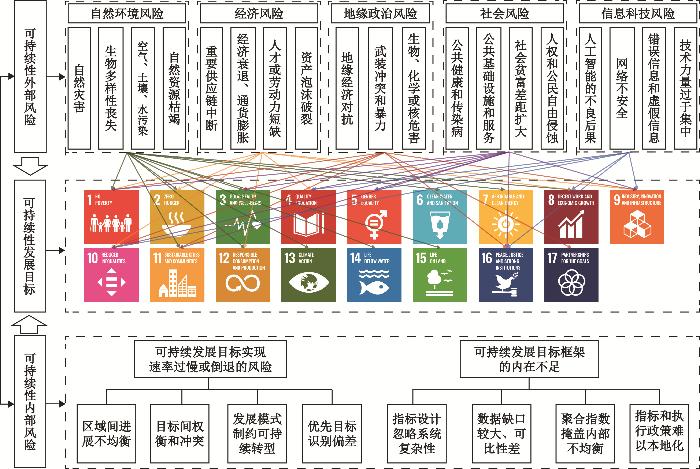
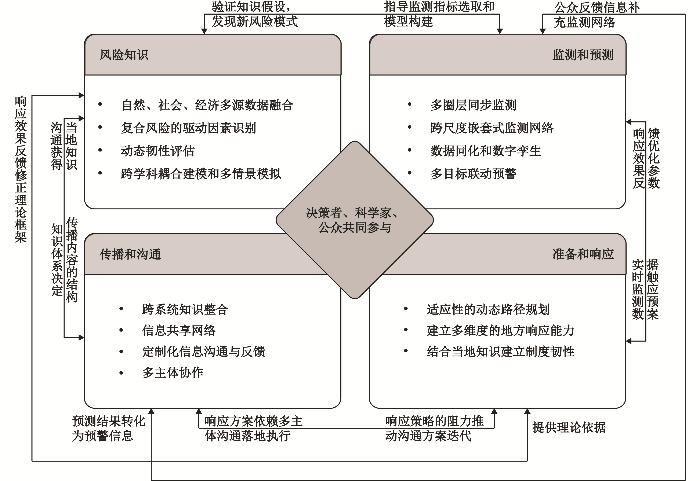
人地系统可持续性是当前全球发展研究的核心议题,可持续性风险的评估和治理是实现人地系统可持续发展的关键环节和重要保障。本文从风险概念的定义与分类、一般性风险的评估与预警、治理方法出发,初步探讨了人地系统可持续性风险的内涵;结合一般性风险评估方法,构建了人地系统可持续性风险的综合评估框架,包括评估可持续发展目标实现速率过慢或倒退的内部风险,以及应用多重方法评估不同扰动或冲击的外部风险;根据传统风险预警系统的4个关键过程,提出了包含动态分级的人地系统可持续性风险预警技术体系,并讨论了在系统思维下进行多方协同的风险治理模式。本文有助于深化人地系统可持续性风险的认识,为实现区域可持续发展与风险应对能力的协同提升提供理论支撑。
叶沁涵 , 张军泽 , 王帅 , 傅伯杰 . 人地系统可持续性风险评估与治理:概念、方法与挑战[J]. 地理科学, 2026 , 46(1) : 1 -15 . DOI: 10.13249/j.cnki.sgs.20250635
Sustainability of human-earth system has become a pivotal focus in global development research, with risk assessment and governance identified as key components and fundamental safeguards in the pursuit of sustainable development. This study begins by reviewing the conceptual definitions and classifications of risk, as well as general methods for risk assessment, early warning, and governance, to preliminarily explore the connotation of sustainability risk in human-earth system. Drawing on general risk assessment methodologies, this study constructs an integrated framework for evaluating sustainability risk in human-earth system, which incorporates both internal risks (e.g., stagnation or regression in meeting sustainable development goals) and external risks (e.g., disruptions from multiple stressors) through multi-method evaluations. Finally, based on the four key processes of traditional risk early warning systems, this study proposes a dynamic, graded technical system for early warning of sustainability risk in human-earth system and discusses a collaborative governance model underpinned by systems thinking. Overall, our study contributes to a deeper understanding of sustainability risk in human-earth system, offering theoretical support for improving governance capacities and promoting the co-evolution of regional sustainability and resilience.
表1 一般性的风险定义Table 1 General definition of risk |
| 定义视角 | 内容 | 参考文献 |
| 意大利语中的风险定义(17世纪) | 冒险、进入危险 | [26] |
| 风险的数学定义(18—19世纪) | 预期损失(潜在损失与发生概率的乘积) | [27] |
| 风险的中性定义(19世纪初) | 冒险中获得好或坏结果的可能性 | [27] |
| 风险的客观不确定性定义 | 风险是可以度量的不确定性 | [28] |
| 风险的社会建构定义 | 人类制造的、不可完全预测和控制的未来危害 | [29] |
| 复杂系统理论中的风险 | 风险源于系统内高度耦合与非线性交互形成的脆弱结构,一旦某个节点受到冲击,危害便可能沿着某种路径扩散并引发连锁性的级联破坏 | [14] |
| 国际标准化组织定义 | 不确定性对目标的影响 | [30] |
| 综合性视角的定义 | 风险由不良后果的潜在性、结果发生的不确定性及相关知识的局限性共同构成 | [31] |
表2 风险评估方法Table 2 Methods of risk assessment |
| 类别 | 方法 | 内容 | 优点 | 缺点 | 参考文献 | |
| 定量评估 | 蒙特卡洛模拟 | 随机抽样生成大量可能的参数组合,模拟多种潜在结果,计算概率分布 | 能处理复杂系统风险,提供概率分布 | 需要大量的计算资源,模拟时间较长 | [38] | |
| 贝叶斯网络 | 构建图形模式表示变量间条件概率依赖关系,进行推理 | 直观表示因果关系 | 模型构建复杂,需要专业知识 | [19] | ||
| 概率风险评估 | 系统性识别评估潜在事故序列及其后果 | 全面识别潜在风险源 | 在复杂系统中难以准确构建因果关系,过度依赖定量数据 | [28] | ||
| 脆弱性曲线 | 描述对象在面对扰动时,破坏程度与灾害强度之间的关系 | 可用于快速评估灾害 损失 | 难以捕捉复杂机制,依赖大量高质量数据 | [20] | ||
| 基于极值的统计 方法 | 通过泊松分布等统计方法,分析极端事件发生概率和强度 | 计算极端事件风险 | 统计模型包含的假设不一定成立,风险往往受潜在变量影响 | [39] | ||
| 地球界限 | 识别关键地球系统过程设定“安全界限”,监测人类活动是否越过可持续阈值 | 有助于制定全球尺度的环境政策与治理目标 | 阈值理论可能不适合一些关键系统过程 | [40] | ||
| 半定量评估 | 风险矩阵法 | 将事件概率和后果严重性通过矩阵组合 | 可视化性强,操作简单 | 分级模糊,难以处理复合风险交互 | [41] | |
| 聚合指数 | 灰色关联法 | 通过计算序列之间的相似度评估不同因素的关联程度 | 结合不同来源数据,适用于数据不足时 | 受到初始参数选择影响,计算量随因素数量增加 | [42] | |
| 主成分分析 | 减少数据维度,并尽可能保留原始变量信息 | 结合不同来源数据,擅长于高维数据的降维 | 无法捕捉数据的非线性关系,降维过程造成信息丢失 | [33] | ||
| 熵权法 | 通过指标数值分布的离散程度客观确定各指标权重 | 适用性广、对信息离散性敏感 | 对数据质量要求较高,忽略指标间关系 | [43] | ||
| 影响链分析法 | 构建暴露、敏感性与适应能力的因果路径图像化,再结合指标与权重计算脆弱性 | 允许将定量模型(如水文、气候数据)与本地专家打分灵活整合 | 涉及人为设定阈值与主观权重选择 | [44-45] | ||
| 韧性评估 | 包含韧性维度的风险指数(例如国家风险指数) | 通过预期年损失、社会脆弱性、社区韧性评估全国自然灾害风险 | 覆盖广泛、多维度集成 | 未能考虑人为造成的灾害 | [46] | |
| 社区韧性指标(例如社区韧性基线指标) | 通过社区韧性次级指标构建的聚合指标 | 可操作性强、适应社区 尺度 | 数据依赖性强,静态 评估 | [47] | ||
| 定性评估 | 德尔菲法 | 多轮匿名问卷收集专家意见,逐步反馈并调整 | 鼓励自由表达,可以整合专家意见 | 较为主观,依赖专家的个人看法 | [48] | |
| 专家访谈法 | 通过一对一深度访谈获取专家对特定问题的看法 | 能深入挖掘复杂问题的细节,获取非语言信息 | 易受主观偏见影响,时间成本高,难以量化 结果 | [49] | ||
| SWOT方法 | 从内部(优势、劣势)和外部(机会、威胁)分析风险和机遇 | 结构化分析内外部环境,逻辑清晰 | 可能过于简化,忽略细节,依赖主观判断 | [50] | ||
| 危险与可操作性分析(HAZOP) | 系统化分析工艺参数偏差及其潜在危害 | 系统性强,覆盖全面,适合工程系统安全性检查 | 对非技术领域适用性差,过程复杂,时间成本高 | [51] | ||
| 利益相关者工作坊 | 组织多方利益者共同识别风险并制定策略 | 增强多方沟通与协作,促进共识 | 易受强势利益相关者主导,协调难度大 | [52] | ||
表3 风险分级方法Table 3 Methods of risk classification |
| 分级方法 | 应用场景 | 类别举例 | 参考文献 |
| 基于具体概率的定量分析 | 通过贝叶斯网络等方法得到具体概率 | 例如基于0-1的概率将风险划分为极低、低、中等、高、极高 | [19] |
| 基于评估对象类型 | 基于风险评估对象的具体后果 | 例如自然灾害造成的经济损失 | [20] |
| 基于聚合指数 | 半定量的风险指数 韧性、脆弱性评估 | 在0-1的数值区间,通过固定值域法、K-Means聚类、百分位数等方式划分为3~5类 | [46-47] |
| 风险矩阵法 | 项目方案优劣比较 | 基于严重程度、概率等级划分为3×3或者5×5矩阵 | [41] |
| 基于后果的严重性和 影响范围 | 由专家对风险后果作出评估 | 通过专家意见定性评估后果的严重程度,划分不同风险等级,并将具体风险归入相应级别 | [48] |
| 基于系统变化的关键参数 | 地球界限理论 | 结合系统韧性、反馈强度与不确定性等因素,对不同界限所面临的风险状态进行科学分级 | [40] |
| [1] |
吴传钧. 论地理学的研究核心——人地关系地域系统[J]. 经济地理, 1991, 11(3): 1-6.
Wu Chuanjun. On the core of geographical research: The human-environment relationship regional system. Economic Geography, 1991, 11(3): 1-6.
|
| [2] |
刘彦随. 现代人地关系与人地系统科学[J]. 地理科学, 2020, 40(8): 1221-1234.
Liu Yansui. Modern human-earth relationship and human-earth system science. Scientia Geographica Sinica, 2020, 40(8): 1221-1234.
|
| [3] |
Liu J, Dietz T, Carpenter S R et al. Complexity of coupled human and natural systems[J]. Science, 2007, 317(5844): 1513-1516.
|
| [4] |
樊杰. 人地系统可持续过程、格局的前沿探索[J]. 地理学报, 2014, 69(8): 1060-1068.
Fan Jie. Frontier approach of the sustainable process and pattern of human-environment system. Acta Geographica Sinica, 2014, 69(8): 1060-1068.
|
| [5] |
Giang A, Edwards M R, Fletcher S M et al. Equity and modeling in sustainability science: Examples and opportunities throughout the process[J]. Proceedings of the National Academy of Sciences, 2024, 121(13): e2215688121.
|
| [6] |
Schwab K, Malleret T. The global risks report 2025[R]. Cologny/Geneva, Switzerland: Forum Publishing, 2022.
|
| [7] |
Keys P W, Galaz V, Dyer M et al. Anthropocene risk[J]. Nature Sustainability, 2019, 2(8): 667-673.
|
| [8] |
Wassénius E, Crona B I. Adapting risk assessments for a complex future[J]. One Earth, 2022, 5(1): 35-43.
|
| [9] |
Eckert N, Rusch G, Lyytimäki J et al. Sustainable development goals and risks: The Yin and the Yang of the paths towards sustainability[J]. Ambio, 2023, 52(4): 683-701.
|
| [10] |
Raikes J, Smith T F, Baldwin C et al. The influence of international agreements on disaster risk reduction[J]. International Journal of Disaster Risk Reduction, 2022, 76: 102999.
|
| [11] |
Union Nations. Transforming our world: The 2030 agenda for sustainable development[R]. New York: United Nations, 2015.
|
| [12] |
Union Nations. Sendai framework for disaster risk reduction 2015—2030[R]. Geneva, Switzerland: United Nations Disaster Risk Reduction, 2015.
|
| [13] |
Ye Q, Zhang J, Sun W et al. Synergizing sustainable development goals for disaster risk reduction: Lessons from China[J]. International Journal of Disaster Risk Reduction, 2025, 129: 105765.
|
| [14] |
Helbing D. Globally networked risks and how to respond[J]. Nature, 2013, 497(7447): 51-59.
|
| [15] |
孔雪松, 蒋献佳, 刘叶, 等. 国土空间开发强度与资源环境承载时空耦合及规划启示——以江苏省为例[J]. 中国土地科学, 2020, 34(6): 10-17.
Kong Xuesong, Jiang Xianjia, Liu Ye et al. Spatiotemporal coupling between territorial space development intensity and resource environmental carrying capacity and its planning implications: A case study of Jiangsu Province. China Land Science, 2020, 34(6): 10-17.
|
| [16] |
Pescarfroli G, Alexander D. A definition of cascading disasters and cascading effects: Going beyond the “toppling dominos” metaphor[C/OL]. GRF Davos Planet@Risk, 2015, 3(1): 58-67. https://discovery.ucl.ac.uk/id/eprint/1465510/
|
| [17] |
Hoffmann J, Bauer P, Sandu I et al. Destination earth—A digital twin in support of climate services[J]. Climate Services, 2023, 30: 100394.
|
| [18] |
中国信息通信研究院产业与规划研究所. 数字孪生城市优秀案例汇编(2021年)[R]. 北京: 中国信息通信研究院产业与规划研究所, 2021
Institute of Industry and Planning Research, China Academy of Information and Communications Technology. Collection of outstanding cases of digital twin cities (2021). Beijing: Institute of Industry and Planning Research, China Academy of Information and Communications Technology, 2021.
|
| [19] |
申建红, 刘树鹏. 模糊动态贝叶斯网络在深基坑施工风险演化分析中的应用[J]. 安全与环境学报, 2023, 23(12): 4211-4221
Shen Jianhong, Liu Shupeng. Application of fuzzy dynamic Bayesian network in risk evolution analysis of deep foundation pit construction. Journal of Safety and Environment, 2023, 23(12): 4211-4221.
|
| [20] |
秦鹏程, 周月华, 刘火胜, 等. 基于水动力模型的农作物暴雨洪涝灾害损失评估: 以江汉平原为例[J]. 中国农业气象, 2025, 46(3): 420-431.
Qin Pengcheng, Zhou Yuehua, Liu Huosheng et al. Flood loss assessment for crops based on hydrodynamic modeling: A case study in the Jianghan Plain. Chinese Journal of Agrometeorology, 2025, 46(3): 420-431.
|
| [21] |
陆大道. 关于地理学的“人-地系统”理论研究[J]. 地理研究, 2002, 21(2): 135-145.
Lu Dadao. Theoretical studies of man-land system as the core of geographical science. Geographical Research, 2002, 21(2): 135-145.
|
| [22] |
张宇冕,张军泽,王帅, 等. 人地系统可持续发展评估模型与情景分析研究进展与展望[J]. 地球科学进展, 2025, 40(3): 255-270.
Zhang Yumian, Zhang Junze, Wang Shuai et al. Progress and prospects of research on assessment models and scenario analysis for sustainable development of human-earth systems. Advances in Earth Science, 2025, 40(3): 255-270.
|
| [23] |
傅伯杰, 王帅, 沈彦俊, 等. 黄河流域人地系统耦合机理与优化调控[J]. 中国科学基金, 2021, 35(4): 504-509.
Fu Bojie, Wang Shuai, Shen Yanjun et al. Mechanisms of human-natural system coupling and optimization of the Yellow River Basin. Bulletin of National Natural Science Foundation of China, 2021, 35(4): 504-509.
|
| [24] |
傅伯杰, 刘焱序, 赵文武, 等. 青藏高原生态安全屏障体系优化[J]. 中国科学院院刊, 2024, 39(11): 1882-1893.
Fu Bojie, Liu Yanxu, Zhao Wenwu et al. Optimization for Qinghai-Xizang Plateau ecological security barrier system. Bulletin of the Chinese Academy of Sciences, 2024, 39(11): 1882-1893.
|
| [25] |
Burgess A, Alemanno A, Zinn J. Routledge handbook of risk studies[M]. London, New York: Routledge, Taylor & Francis Group, 2016.
|
| [26] |
Althaus C E. A disciplinary perspective on the epistemological status of risk[J]. Risk Analysis, 2005, 25(3): 567-588.
|
| [27] |
Aven T. The risk concept—Historical and recent development trends[J]. Reliability Engineering & System Safety, 2012, 99: 33-44.
|
| [28] |
Knight F H. Risk, uncertainty and profit[M]. Washington DC: BeardBooks, 1921.
|
| [29] |
Beck U. Risk society: Toward a new modernity[M]. London: Sage, 1992.
|
| [30] |
International Standards Organisation. ISO 31000: 2018-02 risk management—Guidelines[Z]. Geneva, Switzerland: International Organization for Standardization, 2018.
|
| [31] |
Aven T, Cox L A. National and global risk studies: How can the field of risk analysis contribute?[J]. Risk Analysis, 2016, 36(2): 186-190.
|
| [32] |
Aven T, Thekdi S. Risk science: An introduction[M]. 1st ed. London: Routledge, 2021.
|
| [33] |
李巍, 管潇潇, 邸强. 地缘政治风险冲击下的俄罗斯经济韧性——基于主成分分析的实证研究[J]. 俄罗斯研究, 2025(1): 54-84.
LiWei, Guan Xiaoxiao, Di Qiang. Economic resilience of Russia under the impact of geopolitical risks: An empirical study based on principal component analysis. Russian Studies, 2025(1): 54-84.
|
| [34] |
DuHadway S, Carnovale S, Hazen B. Understanding risk management for intentional supply chain disruptions: Risk detection, risk mitigation, and risk recovery[J]. Annals of Operations Research, 2019, 283(1-2): 179-198.
|
| [35] |
International Risk Governance Council. Risk governance—Towards an integrative approach[R]. Geneva, Switzerland: International Risk Governance Council, 2005.
|
| [36] |
United Nations Disaster Risk Reduction. Global assessment report on disaster risk reduction 2022: Our world at risk: Transforming governance for a resilience future[R]. Geneva: United Nations Disaster Risk Reduction, 2022.
|
| [37] |
Avin S, Wintle B C, Weitzdörfer J et al. Classifying global catastrophic risks[J]. Futures, 2018, 102: 20-26.
|
| [38] |
廖高明, 邓一荣, 刘丽丽, 等. 基于蒙特卡洛模拟的典型电镀场地氯代烃污染特征与风险评价[J]. 环境科学研究, 2025, 38(8): 1-16.
Liao Gaoming, Deng Yirong, Liu Lili et al. Pollution characteristics and health risk assessment of chlorinated hydrocarbons at a typical electroplating site based on Monte Carlo simulation. Research of Environmental Sciences, 2025, 38(8): 1-16.
|
| [39] |
袁亚玲, 王文鹏, 韩蕊, 等. 黄淮海平原降雨极值特征及致洪危险性分析[J]. 水电能源科学, 2025, 43(4): 30-34.
Yuan Yaling, Wang Wenpeng, Han Rui et al. Characterization of rainfall extremes and analysis of flooding risk in Huang-Huai-Hai Plain. Water Resources and Power, 2025, 43(4): 30-34.
|
| [40] |
Rockström J, Donges J F, Fetzer I et al. Planetary boundaries guide humanity’s future on earth[J]. Nature Reviews Earth & Environment, 2024, 5(11): 773-788.
|
| [41] |
Liu R, Liu H, Shi H et al. Occupational health and safety risk assessment: A systematic literature review of models, methods, and applications[J]. Safety Science, 2023, 160: 106050.
|
| [42] |
余满仓, 吕敦玉, 孟舒然, 等. 城市地面塌陷灾害风险评估研究[J]. 地质与勘探, 2024, 60(1): 63-75.
Yu Mancang, Lü Dunya, Meng Shuran et al. Research on risk assessment of urban ground collapse disaster. Geology and Exploration, 2024, 60(1): 63-75.
|
| [43] |
覃美满, 寇向宇, 鄢德波, 等. 基于组合赋权–TOPSIS的地下矿山安全风险评价研究[J]. 矿冶工程, 2025, 45(1): 35-40.
Qin Meiman, Kou Xiangyu, Yan Debo et al. Safety risk assessment for underground mines based on combined weighting-TOPSIS. Mining and Metallurgical Engineering, 2025, 45(1): 35-40.
|
| [44] |
Zebisch M, Schneiderbauer S, Fritzsche K et al. The vulnerability sourcebook and climate impact chains: A standardised framework for a climate vulnerability and risk assessment[J]. International Journal of Climate Change Strategies and Management, 2021, 13(1): 35-59.
|
| [45] |
GIZ, EURAC. Risk Supplement to the vulnerability sourcebook[R]. Bonn: GIZ, 2017.
|
| [46] |
Zuzak C, Sheehan A, Goodenough E et al. National risk index technical documentation[R]. Washington, DC: Federal Emergency Management Agency, 2023.
|
| [47] |
Camacho C, Bower P, Webb R T et al. Measurement of community resilience using the Baseline Resilience Indicator for Communities (BRIC) framework: A systematic review[J]. International Journal of Disaster Risk Reduction, 2023, 95: 103870.
|
| [48] |
Zommers Z, Marbaix P, Fischlin A et al. Burning embers: Towards more transparent and robust climate-change risk assessments[J]. Nature Reviews Earth & Environment, 2020, 1(10): 516-529.
|
| [49] |
陆殷昊, 黄晓燕, 盛华青, 等. 长三角区域公共卫生应急协同联防联控机制研究[J]. 中国卫生资源, 2023, 26(6): 646-652.
Lu Yinhao, Huang Xiaoyan, Sheng Huaqing et al. Research on the collaborative prevention and control mechanism for public health emergencies in the Yangtze River Delta region. Chinese Health Resources, 2023, 26(6): 646-652.
|
| [50] |
王立, 窦昊, 祝令锦, 等. 东部矿区煤炭资源深井开采可行性分析——以孔庄煤矿为例[J]. 中国煤炭, 2024, 50(8): 112-121.
Wang Li, Dou Hao, Zhu Lingjin et al. Feasibility analysis of deep well mining of coal resources in eastern mining area: A case study of Kongzhuang Coal Mine. China Coal, 2024, 50(8): 112-121.
|
| [51] |
尚凤琴, 陈明磊, 何丹, 等. HAZOP方法在含铝炸药混合工序风险评估中的应用[J]. 兵工自动化, 2025, 44(3): 77-79.
Shang Fengqin, Chen Minglei, He Dan et al. Application of HAZOP method in risk assessment of aluminized explosive mixing process. Ordnance Industry Automation, 2025, 44(3): 77-79.
|
| [52] |
Lyytimäki J, Eckert N, Lepenies R et al. Assuming accuracy, pretending influence? Risks of measuring, monitoring and reporting sustainable development goals[J]. Ambio, 2023, 52(4): 702-710.
|
| [53] |
Marin-Ferrer M, Vernaccini L, Poljansek K. INFORM Index for risk management: Concept and methodology, version 2017[R]. Luxembourg: Publications Office of the European Union, 2017.
|
| [54] |
Bündnis Entwicklung Hilft. World risk report 2024[R]. Berlin: Bündnis Entwicklung Hilft, 2024.
|
| [55] |
United Nations Office for Disaster Risk Reduction. Technical guidance on comprehensive risk assessment and planning in the context of climate change[M]. Geneva, Switzerland: United Nations Office for Disaster Risk Reduction, 2022.
|
| [56] |
DeWit A, Shaw R, Djalante R. An integrated approach to sustainable development, national resilience, and COVID-19 responses: The case of Japan[J]. International Journal of Disaster Risk Reduction, 2020, 51: 101808.
|
| [57] |
Schinko T, Mechler R, Hochrainer-Stigler S. A methodological framework to operationalize climate risk management: Managing sovereign climate-related extreme event risk in Austria[J]. Mitigation and Adaptation Strategies for Global Change, 2017, 22(7): 1063-1086.
|
| [58] |
Watkiss P, Betts R. Method[M]//The third UK climate change risk assessment technical report[R]. London: Prepared for the Climate Change Committee, 2021.
|
| [59] |
United Nations Children’s Fund, Global Water Partnership. WASH climate resilient development: Strategic framework[M]. New York, United State: United Nations Children’s Fundand Stockholm, Sweden: Global Water Partnership, 2014.
|
| [60] |
Sachs J D, Lafortune G, Fuller G et al. Financing sustainable development to 2030 and mid-century[M]//Sustainable development report 2025. Paris: Dublin University Press, 2025.
|
| [61] |
Zhang J, Sun W, Pradhan P et al. Nonlinear and weak interactions among sustainable development goals (SDGs) drive China’s SDGs growth rate below expectations[J]. Environmental Impact Assessment Review, 2025, 115: 107990.
|
| [62] |
Lyytimäki J, Salo H, Lepenies R et al. Risks of producing and using indicators of sustainable development goals[J]. Sustainable Development, 2020, 28(6): 1528-1538.
|
| [63] |
Aven T. On risk governance deficits[J]. Safety Science, 2011, 49(6): 912-919.
|
| [64] |
International Risk Governance Council. Risk Governance Deficits. An analysis and illustration of the most common deficits in risk governance[R]. Geneva, Switzerland: International Risk Governance Council, 2009.
|
| [65] |
Klinke A, Renn O. The coming of age of risk governance[J]. Risk Analysis, 2021, 41(3): 544-557.
|
| [66] |
World Meteorological Organization. Early warnings for all: Executive action plan 2023—2027[R]. Geneva, Switzerland: World Meteorological Organization, 2022.
|
| [67] |
Sandoval V, Voss M, Flörchinger V et al. Integrated disaster risk management (IDRM): Elements to advance its study and assessment[J]. International Journal of Disaster Risk Science, 2023, 14(3): 343-356.
|
| [68] |
Luo F, Liu Y, Peng J et al. Assessing urban landscape ecological risk through an adaptive cycle framework[J]. Landscape and Urban Planning, 2018, 180: 125-134.
|
| [69] |
Lee P. Benefits, limits, and risks of GPT-4 as an AI chatbot for medicine[J]. The New England Journal of Medicine, 2023: 1233-1239.
|
| [70] |
鲁钰雯, 翟国方. 人工智能技术在城市灾害风险管理中的应用与探索[J]. 国际城市规划, 2021, 36(2): 22-31+39.
Lu Yuwen, Zhai Guofang. Applications and exploration of artificial intelligence technology in urban disaster risk management. Urban Planning International, 2021, 36(2): 22-31+39.
|
| [71] |
Paulik R, Horspool N, Woods R et al. RiskScape: A flexible multi-hazard risk modelling engine[J]. Natural Hazards, 2023, 119(2): 1073-1090.
|
| [72] |
Zhang J, Skene K R, Wang S et al. Beyond borders: Assessing global sustainability through interconnected systems[J]. Sustainable Development, 2025, 33(2): 1909-1920.
|
| [73] |
周维, 李永洪. 共同生产视域下社区治理主体合作困境及其形成机理研究——基于M市P小区的案例分析[J]. 辽宁行政学院学报, 2023(5): 65-71.
Zhou Wei, Li Yonghong. The cooperation dilemma and its formation mechanism among community governance actors from the perspective of co-production: A case study of Community P in City M. Journal of Liaoning Administration College, 2023(5): 65-71.
|
| [74] |
任以胜, 陆林, 虞虎. 新安江流域行政区经济非均衡性的行政边界效应[J]. 经济地理, 2020, 40(9): 46-52.
Ren Yisheng, Lu Lin, Yu Hu. Administrative border effect of economy non-equilibrium in the Xin’an River Basin. Economic Geography, 2020, 40(9): 46-52.
|
| [75] |
Brown S, Budimir M, Sneddon A et al. Gender transformative early warning systems: Experiences from Nepal and Peru[R]. Rugby, UK: Practical Action, 2019.
|
| [76] |
Zhang J, Fu B. Eco-civilization: A complementary pathway rooted in theory and practice for global sustainable development[J]. Ambio, 2023, 52(12): 1882-1894.
|
| [77] |
Zhang J, Wang S, Liu Y et al. Does having more sustainable communities bring better sustainability?[J]. The Innovation, 2022, 3(4): 100267.
|
| [78] |
金自宁. 风险视角下的突发公共卫生事件预警制度[J]. 当代法学, 2020, 34(3): 64-74.
Jin Zining. The early warning system for public health emergencies from a risk perspective. Contemporary Law Review, 2020, 34(3): 64-74.
|
/
| 〈 |
|
〉 |