



数字经济赋能城市旅游业韧性的空间效应与作用机制
|
吴丹丹(1993—),女,安徽宿州人,博士,讲师,硕导,主要研究方向为数字经济与文旅产业发展。E-mail: wudan9303@163.com |
收稿日期: 2024-08-26
修回日期: 2025-03-20
网络出版日期: 2025-12-15
基金资助
教育部人文社会科学青年基金项目(24YJCZH335)
江苏高校哲学社会科学项目(2024SJYB1517)
版权
Spatial effects and mechanism of digital economy enabling tourism industry resilience in China
Received date: 2024-08-26
Revised date: 2025-03-20
Online published: 2025-12-15
Supported by
Humanities and Social Sciences Youth Fund(24YJCZH335)
University Philosophy and Social Science Fund of Jiangsu(2024SJYB1517)
Copyright
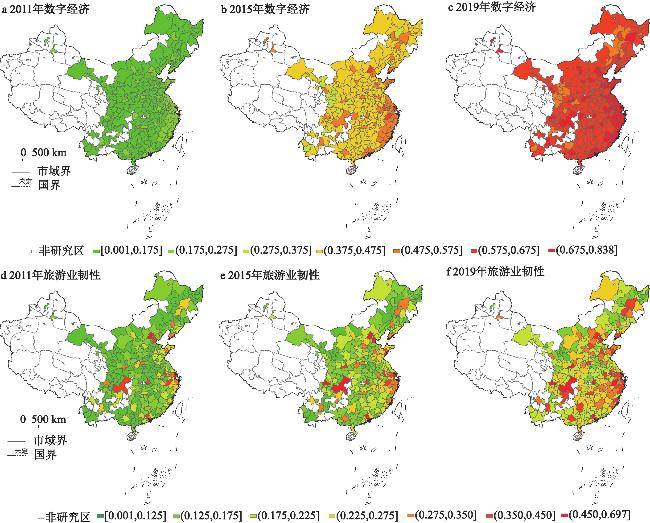
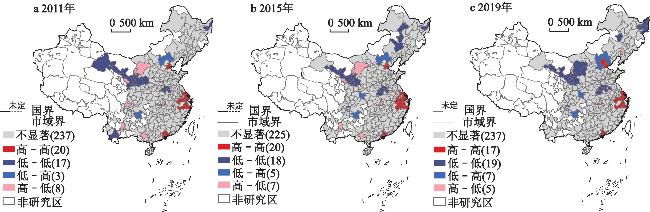
文章融合多源数据构建2011—2019年中国285个地级及以上城市的面板数据集,从时空维度对数字经济与旅游业韧性之间的演变特征进行分析,并运用面板空间杜宾模型对其影响过程、区域异质性和作用机制进行实证检验。结果表明:①数字经济和旅游业韧性整体呈上升状态;前者呈东高西低的“阶梯状”格局,后者呈现“中部塌陷”的空间演变格局。②数字经济和旅游业韧性均呈现较强的空间自相关性,两者之间具有正向空间关联特征。③数字经济对旅游业韧性具有显著的本地提升效应和空间溢出效应。直接效应影响程度为:东北>东部>西部>中部,高数字经济地区>低数字经济地区;同时,中部地区因“虹吸效应”突出而呈现负向溢出效应,高数字经济地区则呈现显著的正向溢出效应。④机制检验表明,旅游创新能力和旅游市场影响力是数字经济赋能旅游业韧性提升的两大路径。
吴丹丹 , 马仁锋 , 冯学钢 . 数字经济赋能城市旅游业韧性的空间效应与作用机制[J]. 地理科学, 2025 , 45(12) : 2586 -2599 . DOI: 10.13249/j.cnki.sgs.20240954
To effectively leverage the positive role of the digital economy in enhancing the resilience of the tourism system is crucial for ensuring the stable and long-term development of the tourism economy and achieving high-quality growth. To this end, the article integrates multi-source data to construct a panel dataset of 285 prefecture-level and above cities in China from 2011 to 2019, analyzes the evolutionary characteristics between the digital economy and tourism industry resilience from the spatial and temporal dimensions, and empirically examines the influence process, regional heterogeneity, and the mechanism of action by using the panel spatial Durbin model. The research finds that: 1) The digital economy and the resilience of the tourism industry as a whole are on an upward trend, and the development gap between cities has narrowed slightly in a converging trend. In terms of spatial distribution, the former shows a “ladder-like” pattern of high in the east and low in the west, while the latter shows a spatial evolution pattern of “central collapse”. 2) Digital economy and tourism industry resilience have strong spatial agglomeration characteristics, while the two show significant positive spatial correlation. 3) The digital economy not only enhances the resilience of the local tourism industry, but also acts on neighboring cities through spatial spillover effects. Heterogeneity analysis shows that the degree of influence of the direct effect is: Northeast > East > West > Central, and high digital economy region > low digital economy region; at the same time, the Central Region shows a negative spillover effect, while the high digital economy region shows a significant positive spillover effect. 4) Mechanism tests indicate that tourism innovation capability and tourism market influence are the two major paths through which the digital economy enables tourism industry resilience. The results of the study can provide a policy basis for effectively promoting the digital transformation of multiple tourism actors at the municipal scale, improving the ability to respond to crisis events, and promoting the sustainable and high-quality development of the tourism industry.
表1 旅游业韧性指标体系Table 1 Index system of tourism industry resilience |
| 一级指标 | 二级指标 | 三级指标 | 具体指标 |
| 抵御能力 | 旅游资源禀赋 | 旅游资源丰富度 | 3A级及以上等级景区赋权 |
| 旅游经济发展 | 旅游经济收入 | 旅游总收入/亿元 | |
| 旅游市场规模 | 旅游接待总人次/万人 | ||
| 地方经济支撑 | 经济发展水平 | 人均地区生产总值/元 | |
| 产业结构升级 | 第三产业与第二产业比值/% | ||
| 恢复能力 | 旅游基础设施 | 交通运输能力 | 城市道路面积密度/% |
| 住宿接待能力 | 星级酒店数/家 | ||
| 医疗保障能力 | 医疗卫生机构床位数/张 | ||
| 旅游文化环境 | 文化事业发展水平 | 文化事业费/万元 | |
| 旅游生态环境 | 绿化覆盖面积 | 人均公园绿地面积/(m2/人) | |
| 调整能力 | 旅游产业环境 | 旅游产业结构合理化 | 旅游总收入/第三产业比重/% |
| 旅游投资水平 | 旅游投资规模 | 旅游固定资产投资额/亿元 | |
| 旅游人力资源 | 旅游就业规模 | 旅游从业者数量/万人 | |
| 更新能力 | 旅游科研投入 | 旅游研发投入强度 | 旅游总收入与地方生产总值的比重乘以科技与教育财政支出/万元 |
| 旅游人才储备 | 旅游高学历人才 | 高等院校在校学生人数/万人 | |
| 旅游对外联系 | 外贸依存度 | 进出口总额占地区GDP比重/% |
表2 数字经济综合发展水平指标体系Table 2 Index system of digital economy development |
| 准则层 | 指标层 | 变量测度 |
| 数字基础设施 | 宽带互联网普及率 | 每万人互联网宽带接入用户数/户 |
| 移动互联网普及率 | 每万人移动电话年末用户数/户 | |
| 数字产业发展 | 信息产业发展 | 计算机服务和软件从业人员占比/% |
| 电信产业发展 | 人均电信业务收入/万元 | |
| 电商产业发展 | 人均邮政业务收入/万元 | |
| 数字创新潜力 | 数字高新技术渗透 | 城市数字高新技术应用渗透程度 |
| 数字创新要素支撑 | 科学技术支出/万元 | |
| 数字技术创新水平 | 数字经济相关专利数/个 | |
| 数字普惠金融 | 数字普惠金融覆盖广度 | 数字普惠金融覆盖广度指数 |
| 数字普惠金融使用深度 | 数字普惠金融使用深度指数 | |
| 数字普惠金融数字化程度 | 数字普惠金融数字化程度指数 |
表3 空间面板杜宾模型估计结果及检验Table 3 Estimation and model recognition verification of spatial panel Durbin model |
| 变量 | SPDM模型 | 变量 | SPDM模型 | |||||
| 时间固定效应 | 个体固定效应 | 双向固定效应 | 时间固定效应 | 个体固定效应 | 双向固定效应 | |||
| 注:***、**、*分别表示0.01、0.05、0.1显著性水平;括号内为标准误统计量;涉及W的公式为空间滞后项,ρ为空间滞后项系数;DE,数字经济的综合值;Rcty,城乡融合度;Fin,金融发展水平;Mark,市场化水平;FGov,政府规制;Res,旅游资源丰富度;Rdpo,旅游潜在市场;西藏、港澳台数据暂缺。 | ||||||||
| lnDE | | | | W×lnDE | − | − | | |
| ( | ( | ( | ( | ( | ( | |||
| lnRcty | − | | | W×lnRcty | | | | |
| ( | ( | ( | ( | ( | ( | |||
| lnFin | | | | W×lnFin | − | | | |
| ( | ( | ( | ( | ( | ( | |||
| lnMark | | | − | W×lnMark | | | | |
| ( | ( | ( | ( | ( | ( | |||
| lnFGov | − | | | W×lnFGov | − | − | − | |
| ( | ( | ( | ( | ( | ( | |||
| lnRes | | | | W×lnRes | − | − | − | |
| ( | ( | ( | ( | ( | ( | |||
| lnRdpo | | | | W×lnRdpo | − | | | |
| ( | ( | ( | ( | ( | ( | |||
| ρ | | | | sigma 2 _e | | | | |
| ( | ( | ( | ( | ( | ( | |||
| R 2 | | | | 样本数 | | | | |
表4 数字经济赋能旅游业韧性的直接效应、间接效应和总效应结果Table 4 Direct effects, indirect effects and total effects of digital economy enabling tourism industry resilience |
| lnDE | lnRcty | lnFin | lnMark | lnFGov | lnRes | lnRdpo | |
| 注:***、**、*分别表示0.01、0.05、0.1显著性水平;括号内数值为标准误统计量;变量含义见表3;西藏、港澳台数据暂缺。 | |||||||
| 直接效应 | | | | − | | | |
| ( | ( | ( | ( | ( | ( | ( | |
| 间接效应 | | | | | − | − | |
| ( | ( | ( | ( | ( | ( | ( | |
| 总效应 | | | | | − | | |
| ( | ( | ( | ( | ( | ( | ( | |
表5 数字经济赋能旅游业韧性的稳健性检验结果Table 5 Results of robustness test of digital economy enabling tourism industry resilience |
| 变量 | 滞后1期估计 | 替换核心解释变量 | 替换空间矩阵 | |
| 移动互联网 | 数字金融 | |||
| 注:***、**分别表示0.01、0.05显著性水平;括号内数值为标准误统计量;西藏、港澳台数据暂缺。 | ||||
| 直接效应 | | | | |
| ( | ( | ( | ( | |
| 间接效应 | | | | |
| ( | ( | ( | ( | |
| 总效应 | | | | |
| ( | ( | ( | ( | |
| 控制变量 | 是 | 是 | 是 | 是 |
| 个体固定 | 是 | 是 | 是 | 是 |
| 时间固定 | 是 | 是 | 是 | 是 |
| log L | | | | |
| R 2 | | | | |
| 样本数 | | | | |
表6 数字经济赋能旅游业韧性的空间异质性计量结果Table 6 Spatial heterogeneity test of digital economy enabling tourism industry resilience |
| 变量 | 东部 | 中部 | 西部 | 东北 | 高数字经济发展地区 | 低数字经济发展地区 |
| 注:***、**分别表示0.01、0.05显著性水平;括号内数值为标准误统计量;西藏、港澳台数据暂缺。 | ||||||
| 直接效应 | | | | | | |
| ( | ( | ( | ( | ( | ( | |
| 间接效应 | | − | | | | |
| ( | ( | ( | ( | ( | ( | |
| 总效应 | | − | | | | |
| ( | ( | ( | ( | ( | ( | |
| 控制变量 | 是 | 是 | 是 | 是 | 是 | 是 |
| 个体固定 | 是 | 是 | 是 | 是 | 是 | 是 |
| 时间固定 | 是 | 是 | 是 | 是 | 是 | 是 |
| logL | | | | | | |
| R 2 | | | | | | |
| 样本数 | 927 | 576 | 756 | 306 | | |
表7 数字经济赋能旅游业韧性的中介效应检验结果Table 7 Results of mediating effect test of digital economy enabling tourism industry resilience |
| lnTIA | lnTMR | lnTMI | lnTMR | ||
| 注:***、**分别表示0.01、0.05显著性水平;括号内数值为标准误统计量;DE为数字经济的综合值,TIA为旅游创新能力,TMI为旅游市场影响力;西藏、港澳台数据暂缺。 | |||||
| 直接效应 | lnDE | | | | |
| lnTIA | | ||||
| lnTMI | | ||||
| 间接效应 | lnDE | − | | | |
| lnTIA | | ||||
| lnTMI | | ||||
| 总效应 | lnDE | | | | |
| lnTIA | | ||||
| lnTMI | | ||||
| 控制变量 | 是 | 是 | 是 | 是 | |
| 个体控制 | 是 | 是 | 是 | 是 | |
| 时间控制 | 是 | 是 | 是 | 是 | |
| R 2 | | | | | |
| [1] |
Tai M W, Jing B X, Wong S M. Crisis management research (1985―2020) in the hospitality and tourism industry: A review and research agenda[J]. Tourism Management, 2021, 85: 104307
|
| [2] |
Orchiston C. Tourism business preparedness, resilience and disaster planning in a region of high seismic risk: The case of the Southern Alps, New Zealand[J]. Current Issues in Tourism, 2013, 16(5): 477-494.
|
| [3] |
魏敏, 魏海湘, 黄海玉. 疫情下旅游经济韧性与高质量发展[J]. 旅游学刊, 2022, 37(9): 5-7.
Wei Min, Wei Haixiang, Huang Haiyu. Resilience and high-quality development of tourism economy under the epidemic. Tourism Tribune, 2022, 37(9): 5-7.
|
| [4] |
孙业红, 宋雨新. 从韧性看可持续旅游发展[J]. 旅游学刊, 2021, 36(5): 8-10.
Sun Yehong, Song Yuxin. Sustainable tourism development from the perspective of resilience. Tourism Tribune, 2021, 36(5): 8-10.
|
| [5] |
赵磊. 数字经济赋能旅游业高质量发展的内涵与维度[J]. 旅游学刊, 2022, 37(4): 5-6.
Zhao Lei. The connotation and dimension of digital economy enabling the high-quality development of tourism industry. Tourism Tribune, 2022, 37(4): 5-6.
|
| [6] |
吴丹丹, 冯学钢, 马仁锋, 等. 数字经济发展对旅游业全要素生产率的非线性效应[J]. 旅游学刊, 2023, 38(2): 47-65.
Wu Dandan, Feng Xuegang, Ma Renfeng et al. Nonlinear effects of digital economy development on tourism total factor productivity. Tourism Tribune, 2023, 38(2): 47-65.
|
| [7] |
Martin R, Sunley P, Tyler P. Local growth evolutions: Recession, resilience and recovery[J]. Cambridge Journal of Regions, Economy and Society, 2015, 8(2): 141-148.
|
| [8] |
李连刚, 张平宇, 谭俊涛, 等. 韧性概念演变与区域经济韧性研究进展[J]. 人文地理, 2019, 34(2): 1-7,151
Li Liangang, Zhang Pingyu, Tan Juntao et al. Review on the evolution of resilience concept and research progress on regional economic resilience. Human Geography, 2019, 34(2): 1-7,151.
|
| [9] |
Martin R, Gardiner B. The resilience of cities to economic shocks: A tale of four recessions (and the challenge of Brexit)[J]. Papers in Regional Science, 2019, 98(4): 1801-1832.
|
| [10] |
罗冬晖. 旅游产业链供应链韧性衡量和提升路径[J]. 旅游研究, 2023, 15(3): 16-27.
Luo Donghui. Resilience evaluation and improving paths of tourism industry chain and supply chain. Tourism Research, 2023, 15(3): 16-27.
|
| [11] |
高钰桔, 毛志睿, 陈笑葵, 等. 元阳哈尼梯田遗产乡村聚落韧性测度及优化策略——以多依树村为例[J]. 经济地理, 2023, 43(8): 220-228.
Gao Yujie, Mao Zhirui, Chen Xiaokui et al. Resilience measurement of rural settlement in Hani terrace field heritage in Yuanyang and its optimization strategy: A case study of Duoyishu Village. Economic Geography, 2023, 43(8): 220-228.
|
| [12] |
杨秀平, 贾云婷, 翁钢民, 等. 城市旅游环境系统韧性的系统动力学研究——以兰州市为例[J]. 旅游科学, 2020, 34(2): 23-40.
Yang Xiuping, Jia Yunting, Weng Gangmin et al. A study on system dynamics of the resilience of urban tourism environment system: A case study of Lanzhou City. Tourism Science, 2020, 34(2): 23-40.
|
| [13] |
纪颖超, 殷杰. “一带一路”沿线国家旅游合作联系网络结构韧性: 综合评估与动因甄别[J]. 人文地理, 2023, 38(4): 176-185.
Ji Yingchao, Yin Jie. Structure resilience of tourism cooperation linkage network of countries along The Belt and Road initiative: Comprehensive evaluation and motivation identification. Human Geography, 2023, 38(4): 176-185.
|
| [14] |
方叶林, 吴燕妮, 黄震方, 等. 中国大陆入境旅游产业演化与韧性研究[J]. 经济地理, 2023, 43(1): 188-196.
Fang Yelin, Wu Yanni, Huang Zhenfang et al. Evolution of inbound tourism industry and its resilience in Chinese mainland. Economic Geography, 2023, 43(1): 188-196.
|
| [15] |
麻学锋, 谭佳欣. 湘西地区交通可达性对旅游环境系统韧性的影响及空间溢出效应[J]. 地理科学, 2023, 43(2): 291-300.
Ma Xuefeng, Tan Jiaxin. Impact of traffic accessibility on the resilience of tourism environment system and spatial spillover effects in Xiangxi Area. Scientia Geographica Sinica, 2023, 43(2): 291-300.
|
| [16] |
王倩, 赵林, 于伟, 等. 中国旅游经济系统韧性的时空变化特征与影响因素分析[J]. 地理与地理信息科学, 2020, 36(6): 113-118.
Wang Qian, Zhao Lin, Yu Wei et al. Spatial-temporal evolution characteristics and influencing factors of resilience of tourism economic system in China. Geography and Geo-Information Science, 2020, 36(6): 113-118.
|
| [17] |
Lee Y, Kim J, Jang S et al. Tourism and economic resilience[J]. Annals of Tourism Research, 2021, 87: 103024.
|
| [18] |
Orchiston C, Prayag G, Brown C. Organizational resilience in the tourism sector[J]. Annals of Tourism Research, 2016, 56(1): 145-148.
|
| [19] |
杨勇. 互联网促进旅游业提质增效了吗?——基于我国省级面板数据的实证分析[J]. 旅游学刊, 2020, 35(1): 32-46.
Yang Yong. Does internent improve quality and efficiency of China tourism industry? Empirical test based on Chinese provincial data from 2004 to 2014. Tourism Tribune, 2020, 35(1): 32-46.
|
| [20] |
徐圆, 张林玲. 中国城市的经济韧性及由来: 产业结构多样化视角[J]. 财贸经济, 2019, 40(7): 110-126.
Xu Yuan, Zhang Linling. The economic resilience of Chinese cities and its origin: From the perspective of diversification of industrial structure. Finance & Trade Economics, 2019, 40(7): 110-126.
|
| [21] |
何建民, 姜文琼. 疫情下旅游企业韧性与高质量发展的基本理论及决策和管理思路[J]. 旅游学刊, 2022, 37(9): 8-10.
He Jianmin, Jiang Wenqiong. Basic theory, decision and management ideas of resilience and high quality development of tourism enterprises under the epidemic. Tourism Tribune, 2022, 37(9): 8-10.
|
| [22] |
叶欣梁, 何一, 孙瑞红. 脆弱与反脆弱: 旅游业韧性研究进展与述评[J]. 旅游学刊, 2023, 38(10): 31-48.
Ye Xinliang, He Yi, Sun Ruihong. Vulnerability and anti-vulnerability: Research progress and review of tourism resilience. Tourism Tribune, 2023, 38(10): 31-48.
|
| [23] |
徐圆, 邓胡艳. 多样化、创新能力与城市经济韧性[J]. 经济学动态, 2020(8): 88-104.
Xu Yuan, Deng Huyan. Diversification, innovation capability and urban economic resilience. Economic Perspectives, 2020(8): 88-104.
|
| [24] |
黄鑫楠, 孙斌栋, 张婷麟. 地理距离对互联网社会中网络信息传播的影响[J]. 地理学报, 2020, 75(4): 722-735.
Huang Xinnan, Sun Bindong, Zhang Tinglin. The influence of geographical distance on the dissemination of internet information in the internet society. Acta Geographica Sinica, 2020, 75(4): 722-735.
|
| [25] |
江小涓, 靳景. 数字技术提升经济效率: 服务分工、产业协同和数实孪生[J]. 管理世界, 2022, 38(12): 9-26.
Jiang Xiaojuan, Jin Jing. Digital technology promotes economic efficiency: Labor division of service, industrial synergy and digital-real twins. Management World, 2022, 38(12): 9-26.
|
| [26] |
曾国军, 林家惠. 疫情背景下酒店业韧性建设与高质量发展[J]. 旅游学刊, 2022, 37(9): 10-12.
Zeng Guojun, Lin Jiahui. Resilience construction and high quality development of hotel industry under the background of epidemic. Tourism Tribune, 2022, 37(9): 10-12.
|
| [27] |
Buhalis D. Marketing the competitive destination of the future[J]. Tourism Management, 2000, 21: 97-116.
|
| [28] |
Lesage J, Pace R K. Introduction to spatial econometrics[M]. New York: CRC Press, 2009.
|
| [29] |
吴丹丹, 马仁锋, 郝晨, 等. 数字经济对市域旅游业高质量发展水平的空间效应及机制[J]. 经济地理, 2023, 43(4): 229-240.
Wu Dandan, Ma Renfeng, Hao Chen et al. Spatial effect and impact mechanism of digital economy on tourism industry high-quality development in Chinese cities. Economic Geography, 2023, 43(4): 229-240.
|
| [30] |
Martin R, Sunley P. On the notion of regional economic resilience: Conceptualization and explanation[J]. Journal of Economic Geography, 2015, 15(1): 1-42.
|
| [31] |
Simmie J, Martin R. The economic resilience of regions: Towards an evolutionary approach[J]. Cambridge Journal of Regions, Economy and Society, 2010, 3(1): 27-43.
|
| [32] |
Martin R, Sunley P, Gardiner B et al. How regions react to recessions: Resilience and the role of economic structure[J]. Regional Studies, 2016, 50(4): 561-585.
|
| [33] |
Walker B, Holling C S, Carperter S R et al. Resilience, adaptability and transformability in social-ecological systems[J]. Ecology and Society, 2004, 9(2): 5.
|
| [34] |
刘英基, 邹秉坤, 韩元军, 等. 数字经济赋能文旅融合高质量发展——机理、渠道与经验证据[J]. 旅游学刊, 2023, 38(5): 28-41.
Liu Yingji, Zou Bingkun, Han Yuanjun et al. The digital economy enables high-quality cultural tourism integration: Mechanisms, channels, and empirical evidence. Tourism Tribune, 2023, 38(5): 28-41.
|
| [35] |
Elhorst J P. Matlab software for spatial panels[J]. International Regional Science Review, 2014, 68(2): 401-420.
|
/
| 〈 |
|
〉 |