



珠三角城市群新能源汽车企业的时空格局及影响因素
|
李珊(1987—),女,湖北天门人,博士,副教授,硕导,研究领域为经济地理与城市地理。E-mail: lishan@gzhu.edu.cn |
收稿日期: 2024-08-21
修回日期: 2025-03-04
网络出版日期: 2025-12-15
基金资助
国家自然科学基金项目(42301182)
国家自然科学基金项目(42301203)
广东省基础与应用基础研究基金项目(2022A1515110331)
广东省哲学社会科学规划项目(GD23XGL076)
广东省科学院发展专项资金项目(2023GDASZH-2023010101)
版权
Spatio-temporal patterns and influencing factors of new energy vehicle enterprises in the Pearl River Delta Urban Agglomeration, China
Received date: 2024-08-21
Revised date: 2025-03-04
Online published: 2025-12-15
Supported by
National Natural Science Foundation of China(42301182)
National Natural Science Foundation of China(42301203)
Guangdong Basic and Applied Basic Research Foundation(2022A1515110331)
Guangdong Philosophy and Social Science Foundation(GD23XGL076)
GDAS' Project of Science and Technology Development(2023GDASZH-2023010101)
Copyright
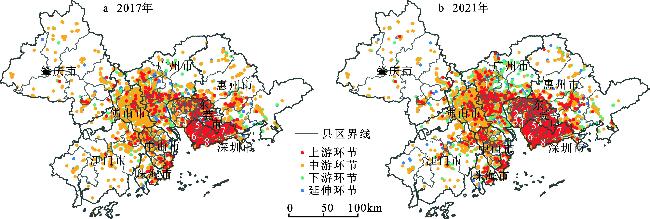
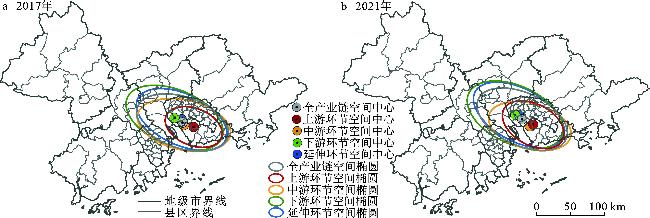
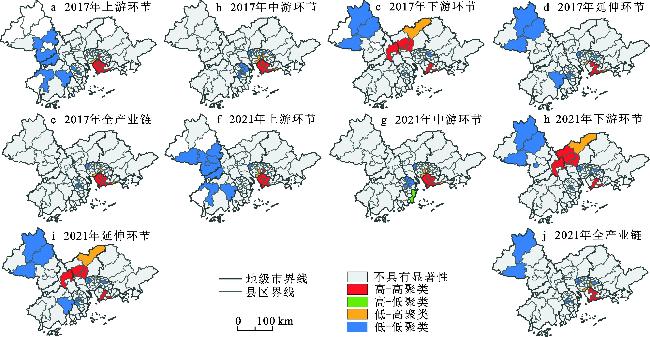
刻画2017—2021年珠三角城市群新能源汽车企业的时空格局,聚焦政府与市场双重动力揭示时空格局的影响因素,探究影响因素随时间、空间和产业链环节的变化。研究表明:①珠三角新能源汽车企业由以深圳为“单核心”向以深圳与广州为“双核心”的空间格局演进,在广佛与深莞交界区域集聚程度最高,上游“原材料”企业由深圳向广州、惠州、珠海等城市扩散,中游“核心零部件”企业一直以深圳集聚为主,下游“整车制造”企业集聚于深圳与广州并逐步向周边地区扩散,延伸“配套及后市场”企业由以深圳和广州为双核心向多热点区演变。②政府与市场共同影响珠三角新能源汽车企业时空格局,且影响程度随发展阶段、地理区位、企业所处产业链环节而变化。发展阶段上,随着时间推移,企业空间布局的影响因素由政府与市场双重动力,转向以市场力量为主导;地理区位上,珠三角东岸地区受市场动力影响更深,西岸地区则受政府作用相对更显著;产业链上,上游与中游环节主要受到市场作用,下游与延伸环节受到政府与市场力量共同影响。
李珊 , 李宇晖 , 许吉黎 . 珠三角城市群新能源汽车企业的时空格局及影响因素[J]. 地理科学, 2025 , 45(12) : 2625 -2636 . DOI: 10.13249/j.cnki.sgs.20240924
Against the backdrop of climate change, energy transition, and high-quality development, new energy vehicles (NEVs) have become an increasingly vital component of strategic emerging industries. Specifying the spatiotemporal patterns of NEV enterprises within urban agglomerations and identifying the influencing factors are basic scientific issues for facilitating the development of NEV industrial development. This paper depicts the spatiotemporal patterns of NEV enterprises in the Pearl River Delta (PRD) during 2017—2021 and examines the influencing factors through the lens of the dual dynamics of state and market. The findings indicate that: 1) The spatial pattern of NEV enterprises in the PRD has evolved from a “single-core” centered in Shenzhen to a “dual-core” centered in Shenzhen and Guangzhou, with the highest concentration in the boundary areas of Guangzhou-Foshan and Shenzhen-Dongguan. Upstream “raw material” enterprises have dispersed from Shenzhen to Guangzhou, Huizhou, and Zhuhai; midstream “core component” enterprises remain largely concentrated in Shenzhen; downstream “vehicle manufacturing” enterprises are concentrated in Shenzhen and Guangzhou and begin to spread to surrounding areas, with “supporting and aftermarket” enterprises evolving from a dual-core pattern in Shenzhen and Guangzhou to multiple hotspots. 2) Both state and market dynamics influence the spatiotemporal pattern of NEV enterprises in the PRD, with the effects on the distribution of NEV enterprises in the PRD varying across development stages, geographic locations and industry chain segments. In terms of development stages, the influencing factors of enterprise spatial layout shift from the dual drive of government and market to market forces dominance. With respect to geographic locations, the eastern PRD is more sensitive to market dynamics, while the western PRD sees a relatively more prominent role of the government. As for the industrial chain, market forces mainly affect the upstream and midstream, while the downstream and extended segments are under the dual influence of both state and market forces.
表1 珠三角新能源汽车数据库各环节的企业数量Table 1 Number of enterprises in each segment of new energy vehicle database in the PRD |
| 年份 | 全产业链/个 | 上游环节/个 | 中游环节/个 | 下游环节/个 | 延伸环节/个 |
| 2017 | | | | | |
| 2021 | | | | | |
表2 政府与市场影响下珠三角新能源汽车产业空间格局的指标体系Table 2 Indicator system of spatial distribution of NEV enterprises in the PRD under influences from the state and market |
| 一级指标 | 二级指标 | 指标解释 |
| 政府力量(5个) | 一般公共预算支出(GP) | 指国家财政将筹集起来的资金进行分配使用,以满足经济建设和各项事业的需要/万元 |
| 国有企业数量(GY) | 政府对经济的控制水平/个 | |
| 公交车站数量(BU) | 政府对公共服务设施的支撑/个 | |
| 高速公路密度(RN) | 高速公路反映政府对交通基础设施的投入/(km/km2) | |
| 开发区数量(ED) | 国家级、省级开发区数量/个 | |
| 市场力量(4个) | 民营企业数量(MY) | 市场经济的活力和创造力,市场对经济的控制水平/个 |
| 出口额(EX) | 实际出口中国国境的货物的价值总和,反映对外经济活力/万元 | |
| 社会消费品零售额(SA) | 各类批发零售业、住宿餐饮业和其他行业企业,售予城乡居民用于生活消费和社会集团用于公共消费的商品总金额/万元 | |
| 金融证券机构数量(JR) | 证券公司、保险公司、金融保险服务机构的数量/家 | |
| 控制变量(4个) | 人均生产总值(PG) | 地区所生产按人口平均计算的社会最终产品和劳务的总值/(万元/人) |
| 研发支出占比(RD) | 研究与试验发展经费支出占地区生产总值的比例/% | |
| 坡度(SL) | 地表的陡缓程度/(°) | |
| 高程(DE) | 地点相对于黄海平均海面的高度/m |
表3 2017年、2021年珠三角新能源汽车企业时空格局的影响因素及其时空分异Table 3 Heterogeneous influential factors of spatio-temporal distribution of NEV enterprises in the PRD in 2017 and 2021 |
| 变量 | 2017年(全产业) | 2021年(全产业) | ||||||
| 珠三角 | 东岸 | 西岸 | 珠三角 | 东岸 | 西岸 | |||
| 注:*、**和***分别表示5%,1%和0.1%的显著水平;括号内数值为稳健标准误差;变量含义见表2;上述线性回归模型均通过了VIF检验。 | ||||||||
| 政府力量 | GP | 0.123 | 0.223 | −0.061 | 0.160 | −0.015 | −0.209 | |
| (0.112) | (0.153) | (0.042) | (0.159) | (0.156) | (0.192) | |||
| GY | −0.385*** | −0.632*** | 0.035 | −0.163 | 0.086 | −0.045 | ||
| (0.144) | (0.084) | (0.044) | (0.155) | (0.313) | (0.087) | |||
| BU | 0.027 | −0.047 | 0.122*** | 0.119 | 0.196 | 0.160 | ||
| (0.067) | (0.063) | (0.022) | (0.119) | (0.147) | (0.176) | |||
| RN | 0.129* | 0.079 | −0.019 | 0.053 | 0.004 | −0.010 | ||
| (0.075) | (0.065) | (0.026) | (0.057) | (0.058) | (0.108) | |||
| ED | 0.059 | 0.067 | −0.030 | −0.122 | 0.012 | 0.194 | ||
| (0.057) | (0.045) | (0.024) | (0.126) | (0.068) | (0.170) | |||
| 市场力量 | MY | 0.786*** | 1.021*** | −0.140 | 0.420* | 1.339*** | 0.100 | |
| (0.216) | (0.174) | (0.088) | (0.215) | (0.196) | (0.155) | |||
| EX | 0.033 | −0.120 | 0.151*** | 0.258 | −0.058 | 0.099 | ||
| (0.112) | (0.077) | (0.026) | (0.185) | (0.151) | (0.163) | |||
| SA | −0.227** | −0.678* | 0.119*** | 0.001 | −0.241 | 0.089 | ||
| (0.087) | (0.338) | (0.039) | (0.057) | (0.364) | (0.068) | |||
| JR | 0.033 | 0.428** | 0.123* | −0.098 | −0.372** | 0.074 | ||
| (0.126) | (0.206) | (0.071) | (0.134) | (0.141) | (0.169) | |||
| 控制变量 | PG | −0.053 | −0.011 | −0.014 | 0.039 | 0.107* | −0.097 | |
| (0.061) | (0.056) | (0.017) | (0.056) | (0.053) | (0.074) | |||
| RD | 0.064 | 0.075 | 0.001 | 0.015 | −0.776 | 0.080 | ||
| (0.041) | (0.048) | (0.019) | (0.111) | (1.061) | (0.054) | |||
| SL | −0.036 | −0.136* | 0.288 | 0.195 | 0.134 | 0.316 | ||
| (0.099) | (0.067) | (0.194) | (0.158) | (0.204) | (0.475) | |||
| DE | 0.045* | 0.079** | 0.009 | 0.081 | 0.038 | −0.095 | ||
| (0.026) | (0.034) | (0.010) | (0.052) | (0.041) | (0.063) | |||
| 常数 | −0.005 | 0.083 | −0.283 | −0.251 | −0.176 | −0.267 | ||
| (0.098) | (0.068) | (0.183) | (0.172) | (0.197) | (0.428) | |||
| 样本量 | 78 | 44 | 34 | 73 | 39 | 34 | ||
| R 2 | 0.883 | 0.978 | 0.954 | 0.746 | 0.972 | 0.728 | ||
表4 珠三角新能源汽车企业时空格局的影响因素及其产业链分异Table 4 Industrial-chain-based influential factors of spatio-temporal distribution of NEV enterprises in the PRD |
| 变量 | 模型1 | 模型2 | 模型3 | 模型4 | |
| 上游 | 中游 | 下游 | 延伸 | ||
| 注:*、**分别表示5%,1%的显著水平;括号内数值为稳健标准误差;变量含义见表2;上述线性回归模型均通过了VIF检验;样本量151个。 | |||||
| 政府力量 | GP | 0.161(0.109) | 0.169(0.110) | −0.021(0.159) | 0.028(0.136) |
| GY | −0.214**(0.104) | −0.224**(0.105) | −0.122(0.128) | −0.213**(0.098) | |
| BU | −0.063(0.067) | −0.006(0.062) | 0.173**(0.084) | 0.053(0.073) | |
| RN | −0.001(0.040) | −0.001(0.040) | 0.130**(0.056) | 0.080*(0.044) | |
| ED | −0.079(0.054) | −0.092*(0.053) | 0.127(0.100) | 0.071(0.076) | |
| 市场力量 | MY | 0.362*(0.215) | 0.308(0.203) | 0.663**(0.280) | 0.712**(0.288) |
| EX | 0.259**(0.120) | 0.277**(0.116) | 0.018(0.128) | 0.075(0.123) | |
| SA | −0.103(0.076) | −0.110(0.082) | 0.145(0.141) | 0.107(0.126) | |
| JR | −0.024(0.099) | 0.012(0.100) | −0.149(0.139) | −0.062(0.114) | |
| 控制变量 | PG | −0.032(0.045) | −0.027(0.044) | −0.004(0.081 | −0.018(0.066 |
| RD | −0.054(0.098) | −0.050(0.097) | 0.100(0.138) | 0.041(0.132) | |
| SL | 0.016(0.093) | −0.012(0.098) | 0.224(0.151) | 0.138(0.119) | |
| DE | 0.035(0.024) | 0.043*(0.025) | 0.010(0.024) | 0.022(0.021) | |
| 常数 | −0.023(0.096) | −0.003(0.100) | −0.256*(0.148) | −0.159(0.120) | |
| R 2 | 0.668 | 0.677 | 0.674 | 0.727 | |
| [1] |
国务院. 国务院办公厅关于印发新能源汽车产业发展规划(2021—2035年)的通知[R]. 2020
State Council. Notice of the General Office of the State Council on issuing the development plan for the new energy automobile industry (2021—2035). 2020.
|
| [2] |
国务院办公厅, 国家统计局. 战略性新兴产业分类(2018)[S]. 中华人民共和国国务院公报, 2019(5): 41
General Office of State Council, Nationgal Bureau of Statistics. Classification of strategic emerging industries (2018). Communique of the State Council of the People’s Republic of China, 2019(5): 41.
|
| [3] |
袁博. 碳中和目标下粤港澳大湾区新能源汽车产业发展研究[J]. 区域经济评论, 2022(4): 145-151.
Yuan Bo. Research on the development of Guangdong-Hong Kong-Macao Greater Bay Area’s new energy vehicle industry under the goal of carbon neutrality. Regional Economic Review, 2022(4): 145-151.
|
| [4] |
许吉黎, 叶玉瑶, 罗子昕, 等. 新发展格局下粤港澳大湾区高科技产业多尺度空间联系与政策启示[J]. 地理科学进展, 2022, 41(9): 1592-1605.
Xu Jili, Ye Yuyao, Luo Zixin et al. Multi-scalar spatial linkages initiated by high-tech industries in the Guangdong-Hong Kong-Macao Greater Bay Area and policy implications against the backdrop of China’s new development paradigm. Progress in Geography, 2022, 41(9): 1592-1605.
|
| [5] |
乐为, 谢隽阳, 刘启巍, 等. 新能源汽车产业政策关联及其耦合效应研究[J]. 管理学刊, 2022, 35(5): 65-81.
Le Wei, Xie Junyang, Liu Qiwei et al. Research on the relevance and coupling effect of new energy vehicle industrial policy. Journal of Management, 2022, 35(5): 65-81.
|
| [6] |
Jiang Z S, Xu C H. Policy incentives, government subsidies, and technological innovation in new energy vehicle enterprises: Evidence from China[J]. Energy Policy, 2023, 177: 113527
|
| [7] |
周燕, 潘遥. 财政补贴与税收减免——交易费用视角下的新能源汽车产业政策分析[J]. 管理世界, 2019, 35(10): 133-149.
Zhou Yan, Pan Yao. Subsidization versus tax reduction: The policy choice for new energy vehicles under the constraints of transaction costs. Journal of Management World, 2019, 35(10): 133-149.
|
| [8] |
陈肖飞, 郭建峰, 胡志强, 等. 汽车产业集群网络演化与驱动机制研究——以奇瑞汽车集群为例[J]. 地理科学, 2019, 39(3): 467-476.
Chen Xiaofei, Guo Jianfeng, Hu Zhiqiang et al. The evolution process and driving mechanism of automobile industrial cluster network: Taking Chery Cluster as an example. Scientia Geographica Sinica, 2019, 39(3): 467-476.
|
| [9] |
熊志飞, 张文忠. 中国新能源汽车产业创新网络及其溢出效应研究[J]. 中国科学院院刊, 2022, 37(12): 1819-1832.
Xiong Zhifei, Zhang Wenzhong. Study on innovation networks and its spillover effect of China’s new energy automobile industry. Bulletin of Chinese Academy of Sciences, 2022, 37(12): 1819-1832.
|
| [10] |
杨晓燕, 胡永锋, 贾秋淼, 等. 国际大都市碳中和行动对北京的启示[J]. 地理科学, 2024, 44(1): 109-120.
Yang Xiaoyan, Hu Yongfeng, Jia Qiumiao et al. Inspiration from the international metropolis’ zero emission action plan to the carbon neutrality of Beijing. Scientia Geographica Sinica, 2024, 44(1): 109-120.
|
| [11] |
Liu W, Li X, Liu C Y et al. Resilience assessment of the cobalt supply chain in China under the impact of electric vehicles and geopolitical supply risks[J]. Resources Policy, 2023, 80: 103183
|
| [12] |
Gong H W, Hansen T. The rise of China’s new energy vehicle lithium-ion battery industry: The coevolution of battery technological innovation systems and policies[J]. Environmental Innovation and Societal Transitions, 2023, 46: 100689
|
| [13] |
何瑶, 杨永春, 王绍博. 价值链视角下中国新能源汽车产业网络及其机制[J]. 地理学报, 2023, 78(12): 3018-3036.
He Yao, Yang Yongchun, Wang Shaobo. Network and mechanism of China’s new energy vehicle industry from the perspective of value chain. Acta Geographica Sinica, 2023, 78(12): 3018-3036.
|
| [14] |
丛海彬, 邹德玲, 高博, 等. “一带一路” 沿线国家新能源汽车贸易网络格局及其影响因素[J]. 经济地理, 2021, 41(7): 109-118.
Cong Haibin, Zou Deling, Gao Bo et al. Network patterns and influence factors of new energy vehicle trade along the countries of the Belt and Road. Economic Geography, 2021, 41(7): 109-118.
|
| [15] |
张凯煌, 千庆兰. 中国新能源汽车产业创新网络特征及其多维邻近性成因[J]. 地理研究, 2021, 40(8): 2170-2187.
Zhang Kaihuang, Qian Qinglan. Characteristics and proximities mechanism of China’s new energy vehicle industry innovation network. Geographical Research, 2021, 40(8): 2170-2187.
|
| [16] |
Ren M H, Zhou T, Wang C X. New energy vehicle innovation network, innovation resources agglomeration externalities and energy efficiency: Navigating industry chain innovation[J]. Technological Forecasting and Social Change, 2024, 200: 123114
|
| [17] |
曹小曙, 胡培婷, 刘丹. 电动汽车充电站选址研究进展[J]. 地理科学进展, 2019, 38(1): 139-152.
Cao Xiaoshu, Hu Peiting, Liu Dan. Progress of research on electric vehicle charging stations. Progress in Geography, 2019, 38(1): 139-152.
|
| [18] |
黄洁, 高阳, 付晓, 等. 基于出行链的新能源汽车公共充电站点可达性研究——以北京市为例[J]. 地理研究, 2022, 41(12): 3305-3317.
Huang Jie, Gao Yang, Fu Xiao et al. Accessibility of public electric vehicle charging stations based on trip chains: A case study in Beijing. Geographical Research, 2022, 41(12): 3305-3317.
|
| [19] |
Cao L, Deng F, Zhuo C F et al. Spatial distribution patterns and influencing factors of China’s new energy vehicle industry[J]. Journal of Cleaner Production, 2022, 379: 134641
|
| [20] |
Cai L, Peng X Q, Wang L. The characteristics and influencing factors of entrepreneurial behaviour: The case of new state-owned firms in the new energy automobile industry in an emerging economy[J]. Technological Forecasting and Social Change, 2018, 135: 112-120.
|
| [21] |
Xiong Y Q, Qin S F. Differences in the effects of China’s new energy vehicle industry policies on market growth from the perspective of policy mix[J]. Energy & Environment, 2021, 32(3): 542-561.
|
| [22] |
Sun X H, Liu X L, Wang Y et al. The effects of public subsidies on emerging industry: An agent-based model of the electric vehicle industry[J]. Technological Forecasting and Social Change, 2019, 140: 281-295.
|
| [23] |
Lauer J, Liefner I. State-led innovation at the city level: Policy measures to promote new energy vehicles in Shenzhen, China[J]. Geographical Review, 2019, 109(3): 436-456.
|
| [24] |
Wang X L, Li Z Q, Shaikh R et al. Do government subsidies promote financial performance? Fresh evidence from China’s new energy vehicle industry[J]. Sustainable Production and Consumption, 2021, 28: 142-153.
|
| [25] |
Li J J, Jiao J L, Xu Y W et al. Impact of the latent topics of policy documents on the promotion of new energy vehicles: Empirical evidence from Chinese cities[J]. Sustainable Production and Consumption, 2021, 28: 637-647.
|
| [26] |
Chen Y F, Ni L F, Liu K L. Does China’s new energy vehicle industry innovate efficiently? A three-stage dynamic network slacks-based measure approach[J]. Technological Forecasting and Social Change, 2021, 173: 121161
|
| [27] |
Dong F, Liu Y J. Policy evolution and effect evaluation of new-energy vehicle industry in China[J]. Resources Policy, 2020, 67: 101655
|
| [28] |
Wu Z L, Shao Q L, Su Y T et al. A socio-technical transition path for new energy vehicles in China: A multi-level perspective[J]. Technological Forecasting and Social Change, 2021, 172: 121007
|
| [29] |
Cui X F, Huang W, Zhang J et al. Exploring the spatiotemporal evolution mechanism of rural e-commerce: Insights from the experience of Taobao towns in China[J]. Humanities and Social Sciences Communications, 2024, 11(1): 789
|
| [30] |
Chao Y, Gao L N, Liu Y Q et al. Multi-perspective perception of urban relative poverty and its associated factors analysis: A case study of Wuhan City[J]. Cities, 2024, 153: 105320
|
| [31] |
王丰龙, 曾刚, 周灿, 等. 中国地方政府科技财政支出对企业创新产出的影响研究——来自工业企业数据库的证据[J]. 地理科学, 2017, 37(11): 1632-1639.
Wang Fenglong, Zeng Gang, Zhou Can et al. Effects of local expenditure for science and technology on firm innovation: Evidence from Chinese industrial enterprises database. Scientia Geographica Sinica, 2017, 37(11): 1632-1639.
|
| [32] |
李文辉, 董诗涵, 郑舒桐, 等. 中国高成长性创业企业的时空格局与区位因素研究[J]. 地理科学, 2023, 43(3): 445-453.
Li Wenhui, Dong Shihan, Zheng Shutong et al. Spatiotemporal pattern and location factors of Chinese high-growth start-up firms. Scientia Geographica Sinica, 2023, 43(3): 445-453.
|
| [33] |
邹伟勇, 熊云军. 中国城市人工智能发展的时空演化特征及其影响因素[J]. 地理科学, 2022, 42(7): 1207-1217.
Zou Weiyong, Xiong Yunjun. Spatio-temproral evolution characteristics of AI development in Chinese cities and its influencing factors. Scientia Geographica Sinica, 2022, 42(7): 1207-1217.
|
| [34] |
陶杰, 曹卫东, 吴娟. 长三角城市群上市民营企业发展水平变化及其影响因素[J]. 经济地理, 2022, 42(11): 124-132.
Tao Jie, Cao Weidong, Wu Juan. Evolution and factors influencing the development of listed private enterprises in the Yangtze River Delta Urban Agglomeration. Economic Geography, 2022, 42(11): 124-132.
|
| [35] |
丁乙宸, 黄亚平, 鲁仕维, 等. 长三角汽车制造产业链投资网络空间特征及影响因素[J]. 地理研究, 2024, 43(7): 1715-1734.
Ding Yichen, Huang Yaping, Lu Shiwei et al. Spatial characteristics and influencing factors of investment network in the automobile manufacturing industry chain of the Yangtze River Delta. Geographical Research, 2024, 43(7): 1715-1734.
|
| [36] |
赵建吉, 刘岩, 王艳华, 等. 欠发达地区城市群金融机构空间演化特征及影响因素——以中原城市群为例[J]. 经济地理, 2022, 42(1): 70-78
Zhao Jianji, Liu Yan, Wang Yanhua et al. Spatial evolution characteristics and influencing factors of financial institutions in undeveloped areas: A case study of the urban agglomerations in the central plains. Economic Geography, 2002, 42(1): 70-78.
|
| [37] |
王帮娟, 刘承良, 毛炜圣, 等. 中国城市软创新的时空演化及其影响因素[J/OL]. 地理学报, 1-19[2024-11-29]. http://kns.cnki.net/kcms/detail/11.1856.P.20241127.0925.002.html
Wang Bangjuan, Liu Chengliang, Mao Weisheng et al. Spatio-temporal evolution and determinants of soft innovation in Chinese cities: A trademark perspective. Acta Geographica Sinica, 1-19[2024-11-29]. http://kns.cnki.net/kcms/detail/11.1856.P.20241127.0925.002.html.]
|
| [38] |
何瑛, 杨琳. 改革开放以来国有企业混合所有制改革: 历程、成效与展望[J]. 管理世界, 2021, 37(7): 44-60+4.
He Ying, Yang Lin. Mixed ownership reform of state-owned enterprises since reform and opening-up: Course, effect and prospect. Journal of Management World, 2021, 37(7): 44-60+4.
|
| [39] |
李浩天, 薛德升, 黄耿志, 等. 2000—2020年中国就业人口时空格局及影响因素研究[J]. 人文地理, 2024, 39(5): 96-108.
Li Haotian, Xue Desheng, Huang Gengzhi et al. Study on the spatio-temporal pattern and influencing factors of Chinese employed population from 2000 to 2020. Human Geography, 2024, 39(5): 96-108.
|
| [40] |
周霞, 杨仕恩. 北京高新技术企业分布特征及其影响因素[J]. 经济地理, 2024, 44(8): 126-136.
Zhou Xia, Yang Shien. Distribution characteristics and influencing factors of high-tech enterprises in Beijing. Economic Geography, 2024, 44(8): 126-136.
|
| [41] |
王彬燕, 田俊峰, 程利莎, 等. 中国数字经济空间分异及影响因素[J]. 地理科学, 2018, 38(6): 859-868.
Wang Binyan, Tian Junfeng, Cheng Lisha et al. Spatial differentiation of digital economy and its influencing factors in China. Scientia Geographica Sinica, 2018, 38(6): 859-868.
|
| [42] |
Yeh A G, Yang F F, Wang J J. Economic transition and urban transformation of China: The interplay of the state and the market[J]. Urban Studies, 2015, 52(15): 2822-2848.
|
| [43] |
吴磊, 李贵才, 刘青. 新发展格局下粤港澳大湾区的发展脉络与展望[J]. 城市发展研究, 2023, 30(11): 34-41.
Wu Lei, Li Guicai, Liu Qing. The development pulse and prospects of Guangdong, Hong Kong and Macao’s Greater Bay Area under the new development pattern. Urban Development Studies, 2023, 30(11): 34-41.
|
| [44] |
Xu J L, Du Z W, Yeh A G O. Localization, regionalization, and domesticalization of satellite industrial platform and urban transformation: A case study of Dongguan in the Pearl River Delta, China[J]. Cities, 2023, 139: 104368
|
| [45] |
刘逸, 纪捷韩, 张一帆, 等. 粤港澳大湾区经济韧性的特征与空间差异研究[J]. 地理研究, 2020, 39(9): 2029-2043.
Liu Yi, Ji Jiehan, Zhang Yifan et al. Economic resilience and spatial divergence in the Guangdong Hong Kong-Macao Greater Bay Area in China. Geographical Research, 2020, 39(9): 2029-2043.
|
/
| 〈 |
|
〉 |