



中美南海地缘博弈下越南对冲演化及驱动因素
|
彭飞(1986—),男,山西阳泉人,博士,教授,主要从事海洋经济与地缘政治研究。E-mail: pfly324@163.com |
收稿日期: 2024-10-13
修回日期: 2025-01-07
网络出版日期: 2025-12-15
基金资助
教育部人文社会科学基地重大项目(22JJD790032)
国家自然科学基金项目(42271253)
版权
Evolution of Vietnam’s hedging and driving factors under geopolitical game between China and the United States in the South China Sea
Received date: 2024-10-13
Revised date: 2025-01-07
Online published: 2025-12-15
Supported by
Humanities and Social Science Fund of Ministry of Education of China(22JJD790032)
National Natural Science Foundation of China(42271253)
Copyright
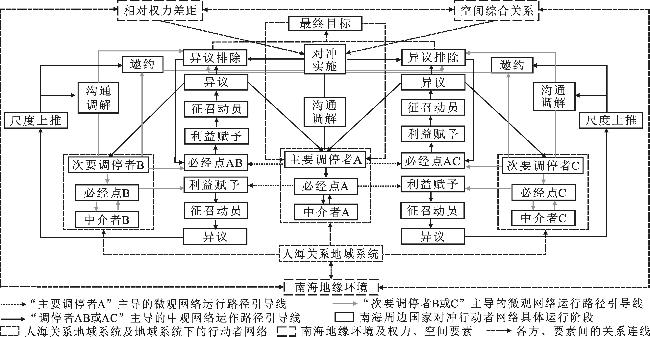
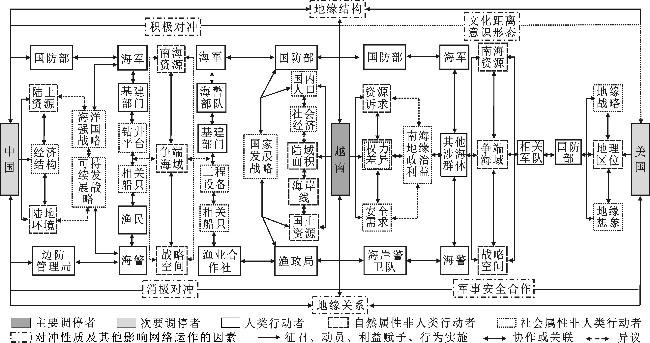
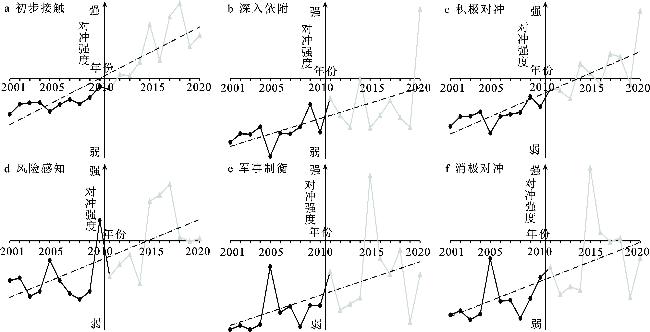
构建人海关系地域系统下南海周边国家对冲行动者网络理论框架,并利用相关模型剖析2001—2020年越南在中美两国间偏华对冲演化过程及驱动因素。结论如下:①越南对冲是在特定的地缘环境下产生和发展,并受国家(地区)间相对权力差异及空间综合关系共同影响的地缘战略,其发展和演化离不开人海关系地域系统下南海周边国家对冲行动者网络的影响;②农德孟时期,积极的偏华对冲初现端倪,消极对冲趋向强化;阮富仲时期,积极对冲曲折前进,消极对冲起伏跌宕;③驱动越南实施偏华的积极对冲因素为“中越外交联系紧密度”“越南社会硬实力发展水平”;消极对冲为“越南对华地缘威胁认知”“越南体系压力”及“南海地缘想象”。
彭飞 , 王坤泽 , 李培 , 任欢 . 中美南海地缘博弈下越南对冲演化及驱动因素[J]. 地理科学, 2025 , 45(12) : 2726 -2737 . DOI: 10.13249/j.cnki.sgs.20241101
This paper constructs a theoretical framework for the network of hedging actors of neighbouring countries of South China Sea under the human-ocean relations geographical system, aiming to fill the existing research gap in systematically analyzing regional hedging dynamics from a geographical perspective. It then utilizes the relevant model to carefully portray and in-depth analyze the evolution of Vietnam’s China-biased hedging between China and the United States and the key driving factors over the two-decade period from 2001 to 2020, a timeframe marked by significant shifts in global and regional power structures.The conclusions are as follows: 1) Vietnam’s hedging is not a random policy choice but a geo-strategy that arises and develops in a specific geo-environment—shaped by the South China Sea’s unique geography and regional power balance. It is deeply influenced by the relative power differences between countries and the spatial synthesis of relations, and its development and evolution cannot be separated from the influence of the network of hedging actors of neighbouring countries of South China Sea under the human-ocean relations geographical system, as interactions with other regional states further mold its hedging decisions; 2) During the period of Nong Duc Manh, Vietnam initially adopted positive hedging in favor of China, driven by early cooperation needs, but as regional tensions gradually emerged, the negative hedging tended to be strengthened; during the period of Nguyen Phu Trong, the positive hedge has been moving forward with twists and turns amid fluctuating bilateral cooperation projects, while the negative hedge has had its ups and downs, closely tied to changes in regional security incidents; 3) The positive hedges that drive Vietnam’s implementation of bias toward China are “the closeness of diplomatic ties between Vietnam and China”—reflected in high-level exchanges and bilateral agreements—and “the level of development of Vietnamese society’s hard power”, as stronger domestic capacity boosts its confidence in cooperative engagement. Meanwhile, the negative hedges are “Vietnam’s perceived geo-political threat of China” based on its regional security assessments, “Vietnam’s systemic pressures” from internal policy coordination and external alliance expectations, and “South China Sea geopolitical imagery” shaped by media narratives and regional state interactions. These findings not only enrich the academic discussion on regional hedging behaviors but also provide practical references for understanding Vietnam’s foreign policy adjustments in the complex South China Sea context, and help clarify the interplay between geo-factors and state strategic choices in this region, offering insights for promoting stable regional interactions.
表1 对冲类型及行为模式的事件数据选定Table 1 Selected event data for hedge types and behavioral patterns |
| 对冲类型 | 行为模式 | 事件数据选取 |
| 注:消极对冲中的合作性质事件均为越南对美国发出;括号内数值为事件数。 | ||
| 积极对冲 | 初步接触 | 呼吁经济合作(211)、经济合作(61)、呼吁外交合作(22)、邀请访问(44)、访问(43) |
| 深入依附 | 参与外交合作(50)、表达参与实质性合作意愿(31)、表达参与外交合作意愿(32) | |
| 消极对冲 | 风险感知 | 拒绝(120)、不赞成(110)、批评和谴责(111)、号召一致反对(113)、参与外交合作(50)、表达参与实质性合作意愿(31)、表达参与外交合作意愿(32) |
| 军事制衡 | 呼吁军事合作(212)、呼吁军事援助(232)、展示军力(150)、口头威胁(130)、正式表示不满(114)、抗议(140) | |
表2 中美南海地缘博弈下越南偏华对冲驱动因素指标体系Table 2 Indicator system of drivers of Vietnam’s China-biased hedging under the US-China geopolitical game in the South China Sea |
| 准则层 | 指标层 | 指标解释 | 变量符号 | 数据来源 |
| 注:① https://comtradeplus.un.org/ [2024-04-11];② https://www.gdeltproject.org/ [2024-04-11];③ https://data.worldbank.org.cn/ [2024-04-11];−为经本文研究模型计算得来的数据。 | ||||
| 积极对冲 | 积极对冲强度 | “初步接触”和“深入依附”行为值之和 | Hed-1 | − |
| 消极对冲 | 消极对冲强度 | “风险感知”和“军事制衡”行为值之和 | Hed-2 | − |
| 中越双边地缘互动关系 | 对华地缘经济依赖水平 | 由“经济依赖系数”模型[22]和中越空间距离测算得到的数值 | Eco-12 | 联合国商品贸易数据库① |
| 中越外交联系紧密度 | 中越两国对彼此发出的“外交互动”性质事件数量、戈登斯坦分值及事件提及次数综合指数 | Dip-12 | GDELT数据库② | |
| 越南对华地缘威胁认知 | 越美军事、安全合作水平 | 越南对美国在南海地区发出的所有“军事、安全合作”及美国对越南发出的“军事援助”性质事件的数量、戈登斯坦分值及事件提及次数综合指数 | Thr-12 | GDELT数据库② |
| 越南体系压力 | 中美南海地缘博弈烈度 | 中美两国在南海地区所有“冲突”性质的事件数量、戈登斯坦分值及事件提及次数综合指数 | Exp-23 | GDELT数据库② |
| 中越地缘临近性 | 中越两国地理与关系距离 | 中越首都间地理距离与两国事件发生数量、戈登斯坦分值的比值 | Geo-12 | GDELT数据库② |
| 越南社会硬实力发展水平 | 经济、科技及军事发展水平 | 越南国内生产总值、科学专利数量、军费投入量综合指数 | Har-1 | 世界银行数据库③ |
| 越南南海地缘 想象 | 南海地区关注度 | 越南政府发出有关南海地区新闻事件数量 | SCScon-1 | GDELT数据库② |
表3 中美南海地缘博弈下越南偏华对冲驱动因素回归结果Table 3 Regression results of drivers of Vietnam’s China-biased hedging under the US-China geopolitical game in the South China Sea |
| 变量名称 | 模型(1) K=0.17, R 2=0.822 | 模型(2) K=168, R 2=0.793 | 模型(3) R 2=0.831 | 模型(4) R 2=0.827 |
| 注:***、**、*分别代表1%,5%,10%的显著性水平;括号内为t检验值;模型(奇数)为积极对冲驱动因素模型,模型(偶数)为消极对冲模型;模型(1)(2)空白项为变量间不存在相关性;模型(3)(4)空白项为不显著变量;变量解释见表2;K为影响模型稳定性和准确性的“惩罚参数”。 | ||||
| SCScon-1 | 0.946 (0.069) | 0.006*** (3.274) | 0.000*** (5.971) | |
| Har-1 | 0.026** (2.505) | 0.264 (1.168) | 0.009*** (2.929) | |
| Thr-12 | 0.002*** (3.917) | 0.000*** (4.733) | ||
| Geo-12 | 0.664 (0.444) | |||
| Exp-23 | 0.360 (0.949) | 0.028** (−2.469) | 0.002*** (−3.674) | |
| Eco-12 | 0.625 ( | 0.807 (−0.249) | ||
| Dip-12 | 0.003*** (3.577) | 0.072* (1.956) | 0.001*** (4.060) | |
| 常数 | 0.028** (−2.479) | 0.252 (−1.198) | 0.007*** (−3.046) | 0.008*** (3.033) |
| [1] |
杜德斌, 范斐, 马亚华. 南海主权争端的战略态势及中国的应对方略[J]. 世界地理研究, 2012, 21(2): 1-17.
Du Debin, Fan Fei, Ma Yahua. Territorial disputes in the South China Sea and China’s strategies. World Regional Studies, 2012, 21(2): 1-17.
|
| [2] |
胡浩, 葛岳静, 胡志丁. 南海问题的大周边地缘环境[J]. 世界地理研究, 2012, 21(3): 36-44.
Hu Hao, Ge Yuejing, Hu Zhiding. The geographical environment around the South China Sea issue. World Regional Studies, 2012, 21(3): 36-44.
|
| [3] |
杜德斌, 曹宛鹏, 夏启繁, 等. 胡焕庸的地缘战略思想及其时代价值[J]. 地理学报, 2022, 77(2): 261-274.
Du Debin, Cao Wanpeng, Xia Qifan et al. Hu Huanyong’s geostrategic thought and its monumental contributions. Acta Geographica Sinica, 2022, 77(2): 261-274.
|
| [4] |
刘若楠. 东南亚国家对冲战略的动因(1997—2015)[D]. 北京:清华大学, 2017
Liu Ruonan. Explaining the hedging strategies of Southeast Asia States (1997—2015). Beijing: Tsing Hua University, 2017.
|
| [5] |
孙晓玲. 中越南海争端中的美国因素[J]. 东南亚研究, 2012(3): 32-37.
Sun Xiaoling. The U. S. factor in the South China Sea dispute between China and Vietnam. Southeast Asian Studies, 2012(3): 32-37.
|
| [6] |
温尧. 东南亚国家的对华对冲: 一项理论探讨[J]. 当代亚太, 2016(6): 4-33,155-156.
Wen Yao. Southeast Asian states’ hedging towards China: A theoretical examination. Journal of Contemporary Asia-Pacific Studies, 2016(6): 4-33,155-156.
|
| [7] |
Cheng-Chwee K. The essence of hedging: Malaysia and Singapore’s response to a rising China[J]. Contemporary Southeast Asia, 2008, 30(2): 159-185.
|
| [8] |
王栋. 国际关系中的对冲行为研究——以亚太国家为例[J]. 世界经济与政治, 2018(10): 21-49,157.
Wang Dong. Hedging in international relations: The cases of the Asia Pacific countries. World Economics and Politics, 2018(10): 21-49,157.
|
| [9] |
史田一. 地区风险与东盟国家对冲战略[J]. 世界经济与政治, 2016(5): 74-102,158-159.
Shi Tianyi. Regional risk and ASEAN states’ hedging strategy. World Economics and Politics, 2016(5): 74-102,158-159.
|
| [10] |
安宁, 蔡晓梅. 跨学科视角下“地缘政治”概念及其研究范式[J]. 地理科学, 2020, 40(9): 1412-1420.
An Ning, Cai Xiaomei. Debates on the concept of ‘geopolitics’ and its research paradigm from an interdisciplinary perspective. Scientia Geographica Sinica, 2020, 40(9): 1412-1420.
|
| [11] |
杜德斌, 马亚华. “一带一路”: 中华民族复兴的地缘大战略[J]. 地理研究, 2015, 34(6): 1005-1014
Du Debin, Ma Yahua One Belt and One Road: The grand geo-strategy of China’s rise. Geographical Research, 2015, 34(6): 1005-1014.
|
| [12] |
Mackinder H J. Democratic ideals and reality: A study in the politics of reconstruction[M]. London: Constable and Company ltd, 1919.
|
| [13] |
阿尔弗雷德·塞耶·马汉. 海权对历史的影响[M]. 安常容, 等译. 北京: 解放军出版社, 2006
Alfred Sayer Mahan. The impact of sea power on history. Translated by An Changrong et al. Beijing: PLA Publishing House, 2006.
|
| [14] |
美)斯皮克曼N J. 和平地理学[M]. 刘愈之, 译. 北京: 商务印书馆, 1965
Spykman N J. Geography of Peace. Translated by Liu Yuzhi. Beijing: The Commercial Press, 1965.
|
| [15] |
胡志丁, 陆大道. 基于批判地缘政治学视角解读经典地缘政治理论[J]. 地理学报, 2015, 70(6): 851-863.
Hu Zhiding, Lu Dadao. The re-interpretation of the classical geopolitical theories from a Critical Geopolitical perspective. Acta Geographica Sinica, 2015, 70(6): 851-863.
|
| [16] |
曾向红. “一带一路”的地缘政治想象与地区合作[J]. 世界经济与政治, 2016(1): 46-71.
Zeng Xianghong. Geopolitical imagination of “Belt and Road” and regional cooperation. World Economics and Politics, 2016(1): 46-71.
|
| [17] |
胡志丁, 骆华松, 葛岳静. 经典地缘政治理论研究视角及其对发展中国新地缘政治理论的启示[J]. 热带地理, 2014, 34(2): 184-190.
Hu Zhiding, Luo Huasong, Ge Yuejing. Research perspectives of classic geopolitical theories and their enlightenment for developing China’s new geopolitical theory. Tropical Geography, 2014, 34(2): 184-190.
|
| [18] |
陆俊元. 冷战后亚太地缘政治格局与中国安全利益[J]. 人文地理, 2001, 16(6): 69-72.
Lu Junyuan. The geopolitical pattern of Asia-Pacific and China’s national security interests in the post cold war years. Human Geography, 2001, 16(6): 69-72.
|
| [19] |
王学文. 多元地缘体互动下南海地缘环境演变及其原因分析[D]. 昆明: 云南师范大学, 2022
Wang Xuewen. Evolution of geo-environment in the South China Sea under the interaction of multiple geo-bodies and its causes. Kunming: Yunnan Normal University, 2022.
|
| [20] |
程国宇, 顾伟刚, 刘云刚. 博物馆中的南海知识生产与地理想象[J]. 人文地理, 2022, 37(3): 72-80.
Cheng Guoyu, Gu Weigang, Liu Yungang. Geographical imagination of the South China Sea based on the museum knowledge production. Human Geography, 2022, 37(3): 72-80.
|
| [21] |
彭飞, 李淑琴. 基于事件数据的南海周边主要国家地缘关系演化分析[J]. 热带地理, 2022, 42(7): 1061-1072.
Peng Fei, Li Shuqin. Evolution of the geo-relations between major countries around the South China Sea Based on event data analysis. Tropical Geography, 2022, 42(7): 1061-1072.
|
| [22] |
胡志丁, 林瑶. 地缘位势与双边关系的互动规律探讨——以中美在东盟十国地缘博弈为例[J]. 经济地理, 2023, 43(7): 27-41.
Hu Zhiding, Lin Yao. Exploring the interaction between geo-potential and bilateral relations: A case study of the geopolitical game between China and the United States in ASEAN. Economic Geography, 2023, 43(7): 27-41.
|
| [23] |
张耀光. 从人地关系地域系统到人海关系地域系统——吴传均院士对中国海洋地理学的贡献[J]. 地理科学, 2008, 28(1): 6-9.
Zhang Yaoguang. Regional system of man-land relationship evolves into regional system of man-sea relationship: Academician Wu Chuanjun’s contribution to studies on Marine Geography. Scientia Geographica Sinica, 2008, 28(1): 6-9.
|
| [24] |
韩增林, 刘桂春. 人海关系地域系统探讨[J]. 地理科学, 2007, 27(6): 761-767.
Han Zenglin, Liu Guichun. Evolution of China’s regional system of man-sea relation and it’s mechanism. Scientia Geographica Sinica, 2007, 27(6): 761-767.
|
| [25] |
孙才志, 张坤领, 邹玮, 等. 中国沿海地区人海关系地域系统评价及协同演化研究[J]. 地理研究, 2015, 34(10): 1824-1838.
Sun Caizhi, Zhang Kunling, Zou Wei et al. Study on regional system of man-sea relationship and its synergetic development in the coastal regions of China. Geographical Research, 2015, 34(10): 1824-1838.
|
| [26] |
李博, 苏飞, 杨智, 等. 基于脆弱性视角的环渤海地区人海关系地域系统时空特征及演化分析[J]. 生态学报, 2018, 38(4): 1436-1445.
Li Bo, Su Fei, Yang Zhi et al. Vulnerability-based analysis of the spatial-temporal dynamic patterns of the human-sea territorial system of the Bohai-rim region, China. Acta Ecologica Sinica, 2018, 38(4): 1436-1445.
|
| [27] |
李博, 苏飞, 杨智, 等. 脆弱性视角下辽宁沿海地区人海关系地域系统特征演化及可持续发展模式[J]. 地域研究与开发, 2017, 36(4): 32-36.
Li Bo, Su Fei, Yang Zhi et al. Vulnerability assessment and sustainable development model for man-sea territorial system in Liaoning coastal regions. Areal Research and Development, 2017, 36(4): 32-36.
|
| [28] |
彭飞, 王浩然, 刘春涛. 人海关系视角下公海保护区海洋地缘环境系统解析[J]. 自然资源学报, 2023, 38(11): 2704-2721.
Peng Fei, Wang Haoran, Liu Chuntao. Analysis of marine geo-setting system in high seas protected areas from the perspective of human-ocean relationship. Journal of Natural Resources, 2023, 38(11): 2704-2721.
|
| [29] |
彭飞, 富宁宁, 张琦琦, 等. 海洋地缘环境系统构建及其脆弱性解析[J]. 世界地理研究, 2019, 28(2): 133-140.
Peng Fei, Fu Ningning, Zhang Qiqi et al. Analysis of systematic construction and vulnerability of marine geo-setting. World Regional Studies, 2019, 28(2): 133-140.
|
| [30] |
彭飞, 陈圆圆. 人海关系地域系统下国家海洋战略影响要素探析[J]. 海洋经济, 2022, 12(4): 24-32.
Peng Fei, Chen Yuanyuan. Analysis of the influence factors of national marine strategy in perspective of human-ocean regional system. Marine Economy, 2022, 12(4): 24-32.
|
| [31] |
Callon M. Some elements of a sociology of translation: Domestication of the scallops and the fishermen of st Brieuc Bay[J]. The Sociological Review, 1984, 32(1): 196-233.
|
| [32] |
Callon M. The sociology of an actor-network: The case of the electric vehicle[M]//Callon M et al. Mapping the dynamics of science and technology. London: Mac-millan Press, 1986: 19-34.
|
| [33] |
刘宣, 王小依. 行动者网络理论在人文地理领域应用研究述评[J]. 地理科学进展, 2013, 32(7): 1139-1147.
Liu Xuan, Wang Xiaoyi. A review on the application of actor network theory to human geography. Progress in Geography, 2013, 32(7): 1139-1147.
|
| [34] |
张喆, 胡志丁. 21世纪以来西藏自治区边境贸易的发展分析[J]. 地理学报, 2023, 78(8): 1920-1935.
Zhang Zhe, Hu Zhiding. The development analysis of Tibet’s border trade in the 21st century based on actor-network theory. Acta Geographica Sinica, 2023, 78(8): 1920-1935.
|
| [35] |
谭华云, 周国华. 基于行动者网络理论的乡村绅士化演化过程与机制解析——以广西巴马盘阳河流域为例[J]. 地理学报, 2022, 77(4): 869-887.
Tan Huayun, Zhou Guohua. Evolution process and mechanism of rural gentrification based on actor-network theory: A case study of Panyang River Basin of Bama County, Guangxi. Acta Geographica Sinica, 2022, 77(4): 869-887.
|
| [36] |
刘天宝, 韩增林, 彭飞. 人海关系地域系统的构成及其研究重点探讨[J]. 地理科学, 2017, 37(10): 1527-1534.
Liu Tianbao, Han Zenglin, Peng Fei. The composition and important research issues of human-ocean regional system. Scientia Geographica Sinica, 2017, 37(10): 1527-1534.
|
| [37] |
刘天宝, 杨芳芳, 韩增林, 等. 人海关系地域系统视角下海洋本体的解构与研究重点[J]. 地理科学, 2019, 39(8): 1321-1329.
Liu Tianbao, Yang Fangfang, Han Zenglin et al. Deconstruction of marine ontology and important research issues in perspective of human-ocean regional system. Scientia Geographica Sinica, 2019, 39(8): 1321-1329.
|
| [38] |
巴士奇, 牛雪利, 姚宇阳, 等. 基于地缘位势模型的中国与南高加索三国地缘关系探讨[J]. 地理科学进展, 2022, 41(11): 2135-2151.
Ba Shiqi, Niu Xueli, Yao Yuyang et al. Geo-relationship between China and the South Caucasus region based on the geo-potential model. Progress in Geography, 2022, 41(11): 2135-2151.
|
| [39] |
富宁宁, 葛岳静, 李彦征, 等. 南海周边国家对中国的对冲强度演变及对冲战略[J]. 地理学报, 2024, 79(8): 2097-2114.
Fu Ningning, Ge Yuejing, Li Yanzheng et al. The evolution of hedging intensity and hedging strategies of countries surrounding the South China Sea towards China. Acta Geographica Sinica, 2024, 79(8): 2097-2114.
|
| [40] |
王淑芳, 葛岳静, 刘玉立. 中美在南亚地缘影响力的时空演变及机制[J]. 地理学报, 2015, 70(6): 864-878.
Wang Shufang, Ge Yuejing, Liu Yuli. The spatio-temporal evolution and driving mechanism of geopolitical influence of China and the US in South Asia. Acta Geographica Sinica, 2015, 70(6): 864-878.
|
| [41] |
杨楠. 岭回归分析在解决多重共线性问题中的独特作用[J]. 统计与决策, 2004(3): 14-15.
Yang Nan. The unique role of ridge regression analysis in solving multicollinearrity problems. Statistics & Decision, 2004(3): 14-15.
|
/
| 〈 |
|
〉 |