



面向城乡融合的县镇村联动发展——学理逻辑与实践路径
|
林元城(1998—),男,广东揭阳人,博士研究生,主要研究方向为乡村地理与城乡发展。E-mail: linyc1206@163.com |
收稿日期: 2024-10-23
修回日期: 2025-03-29
网络出版日期: 2025-12-16
基金资助
教育部哲学社会科学重大课题攻关项目(23JZD008)
国家自然科学基金项目(42171193)
广东省哲学社会科学规划2025年度乡村振兴定向委托重点项目(GD25ZX04)
广东省哲学社会科学规划“落实党的二十届三中全会精神”专项研究重点项目(GD24ES013)
中山大学高校基本科研业务费交叉学科团队培育项目(24wkjc11)
2025年度广州市基础与应用基础研究专项(科技菁英“领航”方向)(2025A04J7127)
版权
Towards urban-rural integration: Theoretical frameworks and practical pathways for coordinated development of county-town-village systems
Received date: 2024-10-23
Revised date: 2025-03-29
Online published: 2025-12-16
Supported by
Key Projects of Philosophy and Social Sciences Research, Ministry of Education of China(23JZD008)
National Natural Science Foundation of China(42171193)
2025 Rural Revitalization Targeted Commissioning Key Project, Guangdong Philosophy and Social Science Fund(GD25ZX04)
Special Research Key Project on “Implementing the Guiding Principles from the Third Plenary Session of the 20th Central Committee of the Communist Party of China”, Guangdong Philosophy and Social Science Fund(GD24ES013)
Interdisciplinary Team Development Program, Fundamental Research Fund for the Central Universities, Sun Yat-sen University(24wkjc11)
Technology Elite Leadership Initiative, 2025 Guangzhou Basic and Applied Basic Research Special Project(2025A04J7127)
Copyright
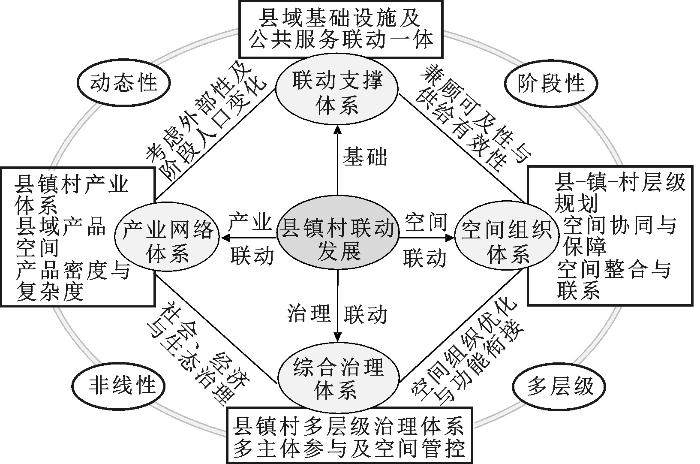
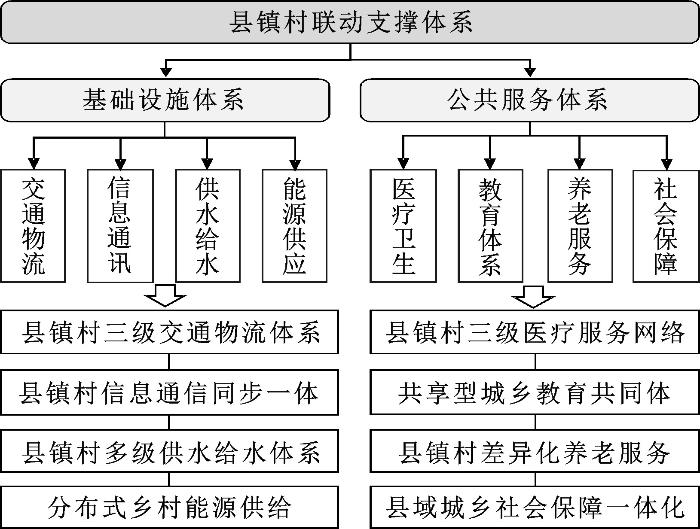
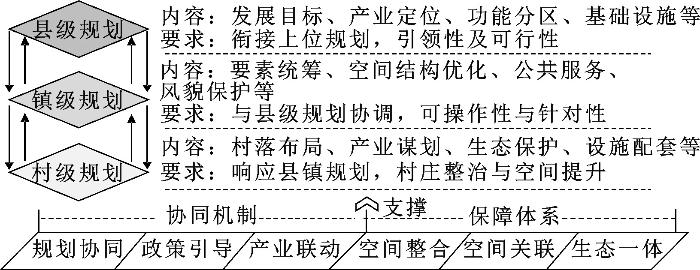
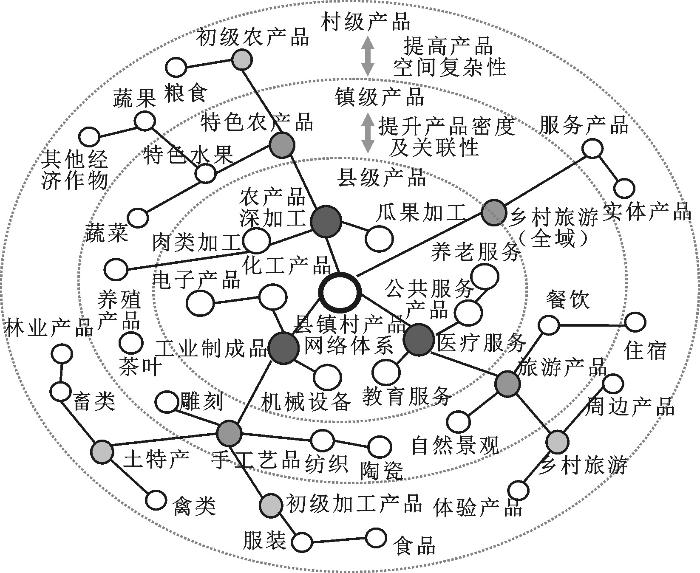
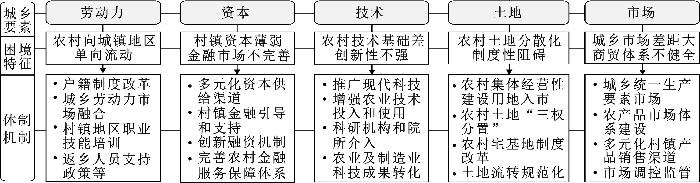
系统探究了县镇村联动发展的学理认知、科学内涵及作用机制,构建起实现县镇村联动发展的逻辑体系,并提出城乡融合导向下的实践路径。研究表明:县镇村联动发展作为新型城乡融合模式,其核心在于通过县域内县城、乡镇和农村在支撑体系、空间组织、产业体系及综合治理的联动,促成县域范围内基础设施、公共服务、空间规划、产业网络、空间管控与治理的一体化发展。县镇村联动发展以基础设施与公共服务的协同为支撑基础;在空间组织上强调县域、镇域与村域在发展目标与功能定位的协同;在产业体系构建上依托县镇村异质性产品形成具有产品提升潜力与升级空间的县域产品空间网络;并在县镇村多层级组织体系下实现社会、经济和生态等维度的综合治理。面向城乡融合目标,县镇村联动应立足县域经济发展、城乡要素流动及发展主体强化,依据县镇村各层级经济发展特征与资源优势实行差异化发展路径;重点构建劳动力、资本、技术、土地和市场等关键要素在城乡间双向流动的体制机制;积极拓展乡村内生力量、社会及市场主体,强化生产协作、服务共享和经营联合等多元联动渠道。
林元城 , 杨忍 , 秦语佳 . 面向城乡融合的县镇村联动发展——学理逻辑与实践路径[J]. 地理科学, 2026 , 46(1) : 228 -239 . DOI: 10.13249/j.cnki.sgs.20241185
This paper delves into the theoretical frameworks and practical strategies for coordinated county-town-village development, unveiling its scientific essence and mechanisms. It establishes a conceptual framework for achieving coordinated development and propose implementation pathways toward urban-rural integration. The main conclusions include 3 aspects. First, as a novel model for urban-rural integration, county-town-village coordination emphasizes the interconnectedness of support systems, spatial organization, industrial systems, and comprehensive governance across administrative levels. This fosters integration in infrastructure, public services, spatial planning, industrial networks and spatial governance. This model builds upon traditional township-village coordination by emphasizing the holistic nature and networked linkages across the three levels of county, town and village. Second, the coordinated development of county-town-village systems is reinforced through coordinated infrastructure development and integrated public services. This approach strengthens alignment in development objectives and functional positioning within spatial planning frameworks. Based on the diverse products of county, town and village, it forms a county-level product space with inherent upgrading potential. Moreover, it achieves comprehensive governance across social, economic and ecological dimensions through multi-level organizational system of county, town and village. Third, the practical strategy for coordinated county-town-village development focuses on three foundational pillars of county-level economic development, urban-rural element flow and enhanced development entities. It is imperative to implement differentiated development pathways tailored to the economic characteristics and resource advantages of county, town and village. This involves constructing institutional mechanisms to enable bidirectional flows of urban-rural elements including labor, capital, technology, land and markets. Concurrently, it entails broadening the intra-rural, social and market entities involved in urban and rural development and strengthening the linkage channels for production, service and operation. This paper will contribute to tackling development imbalance and insufficiency, unleashing the immense potential of counties. It will also provide theoretical underpinnings and practical pathways for regional high-quality development and Chinese-style rural modernization.
| [1] |
杨忍, 陈燕纯, 张菁, 等. 20世纪90年代以来西方乡村地理研究的主要理论演变与启示[J]. 地理科学, 2020, 40(4): 544-555.
Yang Ren, Chen Yanchun, Zhang Jing et al. The main theoretical evolution and enlightenment of western rural geography since 1990s. Scientia Geographica Sinica, 2020, 40(4): 544-555.
|
| [2] |
罗必良, 耿鹏鹏. 理解县域内的城乡融合发展[J]. 南京农业大学学报(社会科学版), 2023, 23(1): 16-28.
Luo Biliang, Geng Pengpeng. Understand the integrated development of urban and rural areas with in the county. Journal of Nanjing Agricultural University (Social Sciences Edition), 2023, 23(1): 16-28.
|
| [3] |
刘彦随, 杨忍, 林元城. 中国县域城镇化格局演化与优化路径[J]. 地理学报, 2022, 77(12): 2937-2953.
Liu Yansui, Yang Ren, Lin Yuancheng. Pattern evolution and optimal paths of county urbanization in China. Acta Geographica Sinica, 2022, 77(12): 2937-2953.
|
| [4] |
Westlund H, Borsekova K. Rural problems, policies and possibilities in a post-urban world[J]. Regional Science Policy & Practice, 2023, 15(4): 717-729.
|
| [5] |
Cattaneo A, Nelson A, McMenomy T. Global mapping of urban-rural catchment areas reveals unequal access to services[J]. Proceedings of the National Academy of Sciences, 2021, 118(2): e2011990118.
|
| [6] |
陈晓平. 镇村联动: 推进城乡发展一体化的重要途径[N]. 光明日报, 2013-09-28(011
Chen Xiaoping. Town-village linkage: An important way to promote the integration of urban and rural development. Guangming Daily, 2013-09-28(011).
|
| [7] |
房艳刚, 毕晓普, 刘建志. 基于多源数据的村庄类型判别研究——以吉林省前郭县和靖宇县的比较分析为例[J]. 地理科学, 2023, 43(3): 541-551.
Fang Yangang, Bi Xiaopu, Liu Jianzhi. Classification of villages based on multi-source data: A case comparison of Qianguo and Jingyu counties in Jilin Province. Scientia Geographica Sinica, 2023, 43(3): 541-551.
|
| [8] |
方方, 李裕瑞, 何仁伟. 基于等级合理性和居业协同度的村庄类型识别与振兴路径研究[J]. 地理科学进展, 2020, 39(6): 1060-1072.
Fang Fang, Li Yurui, He Renwei. Village type identification and rural revitalization path based on the rank level appropriateness and coordination degree of housing-jobs. Progress in Geography, 2020, 39(6): 1060-1072.
|
| [9] |
陶岸君. 中国村镇特色的空间分异格局和综合区划[J]. 地理学报, 2023, 78(12): 3144-3160.
Tao Anjun. Spatial differentiation pattern and comprehensive regionalization of rural settlement characteristics in China. Acta Geographica Sinica, 2023, 78(12): 3144-3160.
|
| [10] |
陆益龙, 周磊刚. 中国式乡村治理代化的重要关系问题[J]. 社会科学研究, 2024(1): 1-9+211.
Lu Yilong, Zhou Leigang. The important relationship issues of Chinese rural governance modernization. Social Science Research, 2024(1): 1-9+211.
|
| [11] |
张兴祥, 史九领, 洪永淼. 中国式县域现代化的“晋江经验”[J]. 中国经济问题, 2023(2): 6-22.
Zhang Xingxiang, Shi Jiuling, Hong Yongmiao. “Jinjiang’s experience” of Chinese-style county modernization[J]. China Economic Studies, 2023(2): 6-22.
|
| [12] |
卓健. 城乡交通与市政基础设施[J]. 城市规划学刊, 2012(4): 120-121.
Zhuo Jian. Urban and rural transportation and municipal infrastructure. Urban Planning Forum, 2012(4): 120-121.
|
| [13] |
胡德胜, 郭云鹏. 现代能源体系理念下农村能源政策法律体系之完善[J]. 中国软科学, 2023(12): 28-37.
Hu Desheng, Guo Yunpeng. On improving the policy and legal system of rural energy under the concept of modern energy system. China Soft Science, 2023(12): 28-37.
|
| [14] |
孙树学, 蒋晓庆, 李维昊, 等. 松散型医联体赋能基层医疗服务体系——组织竞合、政策激励与动态能力提升[J]. 公共管理学报, 2021, 18(3): 139-151+175.
Sun Shuxue, Jiang Xiaoqing, Li Weihao et al. Loose medical consortium empowers the primary medical service system—Organization competition and cooperation, policy incentive and promotion of dynamic capability. Journal of Public Management, 2021, 18(3): 139-151+175.
|
| [15] |
聂建亮. 资源结构、供给形态与需求匹配: 农村养老服务的有效供给路径[J]. 社会保障评论, 2023, 7(5): 100-115.
Nie Jianliang. Resource structure, supply forms, and demand matching: An effective supply path for rural elderly care services. Chinese Social Security Review, 2023, 7(5): 100-115.
|
| [16] |
张尚武. 国土空间规划编制技术体系: 顶层架构与关键突破[J]. 城市规划学刊, 2022(5): 45-50.
Zhang Shangwu. Technical system for territorial spatial planning: Superstructural design and critical breakthroughs. Urban Planning Forum, 2022(5): 45-50.
|
| [17] |
林坚, 吴宇翔, 吴佳雨, 等. 论空间规划体系的构建——兼析空间规划、国土空间用途管制与自然资源监管的关系[J]. 城市规划, 2018, 42(5): 9-17.
Lin Jian, Wu Yuxiang, Wu Jiayu et al. Construction of the spatial planning system: With discussions on the relationship between spatial planning, territorial spatial regulation, and natural resources supervision. City Planning Review, 2018, 42(5): 9-17.
|
| [18] |
周侃, 樊杰, 盛科荣. 国土空间管控的方法与途径[J]. 地理研究, 2019, 38(10): 2527-2540.
Zhou Kan, Fan Jie, Sheng Kerong. Research on methods and approaches of spatial governances. Geographical Research, 2019, 38(10): 2527-2540.
|
| [19] |
Hidalgo C A, Klinger B, Barabási A L et al. The product space conditions the development of nations[J]. Science, 2007, 317(5837): 482-487.
|
| [20] |
刘守英, 杨继东. 中国产业升级的演进与政策选择——基于产品空间的视角[J]. 管理世界, 2019, 35(6): 81-94+194-195.
Liu Shouying, Yang Jidong. The evolution and the policy selection in China’s industrial upgrading: Based on product space perspective. Management World, 2019, 35(6): 81-94+194-195.
|
| [21] |
Qyyum M A, Dickson R, Ali Shah S F et al. Availability, versatility, and viability of feedstocks for hydrogen production: Product space perspective[J]. Renewable and Sustainable Energy Reviews, 2021, 145: 110843.
|
| [22] |
Hidalgo C A. Economic complexity theory and applications[J]. Nature Reviews Physics, 2021, 3(2): 92-113.
|
| [23] |
姜长云. 新发展格局、共同富裕与乡村产业振兴[J]. 南京农业大学学报(社会科学版), 2022, 22(1): 1-11+22.
Jiang Changyun. New pattern of development, common prosperity, and rural industrial revitalization. Journal of Nanjing Agricultural University (Social Sciences Edition), 2022, 22(1): 1-11+22.
|
| [24] |
周德, 钟文钰, 张佳文, 等. 县域城乡融合评价及差异化发展路径——以浙江山区26县为例[J]. 地理科学, 2023, 43(10): 1803-1814.
Zhou De, Zhong Wenyu, Zhang Jiawen et al. Evaluation and differential development path of urban-rural integration at county level: A case study of 26 mountainous counties in Zhejiang Province. Scientia Geographica Sinica, 2023, 43(10): 1803-1814.
|
| [25] |
Lin Y C, Yang R, Li S M. Rural development transformation and social governance from the perspective of specialization: A case study of Ruiling Village in Guangzhou City, China[J]. Chinese Geographical Science, 2023, 33(5): 796-812.
|
| [26] |
刘彦随, 杨林朋, 郭远智. 中国欠发达县域的空间识别及其发展路径[J]. 地理科学, 2025, 45(2): 239-253.
Liu Yansui, Yang Linpeng, Guo Yuanzhi. Spatial identification of underdeveloped counties in China and their development paths. Geographical Science, 2025, 45(2): 239-253.
|
| [27] |
田毅鹏, 钟祥纬. 县城类型化: 地域发展与区域定位[J]. 中央民族大学学报(哲学社会科学版), 2024, 51(3): 42-53.
Tian Yipeng, Zhong Xiangwei. The typification of counties: Regional development and area positioning. Journal of Minzu University of China (Philosophy and Social Sciences Edition), 2024, 51(3): 42-53.
|
| [28] |
Ploeckl F. The next town over: On the clustering of towns and settlements before modern economic growth[J]. Regional Science and Urban Economics, 2021, 89: 103619.
|
| [29] |
蒲艳萍, 彭聚飞, 张玉珂. 劳动力市场多重分割下的城乡劳动力工资差异及其分解[J]. 重庆大学学报(社会科学版), 2020, 26(2): 69-84.
Pu Yanping, Peng Jufei, Zhang Yuke. The gap and decomposition of urban-rural wage in multiple segmented labor market. Journal of Chongqing University (Social Science Edition), 2020, 26(2): 69-84.
|
| [30] |
Lin Y C, Yang R. Production and reconstruction mechanism of consumption spaces in urban fringe areas under capital intervention: Evidence from Guangming Town in Shenzhen[J]. Journal of Rural Studies, 2024, 108: 103307.
|
| [31] |
黄季焜, 苏岚岚, 王悦. 数字技术促进农业农村发展: 机遇、挑战和推进思路[J]. 中国农村经济, 2024(1): 21-40.
Huang Jikun, Su Lanlan, Wang Yue. Digital technologies facilitate agricultural and rural development: Opportunities, challenges, and future directions. Chinese Rural Economy, 2024(1): 21-40.
|
| [32] |
严金明, 蔡大伟, 夏方舟. 党的十八大以来农村土地制度改革的进展、成效与展望[J]. 改革, 2022(8): 1-15.
Yan Jinming, Cai Dawei, Xia Fangzhou. The reform of rural land system since the 18th national congress of the CPC: Progress, achievements and prospect. Reform, 2022(8): 1-15.
|
| [33] |
刘守英. 农村土地制度改革: 从家庭联产承包责任制到三权分置[J]. 经济研究, 2022, 57(2): 18-26.
Liu Shouying. The reform of the rural land system: From the household contract responsibility system to three rights division. Economic Research Journal, 2022, 57(2): 18-26.
|
| [34] |
陈晓华. 突出扶持重点, 切实增强新型农业经营主体发展带动能力[J]. 农业经济问题, 2020, 41(11): 4-7.
Chen Xiaohua. Highlight the key points of support and enhance the development driving capacity of new types of agricultural businesses. Issues in Agricultural Economy, 2020, 41(11): 4-7.
|
| [35] |
罗必良, 耿鹏鹏. 农村集体经济: 农民共同富裕的实践逻辑[J]. 社会科学战线, 2024(6): 54-73+281.
Luo Biliang, Geng Pengpeng. Rural collective economy: The practical logic of farmers’ common prosperity. Social Science Front, 2024(6): 54-73+281.
|
| [36] |
王春光. 中国社会发展中的社会文化主体性——以40年农村发展和减贫为例[J]. 中国社会科学, 2019(11): 86-103+206.
Wang Chunguang. Social and cultural subjectivity in the development of Chinese society—A case study of rural development and poverty reduction in the past 40 years. Social Sciences in China, 2019(11): 86-103+206.
|
/
| 〈 |
|
〉 |