



中国五大国家文化公园多维空间关系治理
|
王博林(1995—),男,河南洛阳人,博士研究生,研究方向为文化旅游深度融合与国家文化公园建设。E-mail: 2819504957@qq.com |
收稿日期: 2024-09-22
修回日期: 2024-12-30
网络出版日期: 2025-12-16
基金资助
国家哲学社会科学基金重点项目(23AZD051)
版权
Governance of multi-dimensional spatial relations of five national cultural parks in China
Received date: 2024-09-22
Revised date: 2024-12-30
Online published: 2025-12-16
Supported by
National Philosophy Social Science Fund Key Program of China(23AZD051)
Copyright
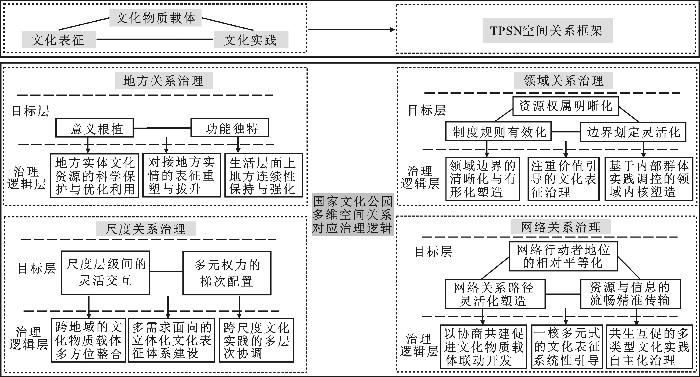
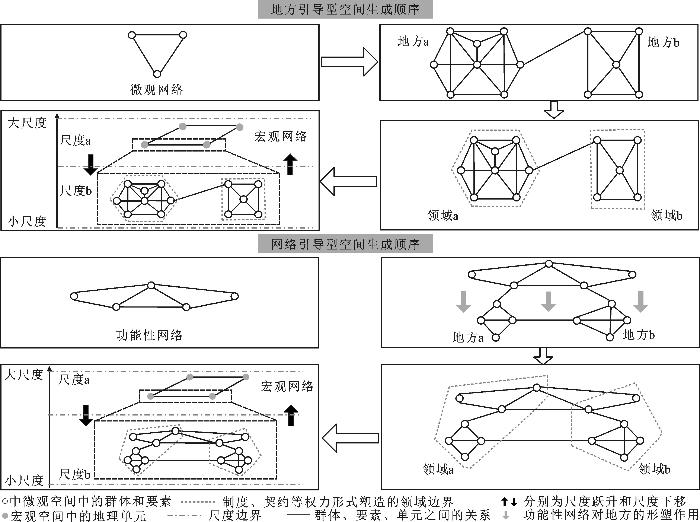
采用TPSN空间关系框架和三元一体的文化结构理论,将领域、地方、网络、尺度的空间关系和文化物质载体、文化表征、文化实践的文化构成进行交叉分析,明晰了国家文化公园多维空间关系的对应治理方略,探讨了长城、长征、大运河、黄河和长江5个国家文化公园空间关系治理的突破方向与行动路线。研究发现,当前国家文化公园空间关系遵循地方引导型和网络引导型2类空间生成顺序,且因现实差异分别形成了地方、尺度和网络3个空间关系治理重心。同时,各类空间关系的功能内涵在不同国家文化公园治理情境下保持着较高一致性。地方关系承载着绝大部分文化资源,是国家文化公园吸引力的关键内核。领域关系体现了多元权力主体对地方关系的确认和调整,初步规定了各类治理对象的运行规则和调整手段。尺度关系重点聚焦各类要素在不同空间层次上的嵌套组合,是衔接并整合治理领域的关键工具,而网络关系则有效确保了其他空间关系正常运行,是贯穿国家文化公园治理全过程的基础性关系。
王博林 , 白凯 . 中国五大国家文化公园多维空间关系治理[J]. 地理科学, 2026 , 46(1) : 179 -190 . DOI: 10.13249/j.cnki.sgs.20241037
The national cultural park is an innovative outcome formed through the efficient protection and utilization of large-scale cultural heritage and resources in China, through localization practices and international exchanges. On the basis of reviewing the existing research achievements in cultural space, this study adopts the TPSN spatial relations theory and the cultural structure theory, utilizes Cross-Analysis based on spatial dimensions of territory, place, network, scale, as well as the cultural dimensions of cultural material carriers, cultural representations, and cultural practices, and constructs a general governance logic for the multidimensional spatial relations of national cultural parks. Furthermore, the breakthrough directions and action routes for the spatial relations governance of the 5 national cultural parks have been explored. It has been found that the spatial relations of current national cultural parks follows 2 types of spatial generative orders: place guided order and network guided order, and due to differences in practical conditions, 3 spatial relations governance focuses have been formed: place, scale, and network. At the same time, the functional connotations of various spatial relations maintain high consistency in different national cultural parks governance contexts. Place relations are the main carriers of the vast majority of cultural resources and constitute the key core of the attractiveness of national cultural parks. Territory relations reflect the recognition and adjustment of place relations by diverse power entities, and preliminarily stipulate the operational rules and adjustment methods of various governance objects. The scale relations focuses on the nested combination of various spatial elements and their governance strategies at different levels, which is a key tool for connecting and integrating governance fields. Network relations are the fundamental relations that ensure the normal operation of other spatial relations and run through the entire process of national cultural parks governance.
表1 5大国家文化公园空间关系治理概要Table 1 Summary of spatial relations governance in 5 national cultural parks |
| 长城国家文化公园 | 黄河/长江国家文化公园 | 长征国家文化公园 | 大运河国家文化公园 | |
| 主导空间关系 | 地方 | 地方 | 尺度 | 网络 |
| 空间关系的 生成性顺序 | 微观网络-地方-领域-宏观网络/尺度 | 微观网络-地方-领域-宏观网络/尺度 | 微观网络-地方-领域-宏观网络/尺度 | 网络-地方-领域-尺度 |
| 重点治理方向 | 长城遗产的全方位保护; 长城精神和边塞文化的保护传承 | 传统地方及文化资源的保护;文化治理与流域治理协同推进 | 长征精神的活化传承与传播;长征精神与地方文化实践的融合 | 大运河沟通功能的延续和发掘;大运河遗产的挖掘、保护与活化 |
| 基本治理逻辑 | 基于遗产利用的“边塞”地方营造治理 | 多类型地方营建的协同化治理 | 多重尺度整合的顶层统筹式治理 | 多内涵网络重塑的功能提升式治理 |
| [1] |
李飞, 邹统钎. 论国家文化公园: 逻辑、源流、意蕴[J]. 旅游学刊, 2021, 36(1): 14-26.
Li Fei, Zou Tongqian. National culture park: Logic, origins and implications. Tourism Tribune, 2021, 36(1): 14-26.
|
| [2] |
戴俊骋. 国家文化公园研究的路径分析[J]. 旅游学刊, 2023, 38(6): 40-51.
Dai Juncheng. Path analysis of national cultural park research. Tourism Tribune, 2023, 38(6): 40-51.
|
| [3] |
路璐, 张锦龙. 文化主体性视域下大运河国家文化公园的系统性建设: 原则、逻辑与路径[J]. 江南大学学报(人文社会科学版), 2024, 23(1): 79-88.
Lu Lu, Zhang Jinlong. Systematic construction of the grand canal national cultural park from the perspective of cultural subjectivity: Principles, logic, and paths. Journal of Jiangnan University (Humanities & Social Sciences), 2024, 23(1): 79-88.
|
| [4] |
Massey D. Power-geometry and a progressive sense of place[M]//Bird J et al. Mapping the futures: Local cultures, global change. London: Routledge, 1993: 60-70.
|
| [5] |
Jessop B, Brenner N, Jones M. Theorizing sociospatial relations[J]. Environment and Planning D: Society and Space, 2008, 26(3): 389-401.
|
| [6] |
Jabareen Y, Eizenberg E. Theorizing urban social spaces and their interrelations: New perspectives on urban sociology, politics, and planning[J]. Planning Theory, 2021, 20(3): 211-230.
|
| [7] |
Lewis G. The site of the social: A philosophical account of the constitution of social life and change[J]. Educational Review, 2023, 75(4): 806.
|
| [8] |
DeLanda M. Assemblage theory[M]. Edinburgh: Edinburgh University Press, 2016: 142.
|
| [9] |
Hess M. ‘Spatial’ relationships? Towards a reconceptualization of embedded ness[J]. Progress in Human Geography, 2004, 28(2): 165-186.
|
| [10] |
Wimmer A, Glick Schiller N. Methodological nationalism and beyond: Nation-state building, migration and the social sciences[J]. Global Networks, 2002, 2(4): 301-334.
|
| [11] |
Marston S A. The social construction of scale[J]. Progress in Human Geography, 2000, 24(2): 219-242.
|
| [12] |
Dicken P, Keley P F, Olds K et al. Chains and networks, territories and scales: Towards a relational framework for analysing the global economy[J]. Global Networks, 2001, 1(2): 89-112.
|
| [13] |
Gailing L, Bues A, Kern K et al. Socio-spatial dimensions in energy transitions: Applying the TPSN framework to case studies in Germany[J]. Environment and Planning A: Economy and Space, 2020, 52(6): 1112-1130.
|
| [14] |
Bridge G, Bouzarovski S, Bradshaw M et al. Geographies of energy transition: Space, place and the low-carbon economy[J]. Energy Policy, 2013, 53: 331-340.
|
| [15] |
Don M. There’s no such thing as culture: Towards a reconceptualization of the idea of culture in geography[J]. Transactions of the Institute of British Geographers, 1995, 20(1): 102.
|
| [16] |
Anderson B. Cultural geography III: The concept of ‘culture’[J]. Progress in Human Geography, 2020, 44(3): 608-617.
|
| [17] |
Geertz C. The interpretation of cultures, selected essays [M]. New York: Basic Books, 1973: 5.
|
| [18] |
Burke P. Cultural hybridity[M]. Cambridge, UK: Polity, 2009: 5-12.
|
| [19] |
Jackson P. The idea of culture: A response to don Mitchell[J]. Transactions of the Institute of British Geographers, 1996, 21(3): 572.
|
| [20] |
斯图尔特·霍尔. 表征: 文化表象与意指实践[M]. 徐亮, 等译. 北京: 商务印书馆, 2003: 18-28
Hall S. Representation: Cultural representations and signifying practice. Translated by Xu Liang et al. Beijing: The Commercial Press, 2003: 18-28.
|
| [21] |
Bathelt H. Geographies of production: Growth regimes in spatial perspective 3-toward a relational view of economic action and policy[J]. Progress in Human Geography, 2006, 30(2): 223-236.
|
| [22] |
Beveridge R, Moss T, Naumann M. Sociospatial understanding of water politics: Tracing the multidimensionality of water reuse[J]. Water Alternatives, 2017, 10(1): 22-40.
|
| [23] |
Jessop B. Institutional re(turns) and the strategic-relational approach[J]. Environment and Planning A: Economy and Space, 2001, 33(7): 1213-1235.
|
| [24] |
Cilliers E J, Timmermans W. The importance of creative participatory planning in the public place-making process[J]. Environment and Planning B: Planning and Design, 2014, 41(3): 413-429.
|
| [25] |
Cox K R. Political geography territory, state, and society[M]. Oxford, UK: Blackwell, 2002: 400.
|
| [26] |
Ochoa Espejo P. On borders: Territories, legitimacy, and the rights of place[M]. Oxford: Oxford University Press, 2020: 29-56.
|
| [27] |
Heley J. Soft spaces, fuzzy boundaries and spatial governance in post—Devolution Wales[J]. International Journal of Urban and Regional Research, 2013, 37(4): 1325-1348.
|
| [28] |
Miller B. Is scale a chaotic concept? Notes on processes of scale production[M]// Keil R et al. Leviathan undone? Towards a political economy of scale. Vancouver: UBC Press, 2009: 51-66.
|
| [29] |
钱俊希, 安宁. 全球文化转变的理论背景与方法论框架——兼论中国文化的跨国实践[J]. 地理研究, 2021, 40(11): 3103-3117.
Qian Junxi, An Ning. Theoretical contexts and a methodological framework for understanding global cultural shift: Implications for China’s transnational cultural practices. Geographical Research, 2021, 40(11): 3103-3117.
|
| [30] |
Marston S A, Jones J P III, Woodward K. Human Geography without scale[J]. Transactions of the Institute of British Geographers, 2005, 30(4): 416-432.
|
| [31] |
贝少军. 京杭大运河: 历史与未来[J]. 中国海事, 2012(8): 6-9.
Bei Shaojun. Beijing-Hangzhou Grand Canal: History and future. China Maritime Safety, 2012(8): 6-9.
|
| [32] |
Brenner N. A thousand leaves: Notes on the geographies of uneven spatial development[M]//Keil R et al. Leviathan undone? Towards a political economy of scale. Vancouver: UBC Press, 2009: 1-27.
|
| [33] |
王丰龙, 刘云刚. 尺度概念的演化与尺度的本质: 基于二次抽象的尺度认识论[J]. 人文地理, 2015, 30(1): 9-15.
Wang Fenglong, Liu Yungang. An analytical framework of scale based on second abstraction. Human Geography, 2015, 30(1): 9-15.
|
| [34] |
苗长虹, 胡志强. 城市群空间性质的透视与中原城市群的构建[J]. 地理科学进展, 2015, 34(3): 271-279.
Miao Changhong, Hu Zhiqiang. The nature of urban agglomeration space and the construction of Zhongyuan Urban Agglomeration. Progress in Geography, 2015, 34(3): 271-279.
|
/
| 〈 |
|
〉 |