



安徽宣城第四纪红土风化特征及其古气候意义
|
刘婉婷(2001—),女,河南驻马店人,硕士研究生,主要从事河流地貌与第四纪环境研究。E-mail: 2321011564@ahnu.edu.cn |
收稿日期: 2024-10-13
修回日期: 2025-04-18
网络出版日期: 2026-01-07
基金资助
国家自然科学基金项目(42471011)
安徽省自然科学基金项目(2108085MD127)
版权
Weathering characteristics of quaternary red clay in Xuancheng, Anhui Province and its paleoclimatic significance
Received date: 2024-10-13
Revised date: 2025-04-18
Online published: 2026-01-07
Supported by
National Natural Science Foundation of China(42471011)
Natural Science Foundation of Anhui Province(2108085MD127)
Copyright
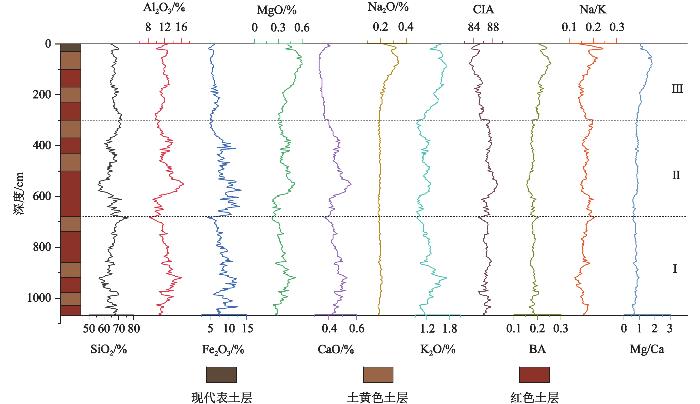
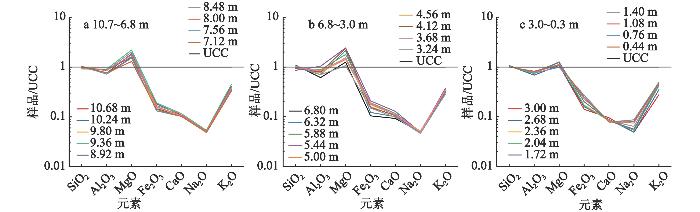
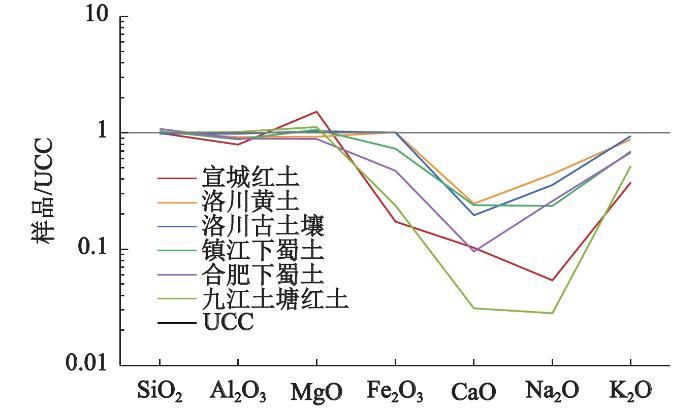
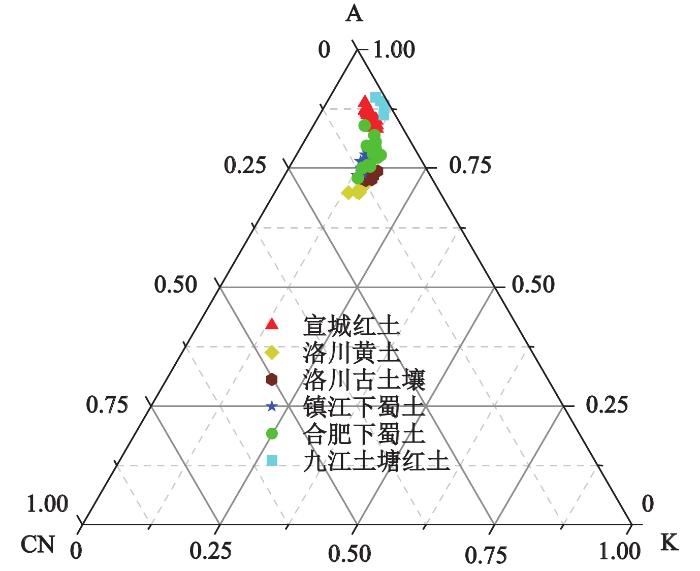
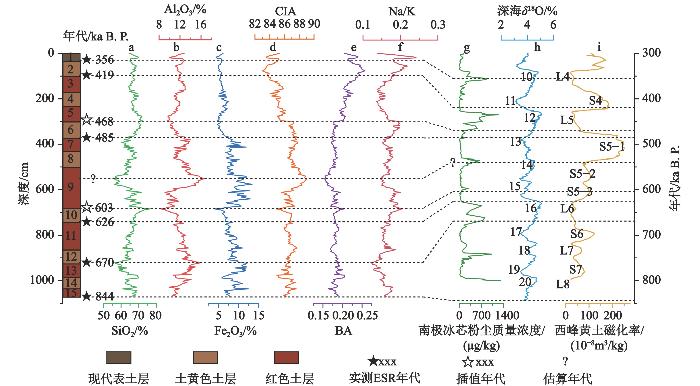
基于电子自旋共振(ESR)测年和元素地球化学测量,研究了安徽宣城电厂红土剖面的风化特征及其古气候意义。研究结果表明:①电厂红土剖面自下而上Al2O3含量、 Fe2O3含量和CIA值波动减小,而SiO2含量、BA值、Na/K值和Mg/Ca值波动增大,据此可划分为3个层段,即层段 Ⅰ(10.7~6.8 m)、层段 Ⅱ(6.8~3.0 m)和层段 Ⅲ(3.0~0.3 m);②电厂红土剖面层段Ⅰ的年代区间约为(844 —603) ka B. P.,风化程度较强;层段Ⅱ的年代区间约为(603 —468) ka B. P.,风化程度达到最强;层段Ⅲ的年代区间约为(468 —356) ka B. P.,风化程度逐渐减弱;③在气候要素组合中,降水对电厂红土剖面风化程度的控制作用较温度更为突出,据此推断出区域降水的变化特征,即(844 —603) ka B. P.区域降水较多、气候较为湿润,(603 —468) ka B. P.区域降水最多、气候最为暖湿,而(468 —356) ka B. P.区域降水较少、气候逐渐转干。④电厂红土剖面风化指标与全球古气候记录(大陆冰芯、深海岩芯、陆地黄土)可能具有负相关关系,其相对湿期基本对应于全球冰期和黄土堆积期,而其相对干期则对应于全球间冰期和古土壤发育期。
刘婉婷 , 胡春生 , 高运 , 李伯祥 , 赵婷婷 , 翁丹煜 , 杨立辉 . 安徽宣城第四纪红土风化特征及其古气候意义[J]. 地理科学, 2026 , 46(2) : 302 -313 . DOI: 10.13249/j.cnki.sgs.20241150
The widely distributed Quaternary laterite in Xuancheng, Anhui Province, has good continuous depositional characteristics, and is a key information carrier for the study of palaeoclimate evolution and palaeoenvironmental changes in the southern region of China. The newly discovered DCRC in Xuancheng is 10.7 m thick, with remarkable development of red and yellow bands, and can be divided into 15 layers from bottom to top. Combining electron spin resonance (ESR) dating and elemental geochemical data, we investigated the weathering characteristics of the DCRC laterite profile and their palaeoclimatic significance. The results show that: 1) With depth, the Al2O3 content, Fe2O3 content, and CIA value decrease, whereas the SiO2 content, BA value, Na/K ratio, and Mg/Ca ratio increase. Based on these trends, the profile is divided into three intervals: Interval I (10.7-6.8 m), Interval II (6.8-3.0 m), and Interval III (3.0-0.3 m). 2) Chronologically, Interval I [(844—603) ka B. P.] underwent strong weathering, Interval II [(603—468) ka B. P.] experienced the most intense weathering, and Interval III [ (468—356) ka B. P.] shows a gradual weakening of weathering intensity. 3) Climate element analysis indicates that precipitation played a more dominant role than temperature in controlling the weathering intensity of the DCRC profile. Consequently, regional precipitation is reconstructed in three stages: a wet period in (844—603) ka B. P., a peak humid and warm period in (603—468) ka B. P., and a transition to a drier climate in (468—356) ka B. P.. 4) The weathering indices correlate negatively with global palaeoclimate records (e.g., continental ice cores, deep-sea cores, and terrestrial loess). Specifically, the relative wet periods in the DCRC profile broadly correspond to global glacial periods and loess accumulation, whereas the dry periods synchronize with global interglacials and palaeosol development. This study investigates the weathering characteristics of the DCRC in Xuancheng and the regional paleoclimate information it contains, providing foundational data for paleoclimate research in southern China. While preliminary findings suggest a potential negative correlation between paleoclimate changes in the study area and global paleoclimate records, further research is needed to elucidate the specific causes and underlying mechanisms of this relationship.
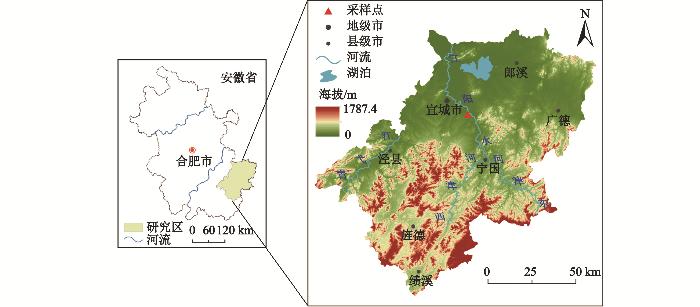
图1 研究区与宣城电厂红土剖面Fig. 1 Study area and electric power plant red clay section in Xuancheng |
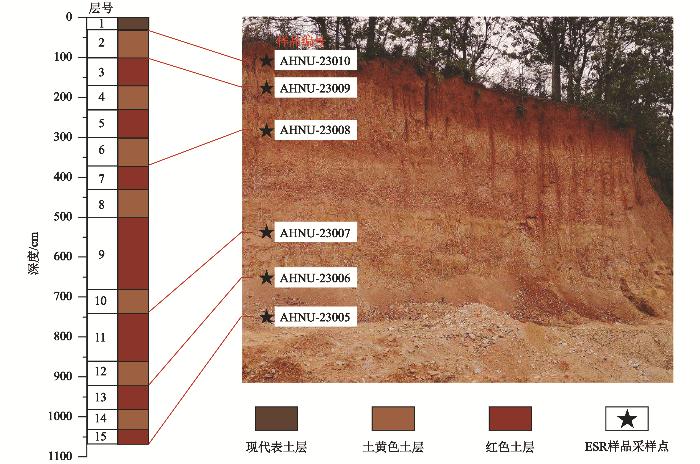
图2 宣城电厂红土剖面层位划分与ESR样品采样位置Fig. 2 Stratigraphic division and ESR sampling points of electric power plant red clay section in Xuancheng |
表1 宣城电厂红土剖面层位划分与描述Table 1 Stratigraphic division and description of electric power plant red clay section in Xuancheng |
| 层号 | 深度/m | 形态特征描述 |
| 1 | 0~0.3 | 顶部为灰色(7.5YR 6/1,润),下部暗红棕(2.5YR 3/4,润),表层土,含植物根系,结构疏松 |
| 2 | 0.3~1.0 | 浅黄色(7.5YR 8/6,润),粉砂质粘土,无网纹,结构疏松 |
| 3 | 1.0~1.7 | 暗红色(2.5YR 4/6,润),粘土,无网纹,含铁锰结核 |
| 4 | 1.7~2.3 | 淡黄色(7.5YR 8/6,润),粉砂质粘土,零星网纹,结构疏松 |
| 5 | 2.3~3.0 | 淡红色(2.5YR 6/8,润),粘土,零星网纹,含较多铁锰结核 |
| 6 | 3.0~3.7 | 土黄色(7.5YR 7/6,润),粉砂质粘土,网纹少,网纹含量<10%,点状分布,大小为1cm×3~4cm,顶部含较多黑色铁锰结核 |
| 7 | 3.7~4.3 | 暗红色(2.5YR 3/6,润),粘土,网纹少,不均匀分布纵向大网纹,占比20%~30% |
| 8 | 4.3~5.0 | 偏黄色(10YR 7/6,润),粉砂质粘土,网纹减少,占比10%~20% |
| 9 | 5.0~6.8 | 紫红色(2.5YR 3/6,润),粘土,网纹非常发育,网状结构,均匀分布,占比>50% |
| 10 | 6.8~7.4 | 土黄色(7.5YR 7/6,润),粉砂质粘土,网纹减少,占比<10%,含红色结核状粘土 |
| 11 | 7.4~8.6 | 红黄色(2.5YR 5/6,润),粘土,横向网纹发育,水平形成横向网纹层,约2 cm宽,横向延伸可达1m,底部网纹发育,中部少,上部又增多,网纹占比20%~30% |
| 12 | 8.6~9.2 | 土黄色(7.5YR 7/6,润),偏黄,粉砂质粘土,网纹减少,分散分布,网纹占比30%,比较均匀分布,1~2 cm宽 |
| 13 | 9.2~9.8 | 总体偏红(2.5YR 4/6,润),红黄相间,粘土,灰红网纹(内含红色印膜),横向增多带状发育,3~4 cm宽,网纹占比40% |
| 14 | 9.8~10.3 | 土黄色(7.5YR 6/6,润),粉砂质粘土,夹纵向灰色网纹,黄色土中有部分纵向分布红色粘土(沿裂隙分布),网纹占比30%~40% |
| 15 | 10.3~10.7 | 紫红色(2.5YR 3/6,润),粘土,发育横向灰红色网纹条带,网纹占比>50%,网纹宽3~4 cm,厚5~6 cm,长可超过20 cm |
表2 宣城电厂红土剖面常量元素含量特征Table 2 Characteristics of macronutrient content of electric power plant red clay section in Xuancheng |
| 层号 | SiO2/% | Al2O3/% | Fe2O3/% | MgO/% | CaO/% | Na2O/% | K2O/% |
| 1 | 67.01 | 11.62 | 5.31 | 0.45 | 0.38 | 0.28 | 1.47 |
| 2 | 66.89 | 11.89 | 5.35 | 0.57 | 0.33 | 0.32 | 1.64 |
| 3 | 65.86 | 12.44 | 5.71 | 0.50 | 0.34 | 0.25 | 1.61 |
| 4 | 67.31 | 11.52 | 6.44 | 0.39 | 0.35 | 0.21 | 1.46 |
| 5 | 69.21 | 10.64 | 5.73 | 0.34 | 0.37 | 0.20 | 1.23 |
| 6 | 68.97 | 11.00 | 5.65 | 0.34 | 0.42 | 0.19 | 1.01 |
| 7 | 63.65 | 12.79 | 8.56 | 0.40 | 0.46 | 0.19 | 1.19 |
| 8 | 65.52 | 12.06 | 7.99 | 0.37 | 0.45 | 0.20 | 1.16 |
| 9 | 63.57 | 12.53 | 9.63 | 0.36 | 0.47 | 0.19 | 1.11 |
| 10 | 69.35 | 10.78 | 6.25 | 0.29 | 0.42 | 0.19 | 1.07 |
| 11 | 65.21 | 12.21 | 8.13 | 0.34 | 0.45 | 0.20 | 1.23 |
| 12 | 63.18 | 13.35 | 8.71 | 0.38 | 0.47 | 0.20 | 1.36 |
| 13 | 61.86 | 13.52 | 10.13 | 0.40 | 0.49 | 0.20 | 1.46 |
| 14 | 65.22 | 12.21 | 8.62 | 0.34 | 0.47 | 0.19 | 1.24 |
| 15 | 66.68 | 11.16 | 8.11 | 0.28 | 0.44 | 0.19 | 1.10 |
| 平均值 | 65.70 | 12.06 | 7.61 | 0.38 | 0.43 | 0.21 | 1.27 |
| 最大值 | 76.44 | 16.56 | 13.44 | 0.60 | 0.56 | 0.34 | 1.74 |
| 最小值 | 56.07 | 8.37 | 3.97 | 0.22 | 0.33 | 0.18 | 0.93 |
表3 宣城电厂红土剖面ESR测年数据Table 3 ESR dating data of electric power plant red clay section in Xuancheng |
| 样品编号 | 深度/m | U/ (μg/g) | Th/ (μg/g) | K/% | 含水量/% | 等效剂量/ Gy | 剂量率/ (Gy/ka) | 年龄/ ka B. P. |
| AHNU- | 10.7 | 3.15±0.13 | 15.8±0.32 | 0.91±0.04 | 17±5 | 1907±303 | 2.26±0.11 | 844±134 |
| AHNU- | 9.2 | 3.79±0.15 | 16.1±0.32 | 1.12±0.04 | 14±5 | 2.64±0.13 | 670±97 | |
| AHNU- | 7.4 | 3.31±0.13 | 14.3±0.29 | 0.94±0.04 | 14±5 | 2.32±0.12 | 626±103 | |
| AHNU- | 3.7 | 3.01±0.12 | 14.5±0.29 | 0.98±0.04 | 13±5 | 2.30±0.12 | 485±67 | |
| AHNU- | 1.0 | 3.12±0.12 | 15.1±0.30 | 1.42±0.06 | 16±5 | 2.65±0.13 | 419±38 | |
| AHNU- | 0.3 | 3.35±0.13 | 16.4±0.33 | 1.29±0.05 | 12±5 | 996±147 | 2.80±0.13 | 356±53 |
表4 东部季风区典型沉积物所在地区年均气温和年均降水量对比表Table 4 Mean annual temperature and precipitation of typical sediments in the eastern monsoon region |
| 区域 | 位置 | 年均气温/℃ | 年均降水量/mm |
| 陕西洛川 | 109°25′E,35°45′N | 10.3 | 597 |
| 江苏镇江 | 119°41′E,32°13′N | 15.6 | |
| 安徽合肥 | 117°20′E,31°46′N | 15.7 | |
| 安徽宣城 | 118°51′E,30°52′N | 15.6 | |
| 江西九江 | 17.0 |
| [1] |
许聿迪, 刘承帅, 高庭, 等. 贵州草海0.78 Ma以来古环境演化: 来自XRF连续扫描的证据[J]. 地学前缘, 2025, 32(3): 168-182.
Xu Yudi, Liu Chengshuai, Gao Ting et al. The paleoenvironmental evolution since 0.78 Ma in Caohai, Guizhou: Evidence from XRF core scanning. Earth Science Frontiers, 2025, 32(3): 168-182.
|
| [2] |
蔡方平, 胡雪峰, 杜艳, 等. 安徽郎溪黄棕色土-红土二元结构土壤剖面的成因与长江流域第四纪晚期古气候演变[J]. 土壤学报, 2012, 49(2): 220-229.
Cai Fangping, Hu Xuefeng, Du Yang et al. Pedogenesis of yellow-brown earth-red clay profile in Langxi County, Anhui Province and paleoclimatic change in the Yangtze River Valley, Southeast China in the late Quaternary period. Acta Pedologica Sinica, 2012, 49(2): 220-229.
|
| [3] |
丁仲礼, 刘东生. 中国黄土研究新进展(一)黄土地层[J]. 第四纪研究, 1989, 9(1): 24-35.
Ding Zhongli, Liu Dongsheng. Progresses of loess research in China (part I) Loess stratigraphy. Quaternary Sciences, 1989, 9(1): 24-35.
|
| [4] |
Wang T H, Wang Q B, Han C L et al. Development and application of new transfer functions between climate and soil weathering indices for paleoclimatic reconstructions from Chinese loess-paleosol sections[J]. Catena, 2023, 224, 106974.
|
| [5] |
Duraimaran P, Mani D, Yadav R et al. Biogeochemical evidence of the Oligocene and late Miocene-Pleistocene climatic variability from two deep sediment cores of the South China Sea[J]. Journal of Earth System Science, 2024, 133(3): 166.
|
| [6] |
Grisart A, Casado M, Gkinis V et al. Sub-millennial climate variability from high-resolution water isotopes in the EPICA Dome C ice core[J]. Climate of the Past, 2022, 18(10): 2289-2301.
|
| [7] |
Anna K. History of environmental and climatic changes recorded in Lacustrine Sediments—A Wigry Lake case study[J]. Sustainability, 2023, 15(21): 15628.
|
| [8] |
王心源, 吴立, 张广胜, 等. 安徽巢湖全新世湖泊沉积物磁化率与粒度组合的变化特征及其环境意义[J]. 地理科学, 2008, 28(4): 548-553.
Wang Xinyuan, Wu Li, Zhang Guangsheng et al. Characteristics and environmental significance of magnetic susceptibility and grain size of lake sediments since Holocene in Chaohu Lake, Anhui Province. Scientia Geographica Sinica, 2008, 28(4): 548-553.
|
| [9] |
Tang X, Yu Z, Lu Z et al. Orbital hydroclimate variability revealed by grain-size evidence in the tropical Pacific Islands since 140 ka[J]. Global and Planetary Change, 2024, 236, 104429.
|
| [10] |
Guo J, Shi J, Dong Q et al. The quantitative reconstruction of paleoclimate in the Huangling Region of the Chinese Loess Plateau during the middle and late holocene[J]. Atmosphere, 2024, 15(4): 476.
|
| [11] |
李秀美, 范宝伟, 侯居峙, 等. 青藏高原达则错沉积物有机碳同位素特征及古气候环境意义[J]. 地球科学, 2022, 47(6): 2275-2286.
Li Xiumei, Fan Baowei, Hou Juzhi et al. Characteristics of compositions of organic matter δ13C in lake sediments from Dagze Co in Tibetan Plateau and its paleoclimatic and paleoenvironmental significance Earth Science, 2022, 47(6): 2275-2286.
|
| [12] |
熊平生, 刘沛林, 王鹏. 衡阳盆地红土剖面的磁化率、Rb/Sr值及其古气候指示意义[J]. 地理科学, 2018, 38(2): 300-306.
Xiong Pingsheng, Liu Peilin, Wang Peng. The magnetic susceptibility, Rb/Sr ratio of red earth profile in Hengyang Basin and its significance of palaeoclimate. Scientia Geographica Sinica, 2018, 38(2): 300-306.
|
| [13] |
王吉, 朱丽东, 禹蕊斐, 等. 南方加积型红土化学风化的非纬向地带性特征及其成因分析[J/OL]. 沉积学报, 2024-09-11. https://doi.org/10.14027/j.issn.1000-0550.2024.097
Wang Ji, Zhu Lidong, Yu Ruifei et al. Non-Latitudinal zonal characteristics and origin of chemical weathering of aggradational red earth in Southern China. Acta Sedimentologica Sinica, 2024-09-11. https://doi.org/10.14027/j.issn.1000-0550.2024.097.
|
| [14] |
朱景郊. 网纹红土的成因及其研究意义[J]. 地理研究, 1988, 7(4): 12-20.
Zhu Jingjiao. Genesis and research significance of the plinthitic horizon. Geographical Research, 1988, 7(4): 12-20.
|
| [15] |
朱丽东, 叶玮, 周尚哲, 等. 中亚热带第四纪红粘土的粒度特征[J]. 地理科学, 2006, 26(5): 5586-5591.
Zhu Lidong, Ye Wei, Zhou Shangzhe et al. Grain-size features of red earth in mid-subtropics. Scientia Geographica Sinica, 2006, 26(5): 5586-5591.
|
| [16] |
杨立辉, 程菲, 陈洁, 等. 南方第四纪红土碎屑锆石U-Pb年龄物源示踪的适用性探讨[J]. 地理研究, 2023, 42(9): 2508-2519.
Yang Lihui, Chen Fei, Chen Jie et al. Applicability of detrital zircon U-Pb ages characteristics in southern Quaternary Red Clay for provenance tracing. Geographical Research, 2023, 42(9): 2508-2519.
|
| [17] |
张晓, 朱丽东, 黄颖, 等. 加积型网纹红土网纹化机制及形成环境[J]. 第四纪研究, 2020, 40(1): 214-228.
Zhang Xiao, Zhu Lidong, Huang Ying et al. The reticulated mechanism and its climatic implication of aggradation red earth. Quaternary Sciences, 2020, 40(1): 214-228.
|
| [18] |
汪玲玲, 李凤全, 吴开钦, 等. 九江加积型红土网纹形态特征及其环境意义[J]. 沉积学报, 2024, 42(2): 534-544.
Wang Lingling, Li Fengquan, Wu Kaiqin et al. Reticulate morphologies and environmental significance of red earth aggradation in Jiujiang. Acta Sedimentologica Sinica, 2024, 42(2): 534-544.
|
| [19] |
熊文婷, 朱丽东, 张晓, 等. 中国南方红土记录的中更新世气候转型及其环境效应[J]. 第四纪研究, 2020, 40(6): 1441-1452.
Xiong Wenting, Zhu Lidong, Zhang Xiao et al. Middle Pleistocene transition and its environmental effects revealed by red earth of south China. Quaternary Sciences, 2020, 40(6): 1441-1452.
|
| [20] |
尹秋珍, 郭正堂. 中国南方的网纹红土与东亚季风的异常强盛期[J]. 科学通报, 2006, 51(2): 186-193.
Yin Qiuzhen, Guo Zhengtang. Anomalously strong periods of reticulated laterite and the East Asian monsoon in southern China. Science Bulletin, 2006, 51(2): 186-193.
|
| [21] |
杨达源, 韩辉友, 周旅复, 等. 安徽宣城地区中晚更新世风成堆积与环境变迁[J]. 海洋地质与第四纪地质, 1991, 11(2): 97-104.
Yang Dayuan, Han Huiyou, Zhou Lyufu et al. Eolian deposit and environmental change of middle-late Pleistocene in Xuancheng, Anhui Province south of the lower reaches of the Changjiang River. Marine Geology & Quaternary Geology, 1991, 11(2): 97-104.
|
| [22] |
李文慧, 胡春生, 田景梅, 等. 安徽宣城向阳剖面第四纪红土常量元素地球化学特征及其古气候意义[J]. 山地学报, 2020, 38(3): 371-383.
Li Wenhui, Hu Chunsheng, Tian Jingmei et al. Geochemical characteristics and paleoclimate significance of major elements of the Quaternary red clay in the Xiangyang section in Xuanchen, Anhui Province, China. Mountain Research, 2020, 38(3): 371-383.
|
| [23] |
Fedo C M, Wayne Nesbitt H, Young G M. Unraveling the effects of potassium metasomatism in sedimentary rocks and paleosols, with implications for paleoweathering conditions and provenance[J]. Geology, 1995, 23(10): 921-924.
|
| [24] |
董苗, 严平, 王晓旭, 等. 青藏高原不同气候带爬坡沙丘沉积物特征及其环境指示[J]. 地理学报, 2023, 78(7): 1825-1846.
Dong Miao, Yan Ping, Wang Xiaoxu et al. Sediment characteristics and environmental significance of climbing dunes in different climatic zones of the Qinghai-Tibet Plateau. Acta Geographica Sinica, 2023, 78(7): 1825-1846.
|
| [25] |
杨宇哲, 岳大鹏, 赵景波, 等. 陕西横山地区L3黄土与S3古土壤元素地球化学特征与环境变化 地理科学进展, 2023, 42(2): 364-379.
Yang Yuzhe, Yue Dapeng, Zhao Jingbo et al. Characteristics of geochemical weathering of L3 and S3 loess-paleosol section in the Hengshan area, Shaanxi Province. Progress in Geography, 2023, 42(2): 364-379.
|
| [26] |
Wignall P B, Twitchett R J. Oceanic anoxia and the end Permian mass extinction[J]. Science, 1996, 272(5265): 1155-1158.
|
| [27] |
胡春生. 黄山北麓青弋江河流阶地发育机制与河流演化特征研究[D]. 南京:南京大学, 2017
Hu Chunsheng. Developmental mechanism of river terraces and evolutional characteristics of the Qingyijiang River on the northern fringe of Mt. Huangshan. Nanjing: Nanjing University, 2017.
|
| [28] |
Hong H, Gu Y, Yin K et al. Clay record of climate change since the mid-P leistocene in Jiujiang, south China[J]. Boreas, 2013, 42(1): 173-183.
|
| [29] |
杨浩, 赵其国, 李小平, 等. 安徽宣城风成沉积-红土系列剖面ESR年代学研究[J]. 土壤学报, 1996, 33(3): 293-300.
Yang Hao, Zhao Qiguo, Li Xiaoping et al. ESR dating of eolian sediment and red earth series form Xuancheng profile in Anhui Province. Acta Pedologica Sinica, 1996, 33(3): 293-300.
|
| [30] |
Vital H, Stattegger K. Major and trace elements of stream sediments from the lowermost Amazon River[J]. Chemical Geology, 2000, 168(1-2): 151-168.
|
| [31] |
熊加贝, 何登发, 成祥, 等. 鄂尔多斯盆地南缘奥陶系顶部碳酸盐岩风化壳特征及其成因机制[J]. 古地理学报, 2024, 26(1): 100-118.
Xiong Jiabei, He Dengfa, Cheng Xiang et al. Characteristics of the weathering crust of the top Ordovician carbonates in the southern margin of the Ordos Basin and its genesis. Journal of Palaeogeography, 2024, 26(1): 100-118.
|
| [32] |
熊平生, 王鹏, 张忆, 等. 衡阳盆地红土剖面元素地球化学特征及其古环境意义[J]. 山地学报, 2019, 37(5): 693-701.
Xiong Pingsheng, Wang Peng, Zhang Yi et al. Geochemistry of elements and its paleoenvironmental implications from the red earth profile in the Hengyang basin. Mountain Research, 2019, 37(5): 693-701.
|
| [33] |
陈田圆, 吕镔, 李嘉伟, 等. 化学蚀变指数(CIA)反映湿润亚热带风化壳型土壤风化强度的适用性探讨[J]. 第四纪研究, 2024, 44(2): 551-562.
Chen Tianyuan, Lyu Bin, Li Jiawei et al. The applicability of chemical index of alteration (CIA) to reflect weathering intensity of humid subtropical weathering crust soil. Quaternary Sciences, 2024, 44(2): 551-562.
|
| [34] |
Taylor S R, McLennan S M. The continental crust: Its composition and evolution: An examination of the geochemical record preserved in sedimentary rocks[M]. Oxford: Blackwell, 1985, 277.
|
| [35] |
陈骏, 安芷生, 刘连文, 等. 最近2.5 Ma以来黄土高原风尘化学组成的变化与亚洲内陆的化学风化[J]. 中国科学(D辑: 地球科学), 2001, 31(2): 136-145.
Chen Jun, An Zhisheng, Liu Lianwen et al. Changes in the chemical composition of wind and dust on the Loess Plateau since the last 2. 5 Ma and chemical weathering in interior Asia. Science in China (Series D), 2001, 31(2): 136-145.
|
| [36] |
李徐生, 韩志勇, 杨守业, 等. 镇江下蜀土剖面的化学风化强度与元素迁移特征[J]. 地理学报, 2007, 62(11): 1174-1184.
Li Xusheng, Han Zhiyong, Yang Shouye et al. Chemical weathering intensity and element migration features of the Xiashu loess profile in Zhenjiang. Acta Geographica Sinica, 2007, 62(11): 1174-1184.
|
| [37] |
路硕, 尹功明, 宋为娟, 等. 合肥下蜀土地球化学特征及其古气候意义[J]. 地质力学学报, 2019, 25(3): 428-439.
Lu Shuo, Yin Gongming, Song Weijuan et al. Geochemical characteristics and paleoclimate implications of Hefei Xiashu Loess. Journal of Geomechanics, 2019, 25(3): 428-439.
|
| [38] |
凌超豪, 龙进, 贾玉连, 等. 赣北鄱阳湖地区土塘剖面第四纪红土地球化学特征及古气候意义[J]. 古地理学报, 2015, 17(5): 699-708.
Ling Chaohao, Long Jin, Jia Yulian et al. Geochemical characteristics and palaeoclimate significance of the Quaternary laterite of Tutan section in Poyang Lake region, northern Jiangxi Province. Journal of Palaeogeography, 2015, 17(5): 699-708.
|
| [39] |
Nesbitt H W, Markovics G, Price R C. Chemical processes affecting alkalis and alkaline earths during continental weathering[J]. Geochimica et Cosmochimica Acta, 1980, 44(11): 1659-1666.
|
| [40] |
王忻宇, 庞奖励, 黄春长, 等. 玛曲谷地晚全新世风成黄土化学风化程度与气候变化[J]. 地理研究, 2024, 43(7): 1911-1928.
Wang Xinyu, Pang Jiangli, Huang Chunchang et al. Chemical weathering degree of the Late Holocene aeolian loess and climate change in Maqu Valley. Geographical Research, 2024, 43(7): 1911-1928.
|
| [41] |
许良峰, 魏骥, 姜伟. 皖南网纹红土的剖面风化特征及其古气候意义[J]. 土壤通报, 2010, 41(1): 7-12.
Xu Liangfeng, Wei Ji, Jiang Wei. The weathering characteristics of the reticulate red clay in southern Anhui Province and its paleo-environmental significance. Chinese Journal of Soil Science, 2010, 41(1): 7-12.
|
| [42] |
Lambert F, Delmonte B, Petit J R et al. Dust-climate couplings over the past 800 000 years from the EPICA Dome C ice core[J]. Nature, 2008, 452(7187): 616-619.
|
| [43] |
Lisiecki L E, Raymo M E. A Pliocene-Pleistocene stack of 57 globally distributed benthic δ18O records Paleoceanography, 2005, 20(1): 1-17.
|
| [44] |
Guo Z T, Berger A, Yin Q Z et al. Strong asymmetry of hemispheric climates during MIS-13 inferred from correlating China loess and Antarctica ice records[J]. Climate of the Past, 2009, 5(1): 21-31.
|
| [45] |
Yihui D, Chan J C. The East Asian summer monsoon: An overview[J]. Meteorology and Atmospheric Physics, 2005, 89(1): 117-142.
|
| [46] |
Wang Y, Cheng H, Edwards R L et al. Millennial- and orbital-scale changes in the East Asian monsoon over the past 224, 000 years[J]. Nature, 2008, 451(7182): 1090-1093.
|
| [47] |
Chen F, Xu Q, Chen J et al. East Asian summer monsoon precipitation variability since the last deglaciation[J]. Scientific Reports, 2015, 5(1): 11186.
|
| [48] |
Wu R, Wang B. Multi-stage onset of the summer monsoon over the western North Pacific[J]. Climate Dynamics, 2001, 17(4): 277-289.
|
| [49] |
Hu C, Li W, Cao L et al. Evidence for wetter climate recorded in the Jingxian red clay section since approximately 840 ka ago and its relationship with the East Asian summer monsoon intensity[J]. Quaternary International, 2019, 532, 57-65.
|
| [50] |
Jin L, Ganopolski A, Willeit M et al. Decoupled orbital-scale variability of late Pleistocene-Holocene monsoonal circulation and rainfall in East Asia[J]. Science Bulletin, 2023, 68(9): 897-901.
|
/
| 〈 |
|
〉 |