



区域新建高铁对城市住宅用地价格的本地效应和网络效应研究——以中原城市群为例
|
石波(1999—),男,河南焦作人,博士研究生,研究方向为高铁交通与城市群发展。E-mail: bo18239133693@163.com |
收稿日期: 2024-10-16
修回日期: 2025-07-07
网络出版日期: 2026-01-29
基金资助
国家自然科学基金项目(2022000125)
国家自然科学基金项目(42371191)
中国科学院未来伙伴网络专项项目(045GJHZ2023059FN)
版权
Local and network effects of new high-speed rail on urban residential land prices: A case study of Zhongyuan Urban Agglomeration
Received date: 2024-10-16
Revised date: 2025-07-07
Online published: 2026-01-29
Supported by
National Natural Science Foundation of China(2022000125)
National Natural Science Foundation of China(42371191)
International Partnership Program of Chinese Academy of Sciences for Future Network Project(045GJHZ2023059FN)
Copyright
新高铁线路的开通不仅提升了沿线城市的交通便利性和区位优势,还可能带来区域层面的网络效应,从而在不同尺度影响高铁城市的经济活动结构。本文以中原城市群为例,探讨高铁网络发展对不同尺度住宅用地出让价格的影响,着重分析新建高铁线路对城市的本地效应与网络效应。研究结果表明:①新高铁线路的开通对土地价值产生了双重影响:一方面直接使高铁沿线城市住宅用地价格平均提升了11.2%(本地效应),另一方面还对区域内其他高铁城市住宅用地价格带来平均约2%的额外提升(网络效应),揭示了高铁网络扩张对城市群整体网络价值的增强作用。②新建高铁的网络效应在不同等级城市呈现显著差异,相较于县和县级市,高铁网络效应对市辖区住宅用地价格的提升更为显著。本研究强调了高铁效应中的本地和网络尺度特征,增强了对高铁网络发展的多维度与异质性影响的理解深度。
石波 , 王磊 , 苗长虹 , 张心语 . 区域新建高铁对城市住宅用地价格的本地效应和网络效应研究——以中原城市群为例[J]. 地理科学, 2026 , 46(2) : 437 -450 . DOI: 10.13249/j.cnki.sgs.20241195
High-speed rail (HSR) infrastructure development has fundamentally reshaped urban economics and spatial organization of economic activities. The opening of new HSR lines not only enhances transportation convenience and locational advantages of cities along the route but also generates significant network effects at the regional level, thereby influencing the economic activity structure and land valuation patterns of HSR cities at different scales. While much of the existing literature has focused on the direct or local effects of HSR on individual cities, there has been relatively limited exploration of the broader network effects generated by HSR networks. This paper focuses on analyzing both the local and network effects of newly constructed HSR lines on cities, providing a comprehensive framework for understanding HSR’s multidimensional impacts. An empirical study examines the impact of the Zhongyuan Urban Agglomeration’s HSR network development on residential land prices at different scales. By combining the PSM-DID model with multilevel data analysis, the empirical findings reveal a dual mechanism through which new HSR lines influence land value. First, we identify a local effect, where cities directly connected by new HSR lines experience an average increase of 11.2% in residential land prices. This increase can be attributed to the improved accessibility, the enhanced locational appeal, and stronger development expectation among investors and local stakeholders. Second, we uncover a network effect: city, as a part of the broader HSR network, but not is necessarily on the newly opened line, also experiences a positive impact, with residential land prices increasing by approximately 2% on average. This finding highlights the importance of network connectivity and suggests that HSR infrastructure generates externalities to transcend the immediately affected localities. Furthermore, the magnitude of these network effects varies significantly across cities of different administrative levels. Prefecture-level cities benefit more substantially from the network effect compared to county-level cities. This heterogeneity shows the uneven spatial distribution of HSR-related benefits. Urban hierarchy determines how effectively cities can leverage their network position. This study demonstrates that the existence of both local effect and network effect of HSR and reveal the multidimensional and spatially heterogeneous nature of HSR effects. These results provide critical insights for regional planning and infrastructure investment. Policymakers should consider network-wide impacts in designing strategies to promote balanced urban development through transportation infrastructure expansion.
表1 变量的描述与解释Table 1 Description and interpretation of variables |
| 变量 | 变量名 | 描述和解释 |
| 被解释变量 | PRIC | 住宅用地平均出让价格/(元/m2) |
| 解释变量 | HSR | 是否开通高铁:开通为1,否则为0 |
| FRE | 高铁服务频次/(班/d) | |
| CC | 高铁网络接近中心性 | |
| TIME | 高铁旅行时间/min | |
| 控制变量 | DIS | 地块区位条件,即交易地块与 当地政府所在地的距离/km |
| POP | 常住人口数/万人 | |
| PGDP | 人均生产总值/(万元/人) | |
| BE | 公共财政支出/万元 | |
| IND2 | 第二产业占生产总值比重/% | |
| IND3 | 第三产业占生产总值比重/% | |
| BL | 地方金融机构贷款余额/亿元 |
表2 基于PSM-DID模型的高铁对住宅用地价格影响的估计结果Table 2 Impact of high-speed railway on residential land prices based on PSM-DID model |
| 变量 | (1) | (2) | (3) | (4) | (5) |
| 注:***、**和*为1%,5%和10%水平显著;括号内为标准误差;样本数为 | |||||
| HSR | 0.103*(0.059) | 0.112*(0.058) | |||
| FRE | 0.037**(0.014) | ||||
| HSR×CC | 0.198**(0.095) | ||||
| TIME | -0.401**(0.166) | ||||
| lnDIS | -0.042***(0.012) | -0.043***(0.009) | -0.042***(0.009) | -0.043***(0.009) | |
| lnPOP | 0.018(0.062) | 0.015(0.054) | 0.018(0.054) | 0.039(0.054) | |
| lnPGDP | -0.202**(0.091) | -0.203***(0.070) | -0.196**(0.070) | -0.204***(0.070) | |
| lnBE | 0.146(0.101) | 0.133(0.095) | 0.140(0.094) | 0.162*(0.094) | |
| IND2 | -0.001(0.003) | -0.001(0.002) | -0.001(0.002) | -0.001(0.002) | |
| IND3 | -0.002(0.005) | -0.002(0.004) | -0.002(0.004) | -0.001(0.004) | |
| lnBL | 0.067(0.067) | 0.077(0.049) | 0.068(0.048) | 0.066(0.048) | |
| 常数项 | 7.199***(0.008) | 6.413***(2.053) | 6.524***(1.420) | 6.422***(1.408) | 9.320***(1.944) |
| 个体固定效应 | 是 | 是 | 是 | 是 | 是 |
| 时间固定效应 | 是 | 是 | 是 | 是 | 是 |
| R2 | 0.722 | 0.729 | 0.727 | 0.728 | 0.729 |
表3 新建高铁的本地效应和网络效应Table 3 Local effect and network effect of new high-speed railway |
| 变量 | 模型1 | 模型2(去掉市辖区) |
| 注:**和*为5%和10%水平显著;括号内为标准误差;空白为无此项;TRT表示处理组虚拟变量,CS为高铁建设虚拟变量,OP为本地高铁开通虚拟变量,ZFOP为郑阜高铁开通虚拟变量,HIER为市辖区虚拟变量。 | ||
| TRT×CS | -0.112**(0.047) | -0.132**(0.055) |
| TRT×OP | 0.129**(0.050) | 0.154**(0.060) |
| TRT×ZFOP | 0.149**(0.064) | 0.122*(0.071) |
| TRT×ZFOP×HIER | 0.174(0.134) | |
| 控制变量 | 是 | 是 |
| 时间固定效应 | 是 | 是 |
| 个体固定效应 | 是 | 是 |
| 样本数 | ||
| R2 | 0.729 | 0.694 |
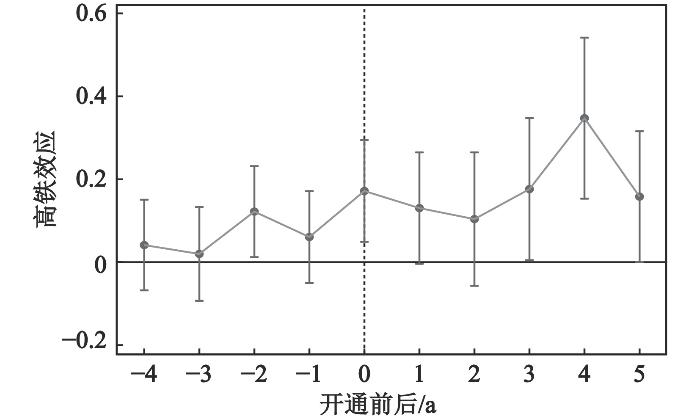
表4 处理时间提前假设Table 4 Advanced treatment timing assumption |
| 变量 | (1) 2 a | (2) 3 a | (3) 4 a | (4) 5 a | (5) 6 a |
| 注:***、*分别为1%,10%水平上的显著性;括号内为标准误差;变量含义见表1;样本数为 | |||||
| HSR | 0.110* | 0.083 | 0.076 | 0.070 | 0.049 |
| (0.058) | (0.060) | (0.066) | (0.062) | (0.070) | |
| 常数项 | 6.467*** | 6.317*** | 6.191*** | 6.139*** | 6.095*** |
| (2.054) | (2.055) | (2.047) | (2.044) | (2.045) | |
| 控制变量 | 是 | 是 | 是 | 是 | 是 |
| 时间固定效应 | 是 | 是 | 是 | 是 | 是 |
| 个体固定效应 | 是 | 是 | 是 | 是 | 是 |
| R2 | 0.729 | 0.728 | 0.728 | 0.728 | 0.728 |
表5 不同匹配方法回归结果Table 5 Regression results of different matching methods |
| (1) | (2) | (3) | |
| 注:***、**分别为1%,5%水平上的显著性;括号内为标准误差;HSR为是否开通高铁;变量含义见表1。 | |||
| 变量 | 近邻匹配 | 核匹配 | 半径匹配 |
| HSR | 0.112** | 0.102*** | 0.120*** |
| (0.047) | (0.039) | (0.041) | |
| 常数项 | 6.413*** | 6.532*** | 6.539*** |
| (1.404) | (2.060) | (2.062) | |
| 控制变量 | 是 | 是 | 是 |
| 时间固定效应 | 是 | 是 | 是 |
| 个体固定效应 | 是 | 是 | 是 |
| 样本数 | 1470 | 2002 | 1911 |
| R2 | 0.729 | 0.748 | 0.736 |
| [1] |
Jiao J J, Wang J E, Zhang F N et al. Roles of accessibility, connectivity and spatial interdependence in realizing the economic impact of high-speed rail: Evidence from China[J]. Transport Policy, 2020, 91, 1-15.
|
| [2] |
Chang Z, Diao M. Inter-city transport infrastructure and intra-city housing markets: Estimating the redistribution effect of high-speed rail in Shenzhen, China[J]. Urban Studies, 2022, 59(4): 870-889.
|
| [3] |
Wang L, Duan X J. High-speed rail network development and winner and loser cities in megaregions: The case study of Yangtze River Delta, China[J]. Cities, 2018, 83, 71-82.
|
| [4] |
孔冰清, 王磊, 段学军. 中国铁路建设与国土空间发展的关系演变——基于多层级管治视角[J]. 热带地理, 2023, 43(5): 859-871.
Kong Bingqing, Wang Lei, Duan Xuejun. Nexus between railway construction and national territorial development strategies in China: A multi-level governance perspective. Tropical Geography, 2023, 43(5): 859-871.
|
| [5] |
Hall P. Magic Carpets and Seamless Webs: Opportunities and constraints for high-speed trains in Europe[J]. Built Environment, 2009, 35(1): 59-69.
|
| [6] |
周玉龙, 杨继东, 黄阳华, 等. 高铁对城市地价的影响及其机制研究——来自微观土地交易的证据[J]. 中国工业经济, 2018(5): 118-136.
Zhou Yulong, Yang Jidong, Huang Yanghua et al. Study on the impact of high speed rail on land price and its mechanism: Evidence from micro land transactions. China Industrial Economics, 2018(5): 118-136.
|
| [7] |
Shen Y, Silva J D E, Martínez L M. Assessing high-speed rail’s impacts on land cover change in large urban areas based on spatial mixed logit methods: A case study of Madrid Atocha railway station from 1990 to 2006[J]. Journal of Transport Geography, 2014, 41, 184-196.
|
| [8] |
Chen Z H, Haynes K E. Impact of high speed rail on housing values: An observation from the Beijing–Shanghai line[J]. Journal of Transport Geography, 2015, 43, 91-100.
|
| [9] |
Zheng S Q, Kahn M E. China’s bullet trains facilitate market integration and mitigate the cost of megacity growth[J]. Proceedings of the National Academy of Sciences, 2013, 110(14): E1248-E1253.
|
| [10] |
Andersson D E, Shyr O F, Fu J. Does high-speed rail accessibility influence residential property prices? Hedonic estimates from southern Taiwan[J]. Journal of Transport Geography, 2010, 18(1): 166-174.
|
| [11] |
Shao S, Tian Z H, Yang L L. High speed rail and urban service industry agglomeration: Evidence from China’s Yangtze River Delta region[J]. Journal of Transport Geography, 2017, 64, 174-183.
|
| [12] |
Wang L, Acheampong R A, He S W. High-speed rail network development effects on the growth and spatial dynamics of knowledge-intensive economy in major cities of China[J]. Cities, 2020, 105, 102772.
|
| [13] |
He S Y. Regional impact of rail network accessibility on residential property price: Modelling spatial heterogeneous capitalisation effects in Hong Kong[J]. Transportation Research Part A: Policy and Practice, 2020, 135, 244-263.
|
| [14] |
孔冰清, 王磊, 张潇冉. 高铁网络化对区域城市商服用地价格的影响——以长三角为例[J]. 自然资源学报, 2024, 39(4): 878-896.
Kong Bingqing, Wang Lei, Zhang Xiaoran. The impact of high-speed rail network expansion on urban commercial land prices in the Yangtze River Delta, China. Journal of Natural Resources, 2024, 39(4): 878-896.
|
| [15] |
Liu X L, Jiang C X, Wang F et al. The impact of high-speed railway on urban housing prices in China: A network accessibility perspective[J]. Transportation Research Part A: Policy and Practice, 2021, 152, 84-99.
|
| [16] |
Zhu Y, Diao M. The local and network effects of rail transit network expansion on retail property values[J]. Journal of Planning Education and Research, 2022, 44(3): 1820-1834.
|
| [17] |
Katz M L, Shapiro C. Network externalities, competition, and compatibility[J]. The American Economic Review, 1985, 75(3): 424-440.
|
| [18] |
Liebowitz S J, Margolis S E. Network externality: An uncommon tragedy[J]. Journal of Economic Perspectives, 1994, 8, 133-150.
|
| [19] |
Sánchez-Mateos H S M, Givoni M. The accessibility impact of a new high-speed rail line in the UK — A preliminary analysis of winners and losers[J]. Journal of Transport Geography, 2012, 25, 105-114.
|
| [20] |
Fesselmeyer E, Liu H M. How much do users value a network expansion? Evidence from the public transit system in Singapore[J]. Regional Science and Urban Economics, 2018, 71, 46-61.
|
| [21] |
Chernoff A, Craig A N. Distributional and housing price effects from public transit investment: Evidence from Vancouver[J]. International Economic Review, 2022, 63(1): 475-509.
|
| [22] |
苗长虹, 王海江. 河南省城市的经济联系方向与强度——兼论中原城市群的形成与对外联系[J]. 地理研究, 2006, 26(2): 222-232.
Miao Changhong, Wang Haijiang. On the direction and intensity of urban economic contacts in Henan Province. Geographical Research, 2006, 26(2): 222-232.
|
| [23] |
Liu S L, Wan Y L, Zhang A M. Does China’s high-speed rail development lead to regional disparities? A network perspective[J]. Transportation Research Part A: Policy and Practice, 2020, 138, 299-321.
|
| [24] |
Lu S W, Huang Y P, Zhao Z Y et al. Exploring the hierarchical structure of China’s railway network from 2008 to 2017[J]. Sustainability, 2018, 10(9): 3173.
|
| [25] |
Freeman L C. Centrality in social networks conceptual clarification[J]. Social Networks, 1978, 1(3): 215-239.
|
| [26] |
焦敬娟, 王姣娥, 金凤君, 等. 高速铁路对城市网络结构的影响研究——基于铁路客运班列分析[J]. 地理学报, 2016, 71(2): 265-280.
Jiao Jingjuan, Wang Jiao’e, Jin Fengjun et al. Impact of high-speed rail on inter-city network based on the passenger train network in China, 2003—2013. Acta Geographica Sinica, 2016, 71(2): 265-280.
|
| [27] |
杨浩然, 王潇萌, 张钦然, 等. 基于航空和高铁流的中国城市网络格局及演化[J]. 地理科学, 2022, 42(3): 436-445.
Yang Haoran, Wang Xiaomeng, Zhang Qinran et al. Pattern characteristics and dynamic evolution of urban network development in China based on the comparison between high-speed rail and airlines flows. Scientia Geographica Sinica, 2022, 42(3): 436-445.
|
| [28] |
Jiao J J, Wang J E, Jin F J. Impacts of high-speed rail lines on the city network in China[J]. Journal of Transport Geography, 2017, 60, 257-266.
|
| [29] |
Heckman J J, Ichimura H, Todd P E. Matching as an econometric evaluation estimator: Evidence from evaluating a job training programme[J]. The Review of Economic Studies, 1997, 64(4): 605-654.
|
| [30] |
刘瑞明, 赵仁杰. 西部大开发: 增长驱动还是政策陷阱——基于PSM-DID方法的研究[J]. 中国工业经济, 2015(6): 32-43.
Liu Ruiming, Zhao Renjie. Western development: Growth drive or policy trap— An analysis based on PSM-DID Method. China Industrial Economics, 2015(6): 32-43.
|
| [31] |
张维阳, 李慧, 段学军. 城市轨道交通对住宅价格的影响研究——以北京市地铁一号线为例[J]. 经济地理, 2012, 32(2): 46-51+65.
Zhang Weiyang, Li Hui, Duan Xuejun. The impacts of rail transit on property values — The case of No. 1 line in Beijing. Economic Geography, 2012, 32(2): 46-51+65.
|
| [32] |
Wang Y, Ruan H Y, Tian C H. Access to high-speed rail and land prices in China’s peripheral regions[J]. Cities, 2022, 130, 103877.
|
| [33] |
Han D, Wu S P. The capitalization and urbanization effect of subway stations: A network centrality perspective[J]. Transportation Research Part A: Policy and Practice, 2023, 176, 103815.
|
| [34] |
Belloni A, Chernozhukov V, Hansen C. Inference on treatment effects after selection among high-dimensional controls[J]. The Review of Economic Studies, 2013, 81(2): 608-650.
|
| [35] |
Chernozhukov V, Hansen C, Spindler M. Post-selection and post-regularization inference in linear models with many controls and instruments[J]. American Economic Review, 2015, 105, 486-490.
|
| [36] |
李琬, 李如茵, 孙斌栋, 等. 中原城市群中心城市对周边经济的影响效应分析[J]. 地理学报, 2025, 80(8): 2143-2158.
Li Wan, Li Ruyin, Sun Bindong et al. The economic impact of central city within the Central Plains Urban Agglomeration on its surrounding cities. Acta Geographica Sinica, 2025, 80(8): 2143-2158.
|
| [37] |
国家统计局. 中国县域统计年鉴[M]. 2010—2022.北京: 中国统计出版社, 2010—2022
National Bureau of Statistics. China county statistical yearbook. 2010—2022.Beijing: China Statistics Press, 2010—2022.
|
| [38] |
Huang Z H, Du X J. How does high-speed rail affect land value? Evidence from China[J]. Land Use Policy, 2021, 101, 105068.
|
| [39] |
Qin Y. ‘No county left behind?’ The distributional impact of high-speed rail upgrades in China[J]. Journal of Economic Geography, 2016, 17(3): 489-520.
|
| [40] |
王雨飞, 徐海东, 王光辉. 快速交通网络化影响下的城市空间关联与经济溢出效应研究——以航空及高铁网络为例[J]. 中国管理科学, 2023, 31(6): 207-220.
Wang Yufei, Xu Haidong, Wang Guanghui. Research on urban spatial correlation and economic spillover effect under the influence of rapid transportation network: Take aviation and high-speed rail networks as examples. Chinese Journal of Management Science, 2023, 31(6): 207-220.
|
| [41] |
Jiao J, Zhao H, Lyu G. How does high-speed rail affect off-site investments? Evidence from the Yangtze River Delta, China[J]. Transportation Research Part A: Policy and Practice, 2024, 181, 103978.
|
/
| 〈 |
|
〉 |