



产业扶贫视角下村域空间贫困陷阱识别与策略分析——以湘西保靖县为例
作者简介:杨志恒(1978-),女,山东泰安人,博士,副教授,硕导,主要从事区域发展与区域经济研究。E-mail:zhihengyang@163.com
收稿日期: 2017-09-07
要求修回日期: 2018-01-10
网络出版日期: 2018-06-20
基金资助
国家自然科学基金项目(41501606)、教育部人文社会科学研究青年项目(13YJC790182)、泰山学者建设工程项目资助
Identification and Strategy Analysis of Poverty Alleviation Traps in Village Area from the Perspective of Industry Poverty Alleviation:A Case of Baojing County in Hunan Province
Received date: 2017-09-07
Request revised date: 2018-01-10
Online published: 2018-06-20
Supported by
National Natural Science Foundation of China (41501606), Youth Project of Humanities and Social Sciences Foundation of Education Department of China (13YJC790182), Taishan Scholar Construction Project
Copyright
杨志恒 , 黄秋昊 , 李满春 , 曲衍波 , 高宇 , 刘美凤 . 产业扶贫视角下村域空间贫困陷阱识别与策略分析——以湘西保靖县为例[J]. 地理科学, 2018 , 38(6) : 885 -894 . DOI: 10.13249/j.cnki.sgs.2018.06.007
As the focal point of developing poverty alleviation, industry poverty alleviation has remarkable effect on changing the plight of poverty-stricken areas. Industry poverty alleviation focuses on the development of industries, promote poverty reduction and development simultaneously. However, the driving force of industrial development comes from the comparative advantages of the composition of regional production factors, such as natural resources, ecological environment, land, labor force and capital, which is closely related to the geographical environment, synthesized by a series of indicators with geographical attributes. There is a significant comparative disadvantage in poor areas determined by geographical environment. From the perspective of industrial poverty alleviation, this article introduces the concept of “spatial Poverty Traps”, chooses Hunan Province, Xiangxi Tujia and Miao Autonomous Prefecture, Baojing County as the research case area, constructs the spatial poverty trap measure index system for the industry poverty alleviation in 5 dimensions: natural environment, geographical location, economic foundation, human capital and social undertakings, identifies and measures the spatial density of the spatial poverty trap using the kernel density analysis method, and puts forward the corresponding development strategy to provide scientific basis for precise poverty alleviation. The results indicate that the plight of industrial poverty alleviation in Baojing county. Most administrative villages are affected by one or more dimensions of the spatial poverty trap, characterized by mountainous areas, reservoir areas, inconvenient transportation and economic and social development backward. The strategies of industrial poverty alleviation is developing village economy focus on small-scale farmers, constructing “point-axis” rural logistics and distribution system, increasing industrial financial service support, strengthening rural human capital accumulation, mining the industrial properties of social undertakings. The study also found that poverty-stricken areas face long-term constraints of space poverty traps. In the future, we should carry out long-term dynamic monitoring to the poor areas, adjust the measures to solve the problem of poverty alleviation and resource allocation, and to improve the poverty alleviation effect of the poverty alleviation industry.
Key words: industry poverty alleviation; spatial poverty trap; village area; Xiangxi
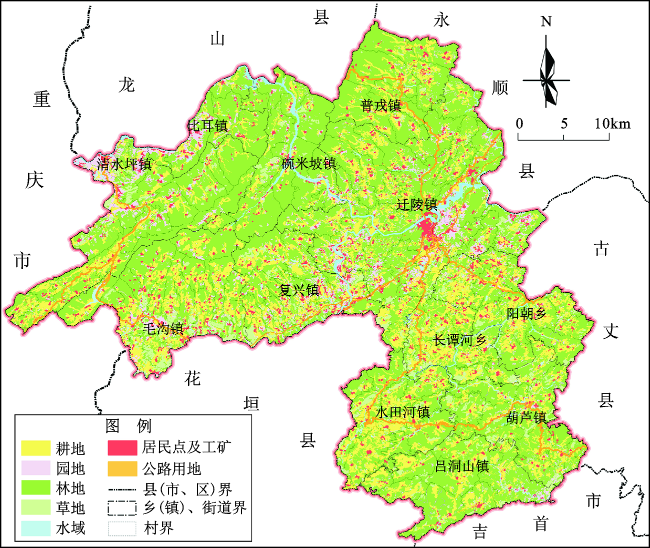
Fig.1 Overview of the study area图1 研究区概况 |
Table 1 Village area industry poverty alleviation space poverty trap measure system表1 村域产业扶贫的空间贫困陷阱测度指标体系与权重分配 |
| 维度 | 维度权重 | 子维度 | 指标 | 序号 | 指标权重 |
|---|---|---|---|---|---|
| 自然环境(N) | 0.101 | 地形 | 平均高程(m) | A1 | 0.010 |
| 15°以上坡度面积比例(%) | A2 | 0.012 | |||
| 地质灾害 | 地质灾害危险程度 | A3 | 0.020 | ||
| 水资源 | 供水能力等级 | A4 | 0.020 | ||
| 土地 | 耕地面积占总面积比重(%) | A5 | 0.008 | ||
| 茶园或果园面积占总面积比重(%) | A6 | 0.009 | |||
| 土壤侵蚀情况 | A7 | 0.022 | |||
| 地理区位(G) | 0.208 | 城镇带动 | 到县中心的距离(km) | A8 | 0.030 |
| 到乡镇驻地的距离(km) | A9 | 0.028 | |||
| 交通条件 | 到主干公路的距离(km) | A10 | 0.028 | ||
| 是否通村组公路 | A11 | 0.075 | |||
| 规划约束 | 是否处于自然保护区或者缓冲区 | A12 | 0.047 | ||
| 经济基础(E) | 0.338 | 村集体 | 村集体经济年收入(万元) | A13 | 0.096 |
| 是否有加工厂、产业生产基地 | A14 | 0.090 | |||
| 农户 | 农户人均年收入(元) | A15 | 0.084 | ||
| 家用电器普及率(%) | A16 | 0.068 | |||
| 人力资本(P) | 0.130 | 数量 | 人口密度(人/ km2) | A17 | 0.027 |
| 青壮年劳动力人数占比(%) | A18 | 0.040 | |||
| 质量 | 高中以上学历人口占比(%) | A19 | 0.031 | ||
| 掌握致富技术的农户占比(%) | A20 | 0.032 | |||
| 社会发展(S) | 0.223 | 教育 | 到小学的距离(km) | A21 | 0.027 |
| 医疗 | 是否有社区卫生室 | A22 | 0.059 | ||
| 住房 | 危房户改造比例(%) | A23 | 0.055 | ||
| 社保 | 农村低保与兜底户占比(%) | A24 | 0.048 | ||
| 信息化 | 是否开展光纤进村 | A25 | 0.019 | ||
| 是否覆盖通讯信号 | A26 | 0.015 |
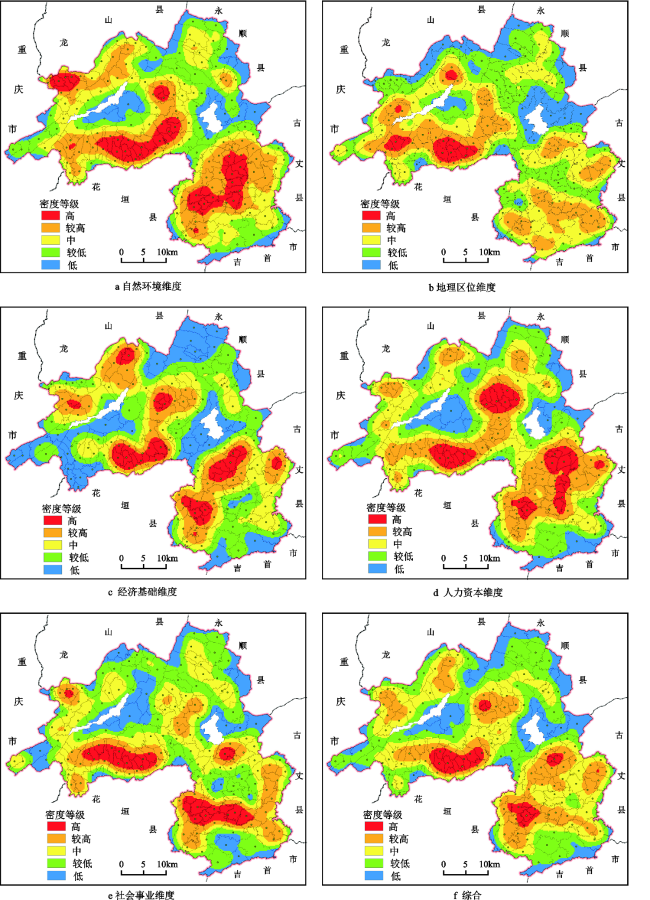
Fig. 2 Spatial poverty traps of poverty villages on alleviating poverty through industry development图2 村域产业扶贫的空间贫困陷阱 |
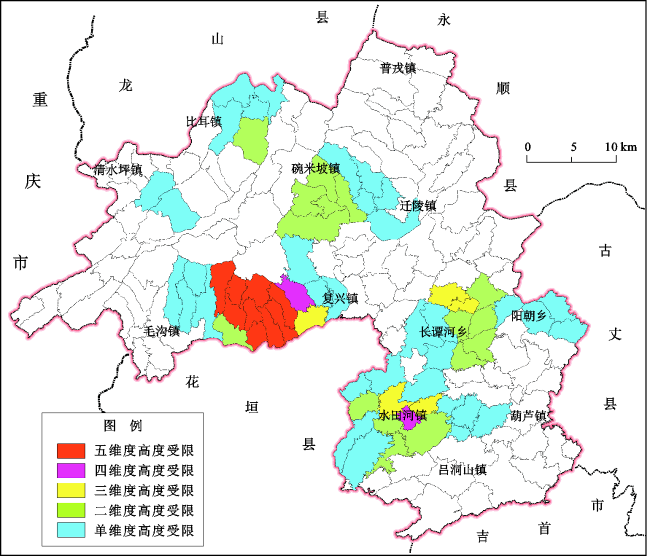
Fig. 3 Restricted dimension on alleviating poverty through industry development图3 村域空间贫困陷阱受限维度 |
The authors have declared that no competing interests exist.
| [1] |
[
|
| [2] |
[
|
| [3] |
[
|
| [4] |
[
|
| [5] |
[
|
| [6] |
[Liu Yuxiang.Study on farmers’ cooperative poverty alleviation model in underdeveloped. Issues in Agricultural Economy,2015(7):37-45,110-111.]
|
| [7] |
[
|
| [8] |
[
|
| [9] |
[
|
| [10] |
|
| [11] |
[
|
| [12] |
[
|
| [13] |
[
|
| [14] |
|
| [15] |
|
| [16] |
[
|
| [17] |
[
|
| [18] |
[
|
| [19] |
|
| [20] |
[
|
| [21] |
[
|
/
| 〈 |
|
〉 |