



地方小吃空间扩散格局与模式——基于中国四大知名地方小吃POI数据的研究
|
朱邦耀(1982−),男,湖北十堰人,博士,副教授,主要从事区域经济与城乡规划研究。E-mail: zby2000@126.com |
收稿日期: 2020-01-16
修回日期: 2020-04-13
网络出版日期: 2022-02-17
基金资助
吉林省社会科学基金项目(2018BS19)
国家自然科学基金项目(41801165)
版权
Spatial Diffusion Pattern and Mode of Local Snacks: Based on POI Data of Four Famous Local Snacks in China
Received date: 2020-01-16
Revised date: 2020-04-13
Online published: 2022-02-17
Supported by
Social Science Foundation of Jilin Province(2018BS19)
National Natural Science Foundation of China(41801165)
Copyright
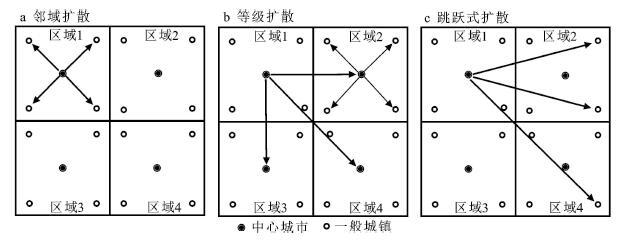
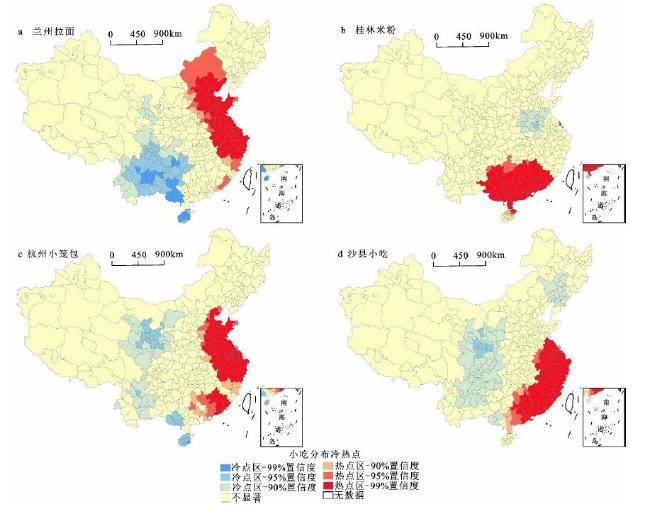
以中国四大知名地方小吃门店兴趣点(POI)大数据为主要数据源,基于密度、距离与加权平均中心方法分析地方小吃空间集聚与扩散格局,采用空间自相关、聚类和异常值分析以及热点分析方法研究地方小吃空间集聚关联特征以及空间扩散模式。结果表明:① 地方小吃在不同尺度上的空间扩散格局存在显著差异,东部地区和中西部省会城市是地方小吃的主要集聚地;② 地方小吃的空间集聚表现出自相关特征,邻域扩散、等级扩散和跳跃式扩散等扩散模式相互融合;③ 地方小吃空间扩散的冷热点集聚区分异明显,反映出不同小吃认可群体范围的差异以及中国各地饮食习惯的空间分异;④ 饮食文化扩散与人口迁移扩散具有空间重合性,经济发展水平较高、人口净流入地区对不同饮食文化的包容性较强。
朱邦耀 , 吴媛媛 . 地方小吃空间扩散格局与模式——基于中国四大知名地方小吃POI数据的研究[J]. 地理科学, 2021 , 41(12) : 2179 -2185 . DOI: 10.13249/j.cnki.sgs.2021.12.011
The spatial gathering and diffusion of local snacks is the main content of spatial communication of catering culture, and also an important performance of population migration and regional cultural exchange. Taking the four famous local snacks in China as the analyzing examples, this paper analyzes the spatial agglomeration and diffusion pattern of local snacks based on the density, distance and weighted average center method, taking the POI of snack stores as the main data source. Then, the spatial autocorrelation, clustering, outlier analysis and hot spot analysis are used to study the spatial correlation characteristics and spatial diffusion model of local snack clusters. The results show that: 1) There are significant differences in the spatial diffusion pattern of local snacks on different scales. The eastern region and the central and western capital cities are the main gathering places of local snacks. 2) The spatial agglomeration of local snacks shows positive spatial autocorrelation. The spatial diffusion model has the characteristics of neighborhood diffusion, grade diffusion and jump diffusion. 3) There are obvious differences in the cold and hot spots of spatial diffusion of different kinds of local snacks, reflecting the differences in the scope of different snack recognition groups and the spatial differences in the eating habits of different parts of China. 4) The diffusion of food culture and population migration and diffusion have space coincidence. The areas with higher economic development level and net population inflow have stronger inclusiveness to different food culture. The areas with large population have more abundant demand for food consumption, and the distribution density of various snacks and fast food stores is higher. In the eastern coastal areas and the capital cities with large population, the proportion of floating population is relatively high. Local snacks not only maintain the livelihood of snack practitioners, but also meet the consumption needs of a large number of floating population with different eating habits.
Key words: local snacks; spatial diffusion; POI data; food culture
表1 中国四大知名小吃门店空间分布全局Moran’s I指数Table 1 Global Moran index of spatial distribution of four famous snack stores in China |
| 小吃 | Moran’s I | E(I) | Z值 | P值 |
| 注:*为满足99%的置信度;不含港澳台数据。 | ||||
| 兰州拉面 | 0.2135 | −0.0027 | 15.9039* | 0 |
| 桂林米粉 | 0.3339 | −0.0027 | 25.9758* | 0 |
| 杭州小笼包 | 0.2180 | −0.0027 | 16.5682* | 0 |
| 沙县小吃 | 0.3167 | −0.0027 | 23.7276* | 0 |
| [1] |
Beardsworth A, Keil T. Sociology on the menu: An invitation to the study of food and society[M]. London: Routledge, 1996.
|
| [2] |
Hall C M. Why forage when you don't have to? Personal and cultural meaning in recreational foraging: A new Zealand study[J]. Journal of Heritage Tourism, 2013, 8(2-3): 224-233.
|
| [3] |
Cheung S C H, Chee Beng T. Food and foodways in Asia: Resource, tradition and cooking[M]. London: Routledge, 2007.
|
| [4] |
朱竑, 张博, 马凌. 新型城镇化背景下中国流动人口研究: 议题与展望[J]. 地理科学, 2019, 39(1): 1-11.
Zhu Hong, Zhang Bo, Ma Ling. A review of Chinese internal migration research under the background of new-type urbanization: Topics and prospects. Scientia Geographica Sinica, 2019, 39(1): 1-11.
|
| [5] |
王维. 华侨与日本中华饮食文化的本土化——以长崎“杂拌面”和函馆“中华汉堡包”为例[J]. 华侨华人历史研究, 2017(4): 1-9.
Wang Wei. Overseas Chinese and the localization of Chinese food culture in Japan—A case study on Nagasaki’s Champon and Hakotdate’s Chinese style hamburger. Journal of Overseas Chinese History Studies, 2017(4): 1-9.
|
| [6] |
房静静, 袁同凯. 空间、饮食与社会变迁: 理论演进脉络[J]. 西北民族大学学报(哲学社会科学版), 2018(2): 51-61.
Fang Jingjing, Yuan Tongkai. Space, food and social transition: Skeletons of theoretical evolution. Journal of Northwest Minzu University (Philosophy and Social Science), 2018(2): 51-61.
|
| [7] |
Cook I. Geographies of food: Mixing[J]. Progress in Human Geography, 2008, 32(1): 821-833.
|
| [8] |
Collins F L. Of kimchi and coffee: Globalization, transnationalism and familiarity in culinary consumption[J]. Social & Cultural Geography, 2008, 9(2): 151-169.
|
| [9] |
Molz J G. Eating difference: The cosmopolitan mobilities of food tourism[J]. Space and Culture, 2007, 10(1): 77-93.
|
| [10] |
陈传康. 中国饮食文化的区域分化和发展趋势[J]. 地理学报, 1994, 49(3): 226-235.
Chen Chuankang. The culture of Chinese diet: Regional differentiation and developing trends. Acta Geographica Sinica, 1994, 49(3): 226-235.
|
| [11] |
赵莹, 梁锦鹏, 吴家铭. 珠海市饮食空间与移民职住空间的关系研究[J]. 地理与地理信息科学, 2019, 35(4): 76-82.
Zhao Ying, Liang Jinpeng, Wu Jiaming. Relationship between catering culture and job-housing spatial distribution of immigrants: A case study of Zhuhai. Geography and Geo-Information Science, 2019, 35(4): 76-82.
|
| [12] |
蔡晓梅, 赖正均. 广州居民在外饮食消费行为的时空间特征研究[J]. 人文地理, 2008, 23(3): 79-84.
Cai Xiaomei, Lai Zhengjun. Spatio-temporal characteristic of the Guangzhou resident's consumpation behavior in the non-home made food. Human Geography, 2008, 23(3): 79-84.
|
| [13] |
蔡晓梅, 朱竑, 刘晨. 情境主题餐厅员工地方感特征及其形成原因——以广州味道云南食府为例[J]. 地理学报, 2012, 67(2): 239-252.
Cai Xiaomei, Zhu Hong, Liu Chen. Characteristics and causes of situational theme restaurant staff's sense of place: A case study of the Taste-Yunnan Restaurant in Guangzhou. Acta Geographica Sinica, 2012, 67(2): 239-252.
|
| [14] |
曾国军, 刘梅, 刘博, 等. 跨地方饮食文化生产的过程研究——基于符号化的原真性视角[J]. 地理研究, 2013, 32(12): 2366-2376.
Zeng Guojun, Liu Mei, Liu Bo et al. Research on process to translocal restaurants' culture production: Based on the perspective of symbolization of authenticity. Geographical Research, 2013, 32(12): 2366-2376.
|
| [15] |
薛樵风, 金晓斌, 韩娟, 等. 区域历史人口空间格局精细化重建: 方法与实证[J]. 地理科学, 2019, 39(12): 1857-1865.
Xue Qiaofeng, Jin Xiaobin, Han Juan et al. Refinement reconstruction of the spatial pattern of regional historical population: Method and demonstration. Scientia Geographica Sinica, 2019, 39(12): 1857-1865.
|
| [16] |
古恒宇, 刘子亮, 沈体雁. 中国省际流动人口户籍迁移意愿的空间格局及影响机制分析[J]. 地理科学, 2019, 39(11): 1702-1710.
Gu Hengyu, Liu Ziliang, Shen Tiyan. Spatial pattern and influencing mechanism of interprovincial migration’s Hukou transfer intention in China. Scientia Geographica Sinica, 2019, 39(11): 1702-1710.
|
| [17] |
王新贤, 高向东. 中国流动人口分布演变及其对城镇化的影响——基于省际、省内流动的对比分析[J]. 地理科学, 2019, 39(12): 1866-1874.
Wang Xinxian, Gao Xiangdong. The evolution of China's floating population and its impact on urbanization: A comparative analysis based on inter-and intra-provincial perspectives. Scientia Geographica Sinica, 2019, 39(12): 1866-1874.
|
| [18] |
雷金容, 王晓文, 张瀚文, 等. 跨国连锁餐饮企业空间扩散过程及机理研究——以福州市麦当劳和肯德基餐厅为例[J]. 世界地理研究, 2018, 27(5): 93-104.
Lei Jinrong, Wang Xiaowen, Zhang Hanwen et al. Spatial diffusion and mechanism of multinational chain catering enterprises. World Regional Studies, 2018, 27(5): 93-104.
|
| [19] |
刘申, 徐美, 王丽娟. 基于长沙市肯德基布局分析的现代商业选址研究[J]. 经济地理, 2009, 29(12): 2039-2043.
Liu Shen, Xu Mei, Wang Lijuan. Study on the location of modern business based on an analysising the layout of KFC in Changsha. Economic Geography, 2009, 29(12): 2039-2043.
|
| [20] |
曾国军, 陆汝瑞. 星巴克在中国大陆的空间扩散特征与影响因素研究[J]. 地理研究, 2017, 36(1): 188-202.
Zeng Guojun, Lu Rurui. Spatial expansion mode and its influencing factors of Starbucks in mainland of China. Geographical Research, 2017, 36(1): 188-202.
|
| [21] |
Taylor S, Lyon P. Paradigm lost: The rise and fall of McDonaldization[J]. International Journal of Contemporary Hospitality Management, 1995, 7(2): 64-68.
|
| [22] |
罗秋菊, 丁绍莲, 潘珂. 外来饮食文化影响下广州本地居民地方身份建构过程的代际差异[J]. 地理研究, 2018, 37(9): 1762-1774.
Luo Qiuju, Ding Shaolian, Pan Ke. Generational differences in the influence of exotic gastronomic culture on local residents' place identity in Guangzhou. Geographical Research, 2018, 37(9): 1762-1774.
|
| [23] |
马丽君, 张家凤. 区域旅游发展空间差异变化对经济发展平衡性的影响[J]. 经济地理, 2020, 40(1): 197-203.
Ma Lijun, Zhang Jiafeng. The impact of spatial differences in regional tourism development on the balance of economic development. Economic Geography, 2020, 40(1): 197-203.
|
| [24] |
吴朋, 李玉刚, 管程程, 等. 基于ESDA-GIS的成渝城市群人居环境质量测度与时空格局分异研究[J]. 中国软科学, 2018(10): 93-108.
Wu Peng, Li Yugang, Guan Chengheng et al. Spatial-temporal differentiation of human settlement in Chengdu-Chongqing urban agglomeration based on ESDA-GIS. China Soft Science, 2018(10): 93-108.
|
| [25] |
朱邦耀, 宋玉祥, 李国柱, 等. C2C电子商务模式下中国“淘宝村”的空间聚集格局与影响因素[J]. 经济地理, 2016, 36(4): 92-98.
Zhu Bangyao, Song Yuxiang, Li Guozhu et al. Spatial aggregation pattern and influencing factors of Taobao Village in China under the C2C E-commerce mode. Economic Geography, 2016, 36(4): 92-98.
|
| [26] |
张海平, 周星星, 汤国安, 等. 基于GIS场模型的城市餐饮服务热点探测及空间格局分析[J]. 地理研究, 2020, 39(2): 354-369.
Zhang Haiping, Zhou Xingxing, Tang Guoan et al. Hotspot discovery and its spatial pattern analysis for catering service in cities based on field model in GIS. Geographical Research, 2020, 39(2): 354-369.
|
| [27] |
林存贞, 林李月, 朱宇, 等. 跨地区生计视角下流动人口在流出地住房投资行为的时空特征[J]. 人文地理, 2018, 33(4): 43-51.
Lin Cunzhen, Lin Liyue, Zhu Yu et al. The time-space patterns of the migrants’ housing investment behavior in their origin places under the perspective of multi-locational livelihood. Human Geography, 2018, 33(4): 43-51.
|
| [28] |
段成荣, 赵畅, 吕利丹. 中国流动人口流入地分布变动特征(2000-2015)[J]. 人口与经济, 2020(1): 89-99.
Duan Chengrong, Zhao Chang, Lyu Lidan. Changes of destination distribution of floating population in China(2000-2015). Population & Economics, 2020(1): 89-99.
|
/
| 〈 |
|
〉 |