



自然商品化中的物质实践和话语建构——以困鹿山普洱茶为例
|
陶伟(1971-),女,河南平顶山人,博士,教授,博导,主要从事城市形态理论与方法、社会文化地理学、城市旅游与遗产保护研究。E-mail: 748954219@qq.com |
收稿日期: 2021-03-12
修回日期: 2021-11-19
网络出版日期: 2022-12-20
基金资助
国家社会科学基金重大项目(18ZDA161)
版权
Material Practice and Discourse Construction in Commercialization of Nature: A Case Study of the Pu’er Tea in Kunlushan Village
Received date: 2021-03-12
Revised date: 2021-11-19
Online published: 2022-12-20
Supported by
Major Program of National Social Science Foundation of China(18ZDA161)
Copyright
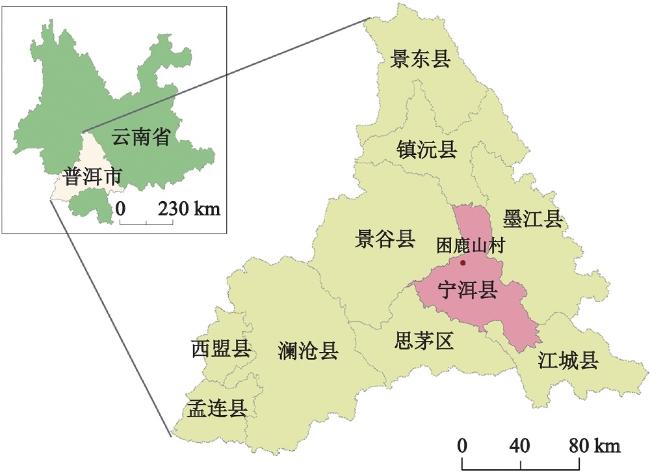
以云南省宁洱县困鹿山村为案例地,基于“自然的社会建构”理论视角,从当地普洱茶的商品化行动者网络中审视人类与非人类、社会与自然的互动过程和复杂关系。研究发现,在普洱茶商品化的时空过程中,不同的人类主体围绕普洱茶展开了一系列社会实践,赋予了其丰富的经济价值和文化意义;与此同时,普洱茶见证了困鹿山村的乡村重构,村落的物质形态和村民的生产生活方式因普洱茶发生了重大转变,其商品化进程已经深深嵌入到地方的发展中。通过剖析普洱茶在困鹿山村重构的核心作用,自然要素的能动性和参与社会实践的方式与过程,进而呼吁从自然与社会的互动视角重新理解中国新时期乡村发展的进程和动力机制。
陶伟 , 李晓璇 , 蔡浩辉 . 自然商品化中的物质实践和话语建构——以困鹿山普洱茶为例[J]. 地理科学, 2022 , 42(12) : 2150 -2159 . DOI: 10.13249/j.cnki.sgs.2022.12.011
Agriculture, a productive activity that human beings utilized natural elements, is regarded as the foundational interaction between Human and Nature. Recently, agricultural products with distinctive characteristics have gradually been favored by consumers, which attracts the attention of geographers and other scholars. It is of great significance to research the spatio-temporal process of their commoditization from its history to the present and its production to consumption. Also, it is worth unraveling how different actants, including humans and nonhumans, perform their agencies, particularly, under the context of Rural Revitalization and Rural-Urban Integration in China. Following the theory of ‘social construction of nature’, this research re-examines the interactive practices and complex relationship by unraveling the actor-network of the Pu’er Tea’s commoditization in Kunlushan Village, Ning’er County, Yunnan Province. This theory emphasizes the agency of nonhuman subjects who can greatly influence human society. In August 2019 and April 2021, we conducted investigations of the Pu’er Tea’s growing, making and consuming by interviewing different social actants and participant observation. It is found that the Pu’er Tea’s commoditization and Kunlushan Village’s reconstruction have been interwoven. First, different human actors have taken various actions around the Pu’er Tea to develop its economic values and cultural meanings during the spatial-temporal process of its commoditization. But on the other hand, it is the Pu’er Tea that helps connect different human actants and make various social interactions possible. For example, the local governments enforced various policies to reconstruct and reinforce the economic and cultural values of the Pu’er Tea, while cultural elites made their efforts to protect the ancient tea forest and introduce the tea culture. For villagers in Kunlushan, they built close relationships with tea merchants who helped them sell the Pu’er Tea to consumers in urban areas, but their livelihood became more reliant on it instead on traditional farming. The Pu’er Tea also witnesses the rural reconstruction of Kunlushan, where there have been lots of great changes in the village’s material forms and peasants’ daily livelihood. From the perspective of time scale, the relationships between different human actants have not become very close until ‘the Pu’er Tea Fever’ in 2007. Besides flowing the supply chain of the Pu’er Tea’s production and consumption from a spatial perspective, we found that various actors have redeveloped the economic value and cultural significance of the Pu’er tea together. This paper analyses the core role of the Pu’er Tea in Kunlushan’s rural reconstruction and presents the ways that nonhuman actors with potential agencies take part in human social practices. Hence, we call for the necessity of reconsidering the mechanism of Chinese rural development by exploring the interactions between society and nature.
| [1] |
Castree N, Braun B. Social nature: Theory, practice, and politics[M]. Oxford: Blackwell, 2001.
|
| [2] |
朱竑, 尹铎. 自然的社会建构: 西方人文地理学对自然的再认识[J]. 地理科学, 2017, 37(11): 1609-1616
Zhu Hong, Yin Duo. Social construction of nature: The rethink of western human geography on nature. Scientia Geographica Sinica, 2017, 37(11): 1609-1616
|
| [3] |
刘彦随. 现代人地关系与人地系统科学[J]. 地理科学, 2020, 40(8): 1221-1234
Liu Yansui. Modern human-earth relationship and human-earth system science. Scientia Geographica Sinica, 2020, 40(8): 1221-1234
|
| [4] |
吴传钧. 论地理学的研究核心——人地关系地域系统[J]. 经济地理, 1991, 11(3): 1-6
Wu Chuanjun. The core of geographical study: Man-earth areal system. Economic Geography, 1991, 11(3): 1-6
|
| [5] |
高庆彦, 潘玉君, 朱海燕, 等. 20世纪初叶以来中国地理学研究范式特征与发展[J]. 热带地理, 2013, 33(5): 628-635
Gao Qingyan, Pan Yujun, Zhu Haiyan et al. Characteristics and development of paradigms in Chinese geography since the early years of the 20th century. Tropical Geography 2013, 33(5): 628-635
|
| [6] |
Tadaki M, Salmond J, Le Heron R et al. Nature, culture, and the work of physical geography[J]. Transactions of the Institute of British Geographers, 2012, 37(4): 547-562
|
| [7] |
Cloke P, Crang P, Goodwin M. 人文地理概论[M]. 王志弘, 等译. 台北: 巨流图书公司, 2006: 7.
Cloke P, Crang P, Goodwin M. Introduction to Human Geography. Translated by Wang Zhihong et al. Taipei: Chu Liu Book Company, 2006: 7.
|
| [8] |
Woodgate G, Redclift M. From a ‘sociology of nature’ to environmental sociology: Beyond social construction[J]. Environmental Values, 1998, 7(1): 3-24
|
| [9] |
马凌, 朱竑, 王敏. 重返“物质”: 新文化地理学视角下的消费研究及进展[J]. 人文地理, 2019, 34(3): 44-52
Ma Ling, Zhu Hong, Wang Min. Review of re-materialization and consumption studies in new cultural geography. Human Geography, 2019, 34(3): 44-52
|
| [10] |
马克思. 马克思恩格斯全集(第1版)[M]. 中共中央马克思恩格斯列宁斯大林著作编译局, 译. 北京: 人民出版社, 2016: 432-438.
Marx K. The complete works of Marx and Engels (1st edition). Translated by the Central Compilation and Translation Bureau. Beijing: People’s Publishing House, 2016: 432-438.
|
| [11] |
Castree N. The nature of produced nature: Materiality and knowledge construction in Marxism[J]. Antipode, 1995, 27(1): 12-48
|
| [12] |
McKibben B. The end of nature[M]. New York: Random House Publishing Group, 2006.
|
| [13] |
Castree N. Commodifying what nature?[J]. Progress in Human Geography, 2003, 27(3): 273-297
|
| [14] |
Dant T. Material culture in the social world[M]. Buckingham: Open University Press, 1999.
|
| [15] |
Friedland W H, Barton A E, Thomas R J. Manufacturing green gold[M]. UK: Cambridge University Press, 1981.
|
| [16] |
Castree N. False antitheses? Marxism, nature and actor-networks[J]. Antipode, 2002, 34(1): 111-146
|
| [17] |
Callon M. The sociology of an actor-network: The case of the electric vehicle[M]//Callon M et al. Mapping the dynamics of science and technology. Hampshire: The Macmillan Press, 1986: 19-34.
|
| [18] |
刘宣, 王小依. 行动者网络理论在人文地理领域应用研究述评[J]. 人文地理, 2013, 32(7): 1139-1147
Liu Xuan, Wang Xiaoyi. A review on the application of actor network theory to human geography. Human Geography, 2013, 32(7): 1139-1147
|
| [19] |
Latour B. Science in action: How to follow engineers and scientists through society[M]. Cambridge, Massachusetts: Harvard University Press, 1987.
|
| [20] |
While A, Jonas A E, Gibbs D et al. From sustainable development to carbon control: Eco-state restructuring and the politics of urban and regional development[J]. Transactions of the Institute of British Geographers, 2010, 35(1): 76-93
|
| [21] |
Bakker K. Neoliberalizing nature? Market environmentalism in water supply in England and Wales[J]. Annals of the American Association of Geographers, 2005, 95(3): 542-565
|
| [22] |
Carton W. Rendering local: The politics of differential knowledge in carbon offset governance[J]. Annals of the American Association of Geographers, 2020, 110(5): 1353-1368
|
| [23] |
Keul A. Performing the swamp, producing the wetland: Social spatialization in the Atchafalaya Basin[J]. Geoforum, 2013, 45(2): 315-324
|
| [24] |
Kirkpatrick J B, Davison A, Daniels G D et al. Sinners, scapegoats or fashion victims? Understanding the deaths of trees in the green city[J]. Geoforum, 2013, 48(5): 165-176
|
| [25] |
Mbaiwa J E. Cultural commodification and tourism: The Goo-Moremi Community, Central Botswana[J]. Tijdschrift voor economische en sociale geografie, 2011, 102(3): 290-301
|
| [26] |
Collard R C. Putting animals back together, taking commodities apart[J]. Annals of the American Association of Geographers, 2014, 104(1): 151-165
|
| [27] |
Riley M. ‘Letting them go’- Agricultural retirement and human-livestock relations[J]. Geoforum, 2011, 42(1): 16-27
|
| [28] |
Mckenna M K L. Can rural voices effect rural choices? Contesting deregulation in New Zealand’s apple industry[J]. Sociologia Ruralis, 2010, 40(3): 366-386
|
| [29] |
李华, 叶敬忠. 被捕获的自然: 重审水资源商品化[J]. 中国农业大学学报(社会科学版), 2014, 31(2): 40-47
Li Hua, Ye Jingzhong. Captured nature: Rethinking water commodification. Journal of China Agricultural University (Social Sciences), 2014, 31(2): 40-47
|
| [30] |
陈培培, 张敏. 从美丽乡村到都市居民消费空间: 行动者网络理论与大世凹村的社会空间重构[J]. 地理研究, 2015, 34(8): 1435-1446
Chen Peipei, Zhang Min. From beautiful village to urban residents’ consumption space: Actor-network theory and the social space reconstruction of Dashiao Village. Geographical Research, 2015, 34(8): 1435-1446
|
| [31] |
吕书额, 金久红. 地方精英与乡村文化建设——纵观廊坊古音乐会传承引发的思考[J]. 廊坊师范学院学报(社会科学版), 2019, 35(4): 91-98
Lv Shue, Jin Jiuhong. Local elites and rural culture construction: Analysis of the inheritance of Langfang ancient concerts. Journal of Langfang Normal University (Social Sciences Edition), 2019, 35(4): 91-98
|
| [32] |
翟风俭. 地方文化精英对非遗保护的作用——以瑞安木活字印刷术的研究与保护为例[J]. 贵州大学学报(艺术版), 2019, 33(4): 87-91
Zhai Fengjian. Functions of local cultural elites in the protection of intangible cultural heritage: A case study of the research and protection of wooden movable type printing in Rui’an city. Journal of Guizhou University (Art), 2019, 33(4): 87-91
|
| [33] |
孙九霞, 苏静. 地方文化保护与传承中精英个体的日常实践[J]. 地理研究, 2019, 38(6): 1343-1354
Sun Jiuxia, Su Jing. The everyday practice of local elites in the protection and inheritance of local culture. Geographical Research, 2019, 38(6): 1343-1354
|
| [34] |
赵雪雁. 地理学视角的可持续生计研究: 现状、问题与领域[J]. 地理研究, 2017, 36(10): 1859-1872
Zhao Xueyan. Sustainable livelihoods research from the perspective of geography: The present status, questions and priority areas. Geographical Research, 2017, 36(10): 1859-1872
|
| [35] |
Chen M, Liu W, Lu D. Challenges and the way forward in China’s new-type urbanization[J]. Land Use Policy, 2016, 55(6): 334-339
|
| [36] |
Long H, Li Y, Liu Y et al. Accelerated restructuring in rural China fueled by ‘increasing vs. decreasing balance’ land-use policy for dealing with hollowed villages[J]. Land Use Policy, 2012, 29(1): 11-22
|
| [37] |
殷洁, 罗小龙. 资本、权力与空间: “空间的生产”解析[J]. 人文地理, 2012, 27(2): 12-16
Yin Jie, Luo Xiaolong. Capital, power and space: Decoding ‘production of space’. Human Geography, 2012, 27(2): 12-16
|
| [38] |
费孝通. 乡土中国[M]. 上海: 上海人民出版社, 2006.
Fei Xiaotong. Rural China. Shanghai: Shanghai Renmin Press, 2006.
|
| [39] |
Yin D, Qian J, Zhu H. Frontier development in the midst of ecological civilization: Unravelling the production of maca in Yunnan, China[J]. Geoforum, 2019, 106: 144-154
|
| [40] |
陶伟, 蔡浩辉, 廖健豪. 粮食地理学视角下乡村本土农业的社会建构——元阳哈尼梯田稻作系统案例[J]. 地理科学, 2020, 40(4): 637-645
Tao Wei, Cai Haohui, Liao Jianhao. Social construction of local agriculture from the perspective of agro-food geography: A case study of Hani Rice Terraces System. Scientia Geographica Sinica, 2020, 40(4): 637-645
|
| [41] |
Jackson P. Rematerializing social and cultural geography[J]. Social & Cultural Geography, 2000, 1(1): 9-14
|
| [42] |
Fleming J. Toward vegetal political ecology: Kyrgyzstan’s walnut-fruit forest and the politics of graft ability[J]. Geoforum, 2017, 79(2): 26-35
|
| [43] |
卢薇, 尹铎, 朱竑. 西方超越人类的地理学研究进展[J]. 地理学报, 2019, 74(10): 2178-2191
Lu Wei, Yin Duo, Zhu Hong. The progress of more-than-human geographies in western geography. Acta Geographica Sinica, 2019, 74(10): 2178-2191
|
| [44] |
Lawrence A M. Listening to plants: Conversations between critical plant studies and vegetal geography[J]. Progress in Human Geography, 2022, 46(2): 629-651
|
/
| 〈 |
|
〉 |