



中国城市资源空间错配:特征测度与时空演进
|
程开明(1975—),男,湖北广水人,教授,博导,主要从事城市与区域经济、空间统计研究。E-mail: chengkaim@163.com |
收稿日期: 2022-01-28
修回日期: 2022-10-02
网络出版日期: 2023-04-20
基金资助
国家社会科学基金重大项目(20&ZD133)
版权
Resource spatial misallocation of cities in China: Characteristic measurement and spatio-temporal evolution
Received date: 2022-01-28
Revised date: 2022-10-02
Online published: 2023-04-20
Supported by
National Social Science Foundation of China(20&ZD133)
Copyright
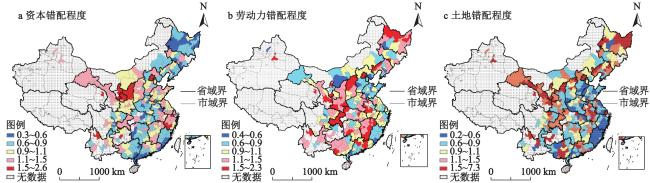
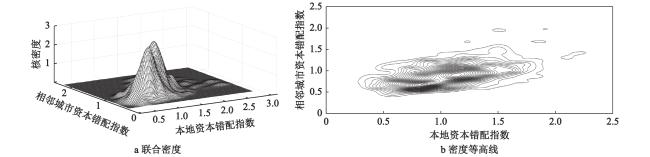
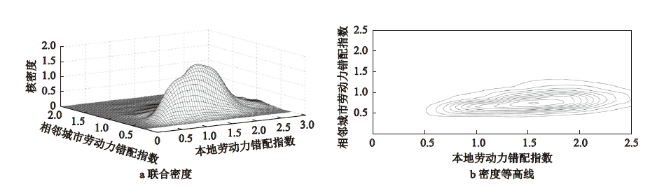
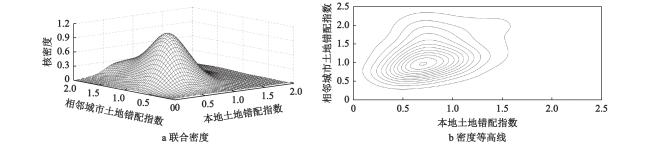
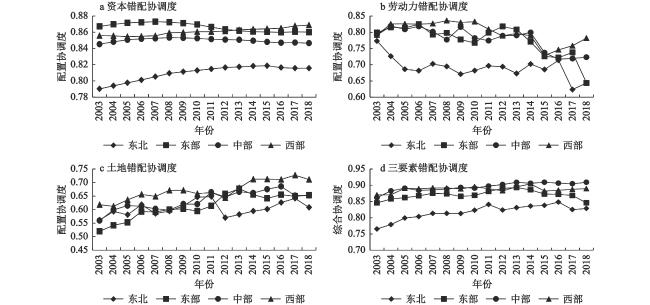
基于拓展的三要素空间一般均衡模型,测度2003―2018年中国地级以上城市资本、劳动力和土地资源空间错配程度,通过时空核密度和综合协调指数解析城市资源空间错配的集聚模式及协调度,以准确反映城市资源空间错配程度及时空演变规律。研究发现:① 样本期内不同资源的城市空间错配程度变动趋势差异明显。城市资本和劳动力空间错配持续改善,但土地空间错配先缓解后加剧,行政力量阻碍资源市场化流动是加剧土地错配的重要因素。② 3种资源在城市间的空间集聚模式具有明显差异。城市资本和土地资源的空间配置具有强烈的区域偏向性和共聚性,相邻城市资源配置呈现高–高、低–低型正向集聚模式;户籍壁垒和非均等化公共服务阻碍城市劳动力自由流动,使得相邻城市劳动力配置呈现出高–低型负向集聚模式。③ 相邻城市在资本市场化改革和土地政策调整方面具有一致性,但城市之间劳动力错配的协调度呈恶化趋势;东北地区要素市场化改革协同性最低。研究结论为完善要素市场化配置体制机制、明晰城市层面资源配置的演化路径和优化策略提供了参考。
程开明 , 于静涵 . 中国城市资源空间错配:特征测度与时空演进[J]. 地理科学, 2023 , 43(4) : 617 -628 . DOI: 10.13249/j.cnki.sgs.2023.04.005
Since the reform and opening up, China has gradually formed a more sound commodity market, but the reform of factor market allocation has lagged behind relatively. The markets for capital, labor, land and other factors of production are still not perfect, and the problem of resource allocation significantly affects the transformation of China's productive forces and production relations. Due to the significant differences in resource endowments in different regions and the restrictions on the free flow of factors by administrative barriers, the cost of factor flow and access to regions is high and resources cannot flow smoothly to advantageous locations. This leads to uneven resource allocation between regions and spatial misallocation of resources. The spatial misallocation of resources not only triggers competition for regional resources, intensifies local protectionism, and leads to more serious structural imbalances such as industrial structure convergence, duplication of major facilities construction and excessive market competition in various regions, but also aggravates problems such as urban traffic congestion, housing tension and environmental pollution due to unbalanced resource allocation. Therefore, a comprehensive and in-depth exploration of the characteristics of resource misallocation in China and its spatial and temporal evolution pattern is of great theoretical and practical significance for the government to re-examine the characteristics of factor mismatch, clarify the direction of optimising resource allocation and promote factor market-oriented reforms. To accurately reflect the spatial mismatch degree and spatial-temporal evolution law of city resources, this paper measures the mismatch degree of capital, labor, and land resources in cities at the prefecture level and above in China from 2003 to 2018 based on the extended three-factor spatial general equilibrium model. We use spatio-temporal kernel density and comprehensive coordination index to analyze the changing trend of city resources spatial mismatch, spatial agglomeration pattern, and the coordination degree of factor marketization reform. The results show that: 1) The variation trend of city spatial mismatch degree of different resources is different. The misallocation of capital and labor space continues to improve, but the misallocation of land space first alleviates and then intensifies. The administrative force hindering the market flow of resources is an important factor aggravating the land misallocation. 2) The spatial agglomeration patterns of the three resources among cities are different. The spatial allocation of city capital and land resources has strong regional bias and convergence, and the resource allocation of neighboring cities shows a high-high, low-low positive agglomeration pattern. However, household registration barriers and unequal public services hinder the free flow of city labor, making it difficult to achieve a balanced allocation of labor resources between cities, and the labor resources in neighboring cities show a high-low negative agglomeration pattern. 3) Neighboring cities have consistency in capital market reform and land policy adjustment. However, the coordination degree of labor mismatch between cities is worsening. Northeast China has the lowest degree of synergy in factor marketization reform. The research conclusion of this paper provides a reference for improving the mechanism of market-oriented allocation of factors and clarifying the evolution path and optimization strategy of resource allocation at the city level.
表1 中国不同地区城市资源空间错配指数Table 1 City resource space misallocation index in different regions of China |
| 类型 | 年份 | 东北 地区 | 东部地区 | 西部地区 | 中部地区 | ||||||
| 东部沿海 | 北部沿海 | 南部沿海 | 西北 | 西南 | 长江中游 | 黄河中游 | |||||
| 注:不含港澳台数据。 | |||||||||||
| 资本 错配 指数 | 2003 | 0.763 | 1.250 | 1.069 | 0.827 | 1.471 | 0.908 | 0.882 | 1.032 | ||
| 2010 | 0.748 | 1.263 | 1.073 | 0.814 | 1.599 | 0.953 | 0.913 | 0.996 | |||
| 2014 | 0.762 | 1.294 | 1.083 | 0.825 | 1.556 | 0.913 | 0.897 | 0.993 | |||
| 2018 | 0.844 | 1.261 | 1.087 | 0.816 | 1.591 | 0.900 | 0.884 | 1.023 | |||
| 劳动力 错配 指数 | 2003 | 1.720 | 0.666 | 0.843 | 0.936 | 1.455 | 1.272 | 1.393 | 1.473 | ||
| 2010 | 1.354 | 0.965 | 0.792 | 1.080 | 1.319 | 1.106 | 1.278 | 1.143 | |||
| 2014 | 0.994 | 1.101 | 0.792 | 1.018 | 1.400 | 1.040 | 1.196 | 1.071 | |||
| 2018 | 0.936 | 1.094 | 0.660 | 1.178 | 1.297 | 1.042 | 1.182 | 1.111 | |||
| 土地 错配 指数 | 2003 | 1.872 | 0.773 | 0.785 | 0.894 | 2.278 | 1.152 | 1.291 | 1.139 | ||
| 2010 | 1.551 | 0.838 | 0.772 | 0.972 | 2.249 | 1.099 | 1.243 | 1.066 | |||
| 2014 | 1.483 | 0.856 | 0.821 | 1.072 | 2.263 | 1.131 | 1.141 | 0.998 | |||
| 2018 | 1.546 | 0.809 | 0.841 | 1.388 | 2.450 | 1.233 | 1.078 | 1.027 | |||
| [1] |
陈彦斌, 王兆瑞, 于泽, 等. 要素市场化配置的共性问题与改革总体思路[J]. 改革, 2020(7): 5-16.
Chen Yanbin, Wang Zhaorui, Yu Ze et al. The common problems and overall solutions of the reform of market-based allocation of factors of production. Reform, 2020(7): 5-16.
|
| [2] |
Hsieh C T, Klenow P J. Misallocation and manufacturing TFP in China and India[J]. The Quarterly Journal of Economics, 2009, 124(4): 1403-1448.
|
| [3] |
Restuccia D, Rogerson R. The causes and costs of misallocation[J]. Journal of Economic Perspectives, 2017, 31(3): 151-74.
|
| [4] |
Chauvin J P, Glaeser E, Ma Y et al. What is different about urbanization in rich and poor countries? Cities in Brazil, China, India and the United States[J]. Journal of Urban Economics, 2017, 98: 17-49.
|
| [5] |
Liu T, Cao G, Yan Y et al. Urban land marketization in China: Central policy, local initiative, and market mechanism[J]. Land Use Policy, 2016, 57: 265-276.
|
| [6] |
谢呈阳, 周海波, 胡汉辉. 产业转移中要素资源的空间错配与经济效率损失: 基于江苏传统企业调查数据的研究[J]. 中国工业经济, 2014(12): 130-142.
Xie Chengyang, Zhou Haibo, Hu Hanhui. The spatial misallocation of factors and economy efficiency loss in industrial transfer: A study based on survey data of traditional industries in Jiangsu province. China Industrial Economics, 2014(12): 130-142.
|
| [7] |
Brandt L, Tombe T, Zhu X. Factor market distortions across time, space and sectors in China[J]. Review of Economic Dynamics, 2013, 16(1): 39-58.
|
| [8] |
王林辉, 袁礼. 资本错配会诱发全要素生产率损失吗[J]. 统计研究, 2014, 31(8): 11-18.
Wang Linhui, Yuan Li. Was capital misallocation an important factor for loss in total factor productivity?. Statistical Research, 2014, 31(8): 11-18.
|
| [9] |
盖庆恩, 朱喜, 程名望, 等. 土地资源配置不当与劳动生产率[J]. 经济研究, 2017, 52(5): 117-130.
Gai Qingen, Zhu Xi, Cheng Mingwang et al. Land misallocation and aggregate labor productivity. Economic Research Journal, 2017, 52(5): 117-130.
|
| [10] |
解晋. 中国分省人力资本错配研究[J]. 中国人口科学, 2019, 32(6): 84-96+128.
Xie Jin. Research on human capital mismatch across provinces in China. Chinese Journal of Population Science, 2019, 32(6): 84-96+128.
|
| [11] |
曹玉书, 楼东玮. 资源错配、结构变迁与中国经济转型[J]. 中国工业经济, 2012(10): 5-18.
Cao Yushu, Lou Dongwei. Misallocation, structural change and China's economic transition. China Industrial Economics, 2012(10): 5-18.
|
| [12] |
Yang M, Yang F, Sun C. Factor market distortion correction, resource reallocation and potential productivity gains: An empirical study on China's heavy industry sector[J]. Energy Economics, 2018, 69: 270-279.
|
| [13] |
王文, 孙早. 中国地区间研发资源错配测算与影响因素分析[J]. 财贸经济, 2020, 41(5): 67-83.
Wang Wen, Sun Zao. Regional R&D resource misallocation and its determinants in China. Finance & Trade Economics, 2020, 41(5): 67-83.
|
| [14] |
邓仲良, 张可云. 中国经济增长的空间分异为何存在?——一个空间经济学的解释[J]. 经济研究, 2020, 55(4): 20-36.
Deng Zhongliang, Zhang Keyun. Why does the spatial differentiation of China's economic growth exist?—An interpretation of spatial economics. Economic Research Journal, 2020, 55(4): 20-36.
|
| [15] |
江艇, 孙鲲鹏, 聂辉华. 城市级别、全要素生产率和资源错配[J]. 管理世界, 2018, 34(3): 38-50+77+183.
Jiang Ting, Sun Kunpeng, Nie Huihua. Administrative rank, total factor productivity and resource misallocation in Chinese cities. Management World, 2018, 34(3): 38-50+77+183.
|
| [16] |
Shenoy A. Market failures and misallocation[J]. Journal of Development Economics, 2017, 128: 65-80.
|
| [17] |
郭晓丹, 张军, 吴利学. 城市规模、生产率优势与资源配置[J]. 管理世界, 2019, 35(4): 77-89.
Guo Xiaodan, Zhang Jun, Wu Lixue. City size, advantages of firm productivity and resource allocation efficiency. Management World, 2019, 35(4): 77-89.
|
| [18] |
Hsieh C T, Hurst E, Jones C I et al. The allocation of talent and U. S. Economic growth[J]. Econometrica, 2019, 87(5): 1439-1474.
|
| [19] |
李力行, 黄佩媛, 马光荣. 土地资源错配与中国工业企业生产率差异[J]. 管理世界, 2016(8): 86-96.
Li Lixing, Huang Peiyuan, Ma Guangrong. Land resource misallocation and productivity difference of industrial enterprises in China. Management World, 2016(8): 86-96.
|
| [20] |
杨其静, 卓品, 杨继东. 工业用地出让与引资质量底线竞争——基于2007—2011年中国地级市面板数据的经验研究[J]. 管理世界, 2014(11): 24-34.
Yang Qijing, Zhuo Pin, Yang Jidong. Industrial land transfer and capital introduction quality bottom line competition—Empirical research based on panel data of Prefecture-level cities in China from 2007 to 2011. Management World, 2014(11): 24-34.
|
| [21] |
张莉, 程可为, 赵敬陶. 土地资源配置和经济发展质量——工业用地成本与全要素生产率[J]. 财贸经济, 2019, 40(10): 126-141.
Zhang Li, Cheng Kewei, Zhao Jingtao. Land resource allocation and economic development quality: Industrial land price and total factor productivity. Finance & Trade Economics, 2019, 40(10): 126-141.
|
| [22] |
陆铭, 李鹏飞, 钟辉勇. 发展与平衡的新时代——新中国70年的空间政治经济学[J]. 管理世界, 2019, 35(10): 11-23+63+219.
Lu Ming, Li Pengfei, Zhong Huiyong. The new era of development and balance: Spatial political economics of new China's regional economy for 70 years. Management World, 2019, 35(10): 11-23+63+219.
|
| [23] |
Aoki S. A simple accounting framework for the effect of resource misallocation on aggregate productivity[J]. Journal of the Japanese and International Economies, 2012, 26(4): 473-494.
|
| [24] |
刘华军, 郭立祥, 乔列成, 等. 中国物流业效率的时空格局及动态演进[J]. 数量经济技术经济研究, 2021, 38(5): 57-74.
Liu Huajun, Guo Lixiang, Qiao Liecheng et al. Spatial-temporal pattern and dynamic evolution of logistics efficiency in China. The Journal of Quantitative & Technical Economics, 2021, 38(5): 57-74.
|
| [25] |
李言, 樊学瑞. 中国地区生产要素价格扭曲的演变: 1978—2016年[J]. 数量经济技术经济研究, 2020, 37(1): 62-82.
Li Yan, Fan Xuerui. Changes in production factors price distortion in China: 1978—2016. The Journal of Quantitative & Technical Economics, 2020, 37(1): 62-82.
|
| [26] |
国家统计局. 中国城市统计年鉴[M]. 2004—2019.北京: 中国统计出版社, 2004−2019.
National Bureau of People's Republic of China. China city statistical yearbook.2004—2019. Beijing: China Statistics Press, 2004−2019.
|
| [27] |
余泳泽. 异质性视角下中国省际全要素生产率再估算: 1978—2012[J]. 经济学(季刊), 2017, 16(3): 1051-1072.
Yu Yongze. Estimation of total factor productivity in China from the perspective of heterogeneity: 1978—2012. China Economic Quarterly, 2017, 16(3): 1051-1072.
|
| [28] |
单豪杰. 中国资本存量K的再估算: 1952—2006年[J]. 数量经济技术经济研究, 2008, 25(10): 17-31.
Shan Haojie. Reestimating the capital stock of China: 1952—2006. The Journal of Quantitative & Technical Economics, 2008, 25(10): 17-31.
|
| [29] |
国家统计局, 人力资源和社会保障部. 中国劳动统计年鉴[M]. 北京: 中国统计出版社, 2004-2019.
National Bureau of People's Republic of China, Ministry of Human Resources and Social Security of the People's Republic of China. China labor statistical yearbook. Beijing: China Statistics Press, 2004-2019.
|
| [30] |
王梦奎. 中国中长期发展的重要问题: 2006—2020[M]. 北京: 中国发展出版社, 2005.
Wang Mengkui. Important issues in China's medium and long term development: 2006—2020. Beijing: China Development Publishing House, 2005.
|
| [31] |
陆铭, 张航, 梁文泉. 偏向中西部的土地供应如何推升了东部的工资[J]. 中国社会科学, 2015(5): 59-83+204-205.
Lu Ming, Zhang Hang, Liang Wenquan. How the bias toward central/western land supplies boosts wages in the East. Social Sciences in China, 2015(5): 59-83+204-205.
|
| [32] |
Ding Y, McQuoid A, Karayalcin C. Fiscal decentralization, fiscal reform, and economic growth in China[J]. China Economic Review, 2019, 53: 152-167.
|
| [33] |
苏红键, 魏后凯. 中国城镇化进程中资源错配问题研究[J]. 社会科学战线, 2019(10): 79-87+281.
Su Hongjian, Wei Houkai. A research on the misallocation and optimization of resources in China's urbanization. Social Science Front, 2019(10): 79-87+281.
|
| [34] |
Shu C, Xie H, Jiang J et al. Is urban land development driven by economic development or fiscal revenue stimuli in China?[J]. Land Use Policy, 2018, 77: 107-115.
|
| [35] |
Chen T, Kung J S. Do land revenue windfalls create a political resource curse? Evidence from China[J]. Journal of Development Economics, 2016, 123: 86-106.
|
| [36] |
Song X, Feng Q, Xia F et al. Impacts of changing urban land-use structure on sustainable city growth in China: A population-density dynamics perspective[J]. Habitat International, 2021, 107: 1022967
|
/
| 〈 |
|
〉 |