



环青海湖骑行游客情感动态性的特征与发生机制
|
陈钢华(1985—),男,湖南新化人,教授,博士,博导,主要从事旅游地理、旅游者时空行为、旅游与流动性研究。E-mail: ganghuachen0311@126.com |
收稿日期: 2023-05-18
修回日期: 2023-08-13
网络出版日期: 2024-07-11
基金资助
国家自然科学基金项目(41971172)
版权
Characteristics and mechanism of emotional dynamics of cycling tourists around Qinghai Lake
Received date: 2023-05-18
Revised date: 2023-08-13
Online published: 2024-07-11
Supported by
National Natural Science Foundation of China(41971172)
Copyright
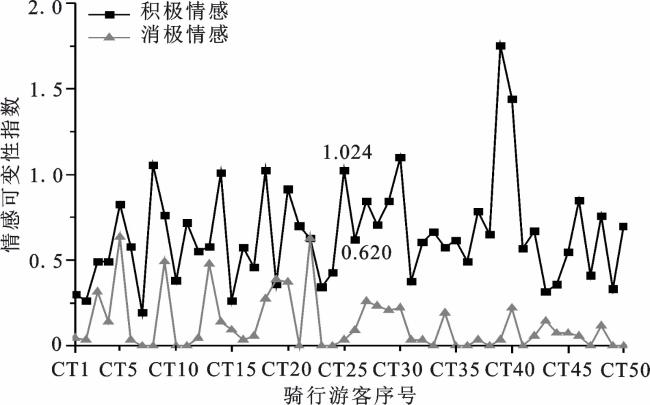
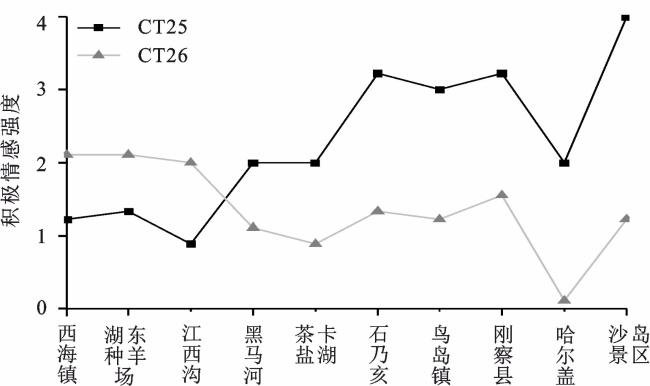
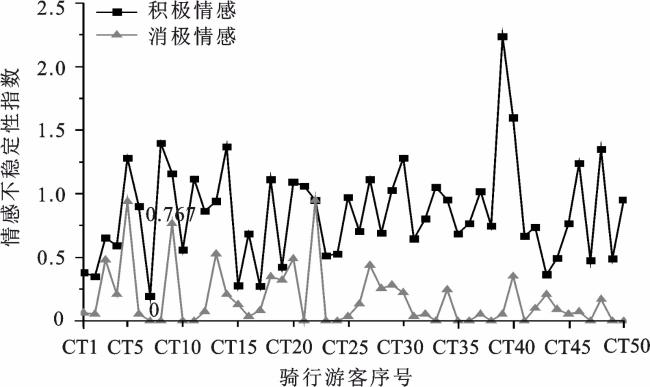
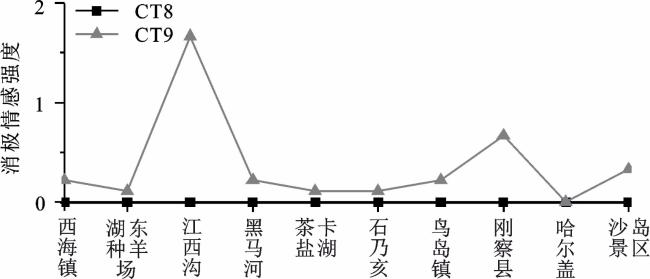
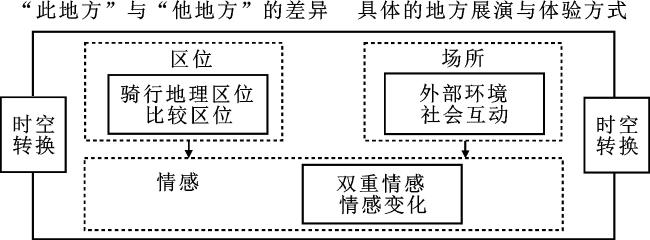
运用混合研究方法,以环青海湖骑行为例,揭示骑行游客情感动态性的特征,并基于地方理论和景观感知理论构建“区位−场所−情感”三维分析框架,识别情感动态性的发生机制。研究发现:① 强度方面,与消极情感相比,游客积极情感的可变性及不稳定性的数值更高、数值区间更大,表明积极情感强度的波动程度更明显,游客之间的波动程度的差异性也更大。② 多样性方面,游客消极情感多样性的变化最为明显,消极情感体验在骑行出发时最复杂,积极情感体验则在旅途结束时最复杂。③ 骑行所经之地独特的区位特质为游客提供了跨地方的差异化体验,场所特质则提供了具体的地方展演和体验方式。两者共同作用,不断引发骑行游客产生积极、消极情感,发生强度及类型上的变化,并在时空变换下将冰冷的道路空间转换为蕴含着丰富多变的人类情感的特殊地方。
陈钢华 , 温倩 , 史艳荣 . 环青海湖骑行游客情感动态性的特征与发生机制[J]. 地理科学, 2024 , 44(6) : 1050 -1059 . DOI: 10.13249/j.cnki.sgs.20230422
Dynamic emotional experience in flow is the key to shaping place meaning. By using the mixed-methods approach and targeting tourists’ cycling around Qinghai Lake, this paper aims to reveal the characteristics of emotional dynamics of cycling tourists. Furthermore, by constructing and using a three-dimensional analytical framework of “location-locale-emotion”, which is based on John Agnew’s place theory and the Landscape Perception Theory, this paper also aims to identify the mechanism of how such emotional dynamics occur. Two types of data were obtained during three participatory field trips, together with cycling tourists’ around Qinghai Lake, which lasted for 18 days, i.e., between 4th July and 21st July. The first type of data was collected from 50 cycling tourists’ via questionnaire surveys using the PANAS scale (i.e., 9 positive and 9 negative emotion items), which recorded each cycling tourist’s 18 emotions in each of the ten nodes of the cycling itinerary, presenting a total of 9000 emotional records; while the second data was collected through in-depth interviews with 18 cycling tourists during these three participatory field trips. The quantitative data collected via questionnaire survey were used to calculate various emotional index, such as the emotional variability, emotional instability, and emotional diversity, to present the characteristics of emotional dynamics of cycling tourists. Meanwhile, the qualitative data collected via interview were coded by using Nvivo 12 to help identify the mechanism of how such emotional dynamics occur. The findings are as follows: 1) Regarding intensity, both the variability and instability of cycling tourists’ positive emotions are higher than that of cycling tourists’ negative emotions, and the numerical intervals are also higher, indicating that the fluctuation degree of positive emotional intensity is more obvious, and the differences among cycling tourists regarding the fluctuation degree is also greater. 2) In terms of diversity, the changes of cycling tourists’ negative emotional diversity, compared with positive emotional diversity, is most obvious during the journey; cycling tourists experience the most complicated negative emotions at the beginning of their journey, while they experience the most complicated positive emotions at the end of their journey. 3) The unique location features provide cycling tourists with differentiated experiences between places, while the locale features offer specific methods for place performances and place experience. Together, location and locale features constantly cause cycling tourists to have positive and negative emotions and make them change in terms of intensity and variety. With the changes of time and space, the cold road space is transformed by cycling tourists into a special place with rich and changeable human emotions.
表1 主轴式编码和选择式编码Table 1 Axial coding and selective coding |
| 选择式编码 | 主轴式编码 | 开放式编码 |
| 区位 | 骑行地理区位 | 高原、极端气候、地形及路况 |
| 比较区位 | 预期想象空间、不同节点 | |
| 场所 | 外部环境 | 自然环境、人文环境、具身体验、自行车作为中介 |
| 社会互动 | 团队氛围、人际交流、社交活动 | |
| 情感 | 双重情感 | 积极情感(喜、盼、惊奇、敬、谢、放松、希望、傲等) 消极情感(惧、忧、憾、怒、烦、悔、悲、愧、慕等) |
| 情感变化 | 情感强度变化、情感种类变化 |
表2 环青海湖骑行游客在各节点的情感多样性指数Table 2 Emotional diversity of cycling tourists at certain nodes around Qinghai Lake |
| 情感多样性 | 西海镇 | 湖东种羊场 | 江西沟 | 黑马河 | 茶卡盐湖 | 石乃亥 | 鸟岛镇 | 刚察县 | 哈尔盖 | 沙岛景区 |
| 积极情感 | 2.024 | 2.040 | 1.877 | 2.013 | 1.981 | 1.988 | 2.022 | 2.056 | 1.925 | 2.067 |
| 消极情感 | 0.266 | 0.107 | 0.194 | 0.042 | 0.115 | 0.090 | 0.161 | 0.139 | 0.136 | 0.069 |
| 总体情感 | 2.133 | 2.092 | 1.959 | 2.037 | 2.071 | 2.037 | 2.087 | 2.110 | 2.005 | 2.099 |
| [1] |
刘彦随. 现代人地关系与人地系统科学[J]. 地理科学, 2020, 40(8): 1221-1234
|
| [2] |
|
| [3] |
朱竑, 尹铎. 自然的社会建构: 西方人文地理学对自然的再认识[J]. 地理科学, 2017, 37(11): 1609-1616
|
| [4] |
袁振杰, 叶维强, 朱竑, 等. 国外移动性研究的理论焦点与启示[J]. 地理研究, 2023, 42(4): 1130-1145
|
| [5] |
|
| [6] |
|
| [7] |
张朝枝, 张鑫. 流动性的旅游体验模型建构——基于骑行入藏者的研究[J]. 地理研究, 2017, 36(12): 2332-2342
|
| [8] |
余志远, 谷平平. 女性自行车旅游者的自我意识觉醒与主体建构[J]. 旅游学刊, 2022, 37(6): 106-120
|
| [9] |
吴寅姗, 陈家熙, 钱俊希. 流动性视角下的入藏火车旅行研究: 体验、 实践、 意义[J]. 旅游学刊, 2017, 32(12): 17-27
|
| [10] |
|
| [11] |
陈钢华, 师慧敏, 赵丽君, 等. 背包客与 “众” 不同吗?——中国背包客与大众游客核心自我评价比较研究[J]. 旅游学刊, 2021, 36(10): 125-139
|
| [12] |
|
| [13] |
|
| [14] |
|
| [15] |
|
| [16] |
管陈雷, 胡志毅. 基于功能认知的自行车旅游者类型及其体验差异分析[J]. 资源开发与市场, 2018, 34(6): 873-877+883
|
| [17] |
邓俊鹏, 李娜, 史文文. 基于方法−目的链的户外骑行人群旅游体验价值——以环青海湖线为例[J]. 体育成人教育学刊, 2021, 37(4): 22-27
|
| [18] |
|
| [19] |
|
| [20] |
邱林, 郑雪, 王雁飞. 积极情感消极情感量表 (PANAS) 的修订[J]. 应用心理学, 2008, 14(3): 249-254
|
| [21] |
|
| [22] |
|
| [23] |
|
| [24] |
|
| [25] |
|
| [26] |
|
| [27] |
|
| [28] |
|
| [29] |
白凯, 胡宪洋, 吕洋洋, 等. 丽江古城慢活地方性的呈现与形成[J]. 地理学报, 2017, 72(6): 1104-1117
|
| [30] |
李凡, 杨蓉, 黄丽萍. 怀旧消费空间地方建构的比较研究 ——以广州怀旧餐厅为例[J]. 地理科学进展, 2015, 34(4): 505-516
|
| [31] |
杨亮, 曾国军, 张杨. 地方餐厅的无地方性机理研究——以广东河源客家菜餐厅为例[J]. 热带地理, 2023, 43(7): 1377-1389
|
| [32] |
|
| [33] |
殷杰, 郑向敏. 高聚集游客群安全的影响因素与实现路径——基于扎根理论的探索[J]. 旅游学刊, 2018, 33(7): 133-144.
|
| [34] |
张中华. 地方理论导向下的城市区位论[J]. 中国名城, 2012 (8): 11-17
|
| [35] |
|
| [36] |
王学基, 孙九霞, 黄秀波. 中介、 身体与情感: 川藏公路旅行中的流动性体验[J]. 地理科学, 2019, 39(11): 1780-1786
|
| [37] |
樊友猛. 旅游具身体验研究进展与展望[J]. 旅游科学, 2020, 34(1): 1-19.
|
/
| 〈 |
|
〉 |