



河北省乡村旅游促进乡村产业振兴路径分析
|
杨丽花(1984—),女,河北大名人,博士,副教授,主要从事旅游产业生态、乡村旅游与地学旅游研究。E-mail: ylh520329@163.com |
收稿日期: 2023-07-26
修回日期: 2024-02-26
网络出版日期: 2024-08-21
基金资助
河北省教育厅青年拔尖人才项目(BJS2023048)
版权
Path of promoting rural industry revitalization through rural tourism in Hebei Province
Received date: 2023-07-26
Revised date: 2024-02-26
Online published: 2024-08-21
Supported by
Youth Top Notch Talents Project of Hebei Provincial Department of Education(BJS2023048)
Copyright
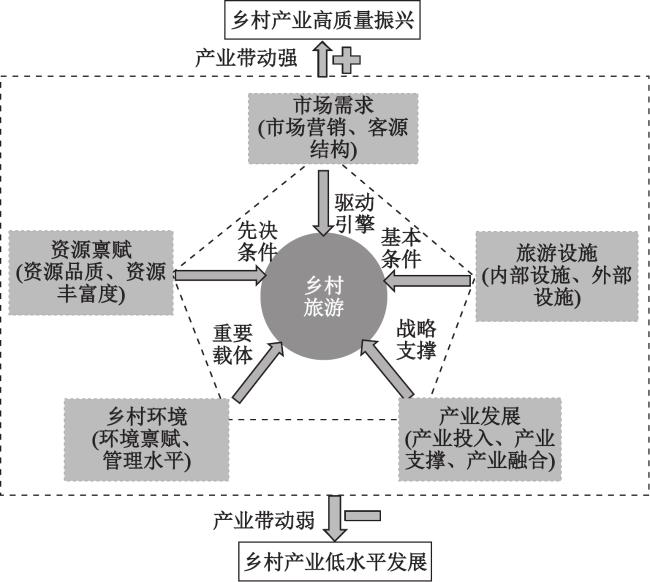
乡村旅游重点村是实现乡村产业振兴的重要载体。通过分析河北省乡村旅游与乡村产业振兴的路径依赖关系,揭示乡村旅游对乡村产业振兴的影响因素及机制。运用组态分析方法,选择河北省49个国家级乡村旅游重点村为案例,分析影响乡村产业振兴发展诸因素之间的关系,并尝试构建多种因素综合作用的锁定机理框架。研究发现:① 资源禀赋、市场需求、旅游设施、产业发展与乡村环境5个要素是乡村旅游促进乡村产业振兴的前因变量,变量共同作用影响乡村产业振兴。② 变量组合方式及作用大小不同,产生多种组态类型。不同组态类型可归纳为2种路径,即乡村产业高质量振兴路径和乡村产业低水平发展路径。③ 案例区因自身发展的差异及主导因素的不同形成了4种组态类型:环境突出型、产业带动型、市场锁定型和设施锁定型。在此基础上,深入分析了这4种组态的成因及限制因素,并提出了针对性的发展路径,以期为建设宜居宜业和美乡村,实现乡村振兴提供理论指导。
杨丽花 , 雷欣 , 白翠玲 , 和文征 . 河北省乡村旅游促进乡村产业振兴路径分析[J]. 地理科学, 2024 , 44(8) : 1396 -1405 . DOI: 10.13249/j.cnki.sgs.20240122
Key rural tourism villages have become an important carrier for achieving the revitalization of rural industries. By analyzing the path dependence relationship between rural tourism and rural industry revitalization in Hebei Province, this study reveals the influencing factors and mechanisms of rural tourism on rural industry revitalization. Using the configuration analysis method, 49 national level key rural tourism villages in Hebei Province were selected as cases to analyze the relationship between various factors affecting rural revitalization and development, and to attempt to construct a multiple locking mechanism framework that integrates multiple factors. The main conclusions were as follows. Firstly, resource endowment, market demand, tourism facilities, industrial development, and rural environment are the antecedent variables of rural tourism promoting rural industrial revitalization, and the combined effects of these variables affect rural industrial revitalization. Secondly, the combination and magnitude of variables vary, resulting in multiple configuration types. Different configuration types can be summarized into 2 paths, namely the path of high-quality revitalization of rural industries and the path of low-level development of rural industries. Thirdly, the case area has formed four types of configurations due to differences in its own development and dominant factors, namely environmental prominent type, industry driven type, market locked type, and facility locked type. On this basis, an in-depth analysis was conducted on the causes and limiting factors of these four configurations, and targeted development paths were proposed in order to provide theoretical guidance for building livable, business friendly, and beautiful rural areas, and achieving rural revitalization.
图1 组态视角下乡村产业振兴锁定机理框架Fig. 1 Mechanism of rural industry revitalization lock-in from a configuration perspective |
表1 变量测量及数据来源Table 1 Variable measurement and data sources |
| 评价指标 | 一级指标 | 二级指标 | 三级指标 | 参考文献 |
| 乡村旅游评价指标 | 产业发展 | 产业投入 | 发展资金投入 | [32-33] |
| 产业支撑 | 标识牌完善度 规范经营的农家乐 | |||
| 旅馆餐馆等接待设施 | ||||
| 乡村购物场所数量及等级 | ||||
| 产业融合 | 产业融合模式、业态 | |||
| 旅游设施 | 外部设施 | 交通可达性 | ||
| 内部设施 | 区域内停车场数量 | |||
| 旅游厕所数量和等级 | ||||
| 市场需求 | 市场营销 | 销售模式及渠道 | [34-35] | |
| 客源结构 | 客源市场定位 | [14,16] | ||
| 游客偏好及消费结构 | ||||
| 资源禀赋 | 资源品质 | 乡村所在区域A级景区等级 | [36-37] | |
| 具有称号的旅游资源数 | ||||
| 资源丰富度 | 景点特色 | |||
| 乡村旅游资源类型结构 | ||||
| 乡村环境 | 环境禀赋 | 农家庭院树木花草,田边路边及房前屋后洁化、绿化和美化 | [15] | |
| 村容村貌整洁有序 | ||||
| 污水处理系统有效运行 | ||||
| 有专职卫生保洁人员,垃圾废弃物及时清运、无害化处理 | ||||
| 村内无污染企业 | ||||
| 管理水平 | 村委会有发展乡村旅游的决定,产业地位明确 | [21,25] | ||
| 乡村有旅游行政管理,各项管理制度健全 | ||||
| 乡村产业振兴评价指标 | 产业振兴 | 产业带动 | 旅游从业人员占全村劳动力比例 | [38-39] |
| 带动本地农产品及纪念品销售等附加效益 |
表2 案例乡村Table 2 Case study of rural areas |
| 发展模式 | 村庄 |
| 景区依托型 | 寿山寺东村、刘家村、东和村、安格庄村、凤凰台村、三坡镇、田岗村、山叶口村、白羊峪村、北戴河村、花果山村、房庄村、西古城村、花楼沟村、迷子地村 |
| 产业驱动型 | 车谷砣村、小堤村、白沙村、吴梧茂村、周窝村、十里海养殖场、黄儿营西村、前南峪村、岗底村、张广王村 |
| 环境依赖型 | 后池村、骆驼湾村、顾家台村、德胜村、陆庄村、小北沟村、温泉村、御道口村、北李庄村 |
| 文化驱动型 | 大激店村、塔元庄村、李家庄、南横口村、吕家村、北庄村、周家庄第九生产队、大洼村、王村、山里各庄村、王硇村、神头村、小戈廖村、英谈村、西古堡村 |
表3 fs/QCA模糊集组态分析阈值Table 3 fs/QCA thresholds |
| 变量 | 校准点 | ||
| 完全不隶属 | 交叉点 | 完全隶属 | |
| 产业发展 | 14.4 | 12.4 | 8.6 |
| 旅游设施 | 27.50 | 18.75 | 12.50 |
| 市场需求 | 13.333 | 13.000 | 8.333 |
| 资源禀赋 | 14.75 | 9.75 | 9.25 |
| 乡村环境 | 75.0 | 72.5 | 60.0 |
| 产业振兴 | 15.0 | 10.5 | 7.5 |
表4 单变量必要性分析Table 4 Necessity analysis of single variation |
| 变量 | 一致性 | 覆盖率 | |
| 注:1.~表示条件缺失;2.括号内数值为缺失条件的数值。 | |||
| 产业 振兴 | 产业发展(~产业发展) | 0.766(0.501) | 0.724(0.596) |
| 旅游设施(~旅游设施) | 0.656(0.589) | 0.785(0.554) | |
| 市场需求(~市场需求) | 0.652(0.520) | 0.654(0.576) | |
| 资源禀赋(~资源禀赋) | 0.735(0.358) | 0.648(0.459) | |
| 乡村环境(~乡村环境) | 0.820(0.358) | 0.732(0.459) | |
| ~产业 振兴 | 产业发展(~产业发展) | 0.622(0.676) | 0.529(0.723) |
| 旅游设施(~旅游设施) | 0.473(0.801) | 0.509(0.677) | |
| 市场需求(~市场需求) | 0.574(0.617) | 0.519(0.615) | |
| 资源禀赋(~资源禀赋) | 0.730(0.557) | 0.579(0.655) | |
| 乡村环境(~乡村环境) | 0.532(0.666) | 0.427(0.770) | |
表5 乡村振兴组态路径结果Table 5 Results of rural revitalization configuration path |
| 变量 | 产业振兴组态 | ~产业振兴组态 | |||
| 1a | 1b | 2c | 2d | ||
| 注:●表示核心条件存在,⊗表示核心条件缺失;●表示边缘条件存在,⊗表示边缘条件缺失,~表示缺失。 | |||||
| 产业发展 | ⊗ | ● | ⊗ | ● | |
| 旅游设施 | ⊗ | ● | ● | ⊗ | |
| 市场需求 | ⊗ | ● | ⊗ | ⊗ | |
| 资源禀赋 | ● | ● | ● | ● | |
| 乡村环境 | ● | ● | ⊗ | ⊗ | |
| 原始覆盖率 | 0.247 | 0.399 | 0.179 | 0.268 | |
| 净覆盖率 | 0.116 | 0.268 | 0.039 | 0.128 | |
| 一致性 | 0.911 | 0.925 | 0.974 | 0.871 | |
| 解的总一致性 | 0.901 | 0.886 | |||
| 解的总覆盖率/% | 51.6 | 30.8 | |||
| [1] |
孙九霞, 黄凯洁, 王学基. 基于地方实践的旅游发展与乡村振兴: 逻辑与案例[J]. 旅游学刊, 2020, 35(3): 39-49.
Sun Jiuxia, Huang Kaijie, Wang Xueji. Tourism development and rural revitalization based on local experiences: Logic and cases. Tourism Tribune, 2020, 35(3): 39-49.
|
| [2] |
孙婧雯, 马远军, 王振波, 等. 基于锁定效应的乡村旅游产业振兴路径[J]. 地理科学进展, 2020, 39(6): 1037-1046.
Sun Jingwen, Ma Yuanjun, Wang Zhenbo et al. Rural tourism industry revitalization path based on the analysis of lock-in effects. Progress in Geography, 2020, 39(6): 1037-1046.
|
| [3] |
孙九霞, 明庆忠, 许春晓, 等. 共同富裕目标下乡村旅游资源创造性传承与开发[J]. 自然资源学报, 2023, 38(2): 271-285.
Sun Jiuxia, Ming Qingzhong, Xu Chunxiao et al. Innovative utilization and development of rural tourism resources under the goal of common prosperity. Journal of Natural Resources, 2023, 38(2): 271-285.
|
| [4] |
舒伯阳, 蒋月华, 刘娟. 新时代乡村旅游高质量发展的理论思考及实践路径[J]. 华中师范大学学报(自然科学版), 2022, 56(1): 73-82.
Shu Boyang, Jiang Yuehua, Liu Juan. Theoretical thinking and practical path of high-qualiti rural tourism development in the new era. Journal of Central China Normal Universitu (Natural Science), 2022, 56(1): 73-82.
|
| [5] |
陆林, 任以胜, 朱道才, 等. 乡村旅游引导乡村振兴的研究框架与展望[J]. 地理研究, 2019, 38(1): 102-118.
Lu Lin, Ren Yisheng, Zhu Daocai et al. The research framework and prospect of rural revitalization led by rural tourism. Geographical Research, 2019, 38(1): 102-118.
|
| [6] |
李志龙. 乡村振兴−乡村旅游系统耦合机制与协调发展研究——以湖南凤凰县为例[J]. 地理研究, 2019, 38(3): 643-654.
Li Zhilong. Research on the coupling mechanism and coordinated development of rural revitalization-rural tourism system: A case study on Fenghuang County in Hunan. Geographical Research, 2019, 38(3): 643-654.
|
| [7] |
余汝艺, 梁留科, 苏小燕, 等. 村域尺度旅游效率空间分异及形成机理——以洛阳市375个旅游村为例[J]. 自然资源学报, 2021, 36(4): 893-905.
Yu Ruyi, Liang Liuke, Su Xiaoyan et al. Spatial differentiation and formation mechanism of tourism efficiency at village scale: A case study of 375 tourism villages in Luoyang. Journal of Natural Resources, 2021, 36(4): 893-905.
|
| [8] |
王新越, 朱文亮. 山东省乡村旅游竞争力评价与障碍因素分析[J]. 地理科学, 2019, 39(1): 147-155.
Wang Xinyue, Zhu Wenliang. Analysis of rural tourism competitiveness and obstacle factors in Shandong Province. Scientia Geographica Sinica, 2019, 39(1): 147-155.
|
| [9] |
张志明, 陈海鹰, 戴健驰, 等. 乡村旅游地生计路径演化过程与机理分析——以海口龙鳞村为例[J]. 旅游学刊, 2023, 38(7): 97-112.
Zhang Zhiming, Chen Haiying, Dai Jianchi et al. Rural tourism destinations’ livelihood path evolution and its mechanism: A case study of Longlin Village, Haikou. Tourism Tribune, 2023, 38(7): 97-112.
|
| [10] |
David P A. Clio and the economics of qwerty[J]. American Economic Review, 1985, 75(2): 332-337.
|
| [11] |
Arthur W B. Competing technologies, increasing returns, and lock-in by historical events[J]. The Economic Journal, 1989, 99(3): 116-131.
|
| [12] |
Hube R T J, Ferdinand P. Links between nature based tourism, protected areas, poverty alleviation and crises—The example of Wasini Island (Kenya)[J]. Journal of Outdoor Recreation and Tourism, 2013, 1(1): 18-28.
|
| [13] |
Muchapondwa E, Stage J. The economic impacts of tourism in Botswana, Namibia and South Africa: Ispoverty subsiding[J]. Natural Resorces Forum, 2013, 37(2): 80-89.
|
| [14] |
翁瑾. 互补性、结构锁定与旅游发展规划[J]. 旅游学刊, 2013, 28(10): 5-7.
Weng Jin. Complementarity, structural locking, and tourism development planning. Tourism Tribune, 2013, 28(10): 5-7.
|
| [15] |
陈钢华, 保继刚. 游度假区开发模式变迁的路径依赖及其生成机制——三亚亚龙湾案例[J]. 旅游学刊, 2013, 28(8): 58-68.
Chen Ganghua, Bao Jigang. Path dependence in developmental model changes of tourist resorts: A case study of Yalong Bay National Tourist Resort in Sanya. China Tourism Tribune, 2013, 28(8): 58-68.
|
| [16] |
吴俊. 县域旅游转型升级中的路径依赖、创造及突破——以浙江省淳安县为例[J]. 商业经济与管理, 2012(5): 57-63.
Wu Jun. Path dependence, creation and break in the county tourism evolution—A case study of Chun’an County in Zhejiang Province. Journal of Business Eeonomics, 2012(5): 57-63.
|
| [17] |
龚伟, 马木兰. 乡村旅游社区空间共同演化研究[J]. 旅游科学, 2014, 28(3): 49-62.
Gong Wei, Ma Mulan. Co-evolution in rural tourism community space. Tourism Science, 2014, 28(3): 49-62.
|
| [18] |
麻学锋, 孙根年. 旅游产业生长点的SGGT模式与空间演化——以张家界为例[J]. 地理研究, 2013, 32(10): 1923-1936.
Ma Xuefeng, Sun Gennian. SGGT mode and spatial evolution of growth point in the tourism industry: Taking Zhangjiajie as an example. Geographical Research, 2013, 32(10): 1923-1936.
|
| [19] |
魏颖, 马耀峰, 李创新. 口岸城市入境旅游流空间扩散路径实证研究——以上海市为例[J]. 旅游科学, 2010, 24(5): 32-39.
Wei Ying, Ma Yaofeng, Li Chuangxin. An emporical research on spatial diffusion path of inbound tourist flows in Chinese port cities: A case study of Shanghai. Tourism Science, 2010, 24(5): 32-39.
|
| [20] |
屠爽爽, 龙花楼. 乡村聚落空间重构的理论解析[J]. 地理科学, 2020, 40(4): 509-517.
Tu Shuangshuang, Long Hualou. The theoretical cognition of rural settlements spatial restructuring. Scientia Geographica Sinica, 2020, 40(4): 509-517.
|
| [21] |
屠爽爽, 郑瑜晗, 龙花楼, 等. 乡村发展与重构格局特征及振兴路径——以广西为例[J]. 地理学报, 2020, 75(2): 365-381.
Tu Shuangshuang, Zheng Yuhan, Long Hualou et al. Spatio-temporal pattern of rural development and restructuring and regional path of rural vitalization in Guangxi, China. Acta Geographica Sinica, 2020, 75(2): 365-381.
|
| [22] |
朱鹤, 刘家明. 山岳型景区建设下乡村聚落的多维重构——基于云丘山旅游景区微观案例的实证研究[J]. 地理研究, 2018, 37(12): 2490-2502.
Zhu He, Liu Jiaming. Rural settlement reconstructing driven by mountain scenic spot construction: An empirical study of Yunqiu Mountain Scenic Spot. Geographical Research, 2018, 37(12): 2490-2502.
|
| [23] |
郭焕成, 韩非. 中国乡村旅游发展综述[J]. 地理科学进展, 2010, 29(12): 1597-1605.
Guo Huancheng, Han Fei. Review on the development of rural tourism in China. Progress in Geography, 2010, 29(12): 1597-1605.
|
| [24] |
徐红罡, 吴悦芳, 彭丽娟. 古村落旅游地游线固化的路径依赖——世界遗产地西递、宏村实证分析[J]. 地理研究, 2010, 29(7): 324-1334.
Xu Honggang, Wu Yuefang, Peng Lijuan. Path dependence in travel route formation in ancient village tourism destinations: An empirical study of Xidi and Hongcun. Geographical Research, 2010, 29(7): 324-1334.
|
| [25] |
周思悦, 申明锐, 罗震东. 路径依赖与多重锁定下的乡村建设解析[J]. 经济地理, 2019, 39(6): 183-190.
Zhou Siyue, Shen Mingrui, Luo Zhendong. Path dependence and multiple lock-in process in rural construction. Economic Geography, 2019, 39(6): 183-190.
|
| [26] |
张雪晶, 陈巧媛, 李华敏. 从体验对象到体验场域: 乡村旅游地高质量发展组态分析[J]. 旅游学刊, 2022, 37(5): 33-44.
Zhang Xuejing, Chen Qiaoyuan, Li Huamin. From experiencing object to experiencing field: A configuration analysis on the high-quality development of rural tourism destinations. Tourism Tribune, 2022, 37(5): 33-44.
|
| [27] |
向延平. 乡村旅游驱动乡村振兴内在机理与动力机制研究[J]. 湖南社会科学, 2021(2): 41-47.
Xiang Yanping. Research on the intrinsic mechanism and driving force mechanism of rural tourism driving rural revitalization. Social Sciences in Hunan, 2021(2): 41-47.
|
| [28] |
易小燕, 陈印军, 向雁, 等. 县域乡村振兴指标体系构建及其评价——以广东德庆县为例[J]. 中国农业资源与区划, 2020, 41(8): 187-195.
Yi Xiaoyan, Chen Yinjun, Xiang Yan et al. Construction and evaluation of index system for county rural revitalization—The case of Deqing County of Guandong Province. Chinese Journal of Agricultural Resources and Regional Planning, 2020, 41(8): 187-195.
|
| [29] |
王力, 李兴锋. 乡村振兴发展水平的时空演变及多维环境规制的影响效应[J]. 统计与决策, 2022, 38(20): 63-66.
Wang Li, Li Xingfeng. The spatio-temporal evolution of rural revitalization development level and the impact of multidimensional environmental regulations. Statistics & Decision, 2022, 38(20): 63-66.
|
| [30] |
杨梅, 冯珠珠, 田波. 全域旅游发展对县域脱贫的组态影响研究——基于fsQCA的分析方法[J]. 西南大学学报(社会科学版), 2021, 47(4): 106-116.
Yang Mei, Feng Zhuzhu, Tian Bo. A study on the configuration impact of global tourism development on county poverty alleviation: An analysis method based on fsQCA. Journal of Southwest University (Socila Siences Edition), 2021, 47(4): 106-116.
|
| [31] |
林菁. 乡村旅游助推乡村振兴的内在机理与发展路径[J]. 农业经济, 2021(11): 75-76.
Lin Jing. The intrinsic mechanism and development path of rural tourism promoting rural revitalization. Rural Economy, 2021(11): 75-76.
|
| [32] |
关志强, 刘蓉, 丁宇, 等. 节事活动旅游公共服务设施IPA评价——以2018中国−亚欧博览会为例[J]. 西北师范大学学报(自然科学版), 2020, 56(4): 120-126.
Guan Zhiqiang, Liu Rong, Ding Yu et al. IPA evaluation of tourism public service facilities for festivals and events—A case study of Asia-Europe expo 2018. Journal of Northwest Normal University (Natural Science), 2020, 56(4): 120-126.
|
| [33] |
钟洁. 基于游憩体验质量的民族村寨旅游产品优化研究——以云南西双版纳傣族园、四川甲居藏寨为例[J]. 旅游学刊, 2012, 27(8): 95-103.
Zhong Jie. Study on the optimization of tourism products in ethnic villages based on recreational experience quality: A case study of Dai Park, Xishuangbanna and Jiaju Tibetan Village, Sichuan Province. Tourism Tribune, 2012, 27(8): 95-103.
|
| [34] |
闫幸, 吴锦峰. 二次元短视频营销策略对顾客投入的影响[J]. 中国流通经济, 2020, 34(12): 40-50.
Yan Xing, Wu Jinfeng. The impact of ACGN short video marketing strategy on customer engagement. China Business and Market, 2020, 34(12): 40-50.
|
| [35] |
张柳, 李君轶, 马耀峰. 旅游目的地网络营销系统与旅游产业发展耦合分析[J]. 经济地理, 2011, 31(2): 339-345.
Zhang Liu, Li Junyi, Ma Yaofeng. Coupling analysis between tourism network markting system and tourism industry development in China. Economic Geography, 2011, 31(2): 339-345.
|
| [36] |
宋增文, 陈瑾妍, 贺剑, 等. 乡村产业振兴背景下资源依托型特色村乡村旅游发展路径研究——以祁杨村为例[J]. 中国农学通报, 2022, 38(6): 158-164.
Song Zengwen, Chen Jinyan, He Jian et al. The development path of rural tourism in resource-based villages under rural industrial revitalization: A case study of Qiyang Village. Chinese Agricultural Science Bulletin, 2022, 38(6): 158-164.
|
| [37] |
王学峰, 张辉. 区域旅游发展潜力评价体系构建及应用研究——以西部地区为例[J]. 干旱区资源与环境, 2013, 27(12): 203-208.
Wang Xuefeng, Zhang Hui. The construction of index systematic for regional tourism development potential assessment. Journal of Arid Land Resources and Environment, 2013, 27(12): 203-208.
|
| [38] |
钟漪萍, 唐林仁, 胡平波. 农旅融合促进农村产业结构优化升级的机理与实证分析——以全国休闲农业与乡村旅游示范县为例[J]. 中国农村经济, 2020(7): 80-98.
Zhong Yiping, Tang Linren, Hu Pingbo. The mechanism and empirical analysis of the integration of agriculture and tourism to promote the optimization and upgrading of rural industrial structure: A case study of National Demonstration Counties of Leisure Agriculture and Rural Tourism. Chinese Rural Economy, 2020(7): 80-98.
|
| [39] |
幸强国. 西部城市人均经济增长的面板数据测度及理论分析[J]. 中国管理科学, 2010, 18(2): 165-171.
Xing Qiangguo. Panel data measurement on per-capita economic growth of western cities and theoretic analysis. Chinese Journal of Management Science, 2010, 18(2): 165-171.
|
| [40] |
胡静, 王蓉, 李亚娟, 等. 基于网络信息的民族地区旅游资源吸引力评价——以贵州省黔东南州为例[J]. 经济地理, 2018, 38(4): 200-207.
Hu Jing, Wang Rong, Li Yajuan et al. Evaluationof tourism resources attraction in ethnic areas based on network information: A case study of Qiandongnan in Guizhou Province. Economic Geography, 2018, 38(4): 200-207.
|
| [41] |
Fiss P C. Building better causal theories: A fuzzy set approach to typologies in organization research[J]. Academy of Management Journal, 2011, 54(2): 393-420.
|
| [42] |
Coduras A, Clemente J A, Ruiz J. A novel application of fuzzy-set qualitative comparative analysis to gem data[J]. Journal of Business Research, 2016, 69(4): 1265-1270.
|
| [43] |
张明, 蓝海林, 陈伟宏, 等. 殊途同归不同效: 战略变革前因组态及其绩效研究[J]. 管理世界, 2020, 36(9): 168-186.
Zhang Ming, Lan Hailin, Chen Weihong. Different outcomes: A study of strategic change antecedent configuration and its performance. Journal of Management World, 2020, 36(9): 168-186.
|
/
| 〈 |
|
〉 |