



中国科技型企业的空间分布及影响因素
|
于英杰(1996—),女,山东威海人,博士研究生,研究方向为科技创新与区域发展。E-mail: yingjieyu202401@163.com |
收稿日期: 2023-12-16
修回日期: 2024-03-25
网络出版日期: 2025-04-07
基金资助
国家社会科学基金重大项目(23&ZD330)
版权
Spatial distribution characteristics and influencing factors of technology-oriented enterprises in China
Received date: 2023-12-16
Revised date: 2024-03-25
Online published: 2025-04-07
Supported by
National Social Science Foundation of China(23&ZD330)
Copyright
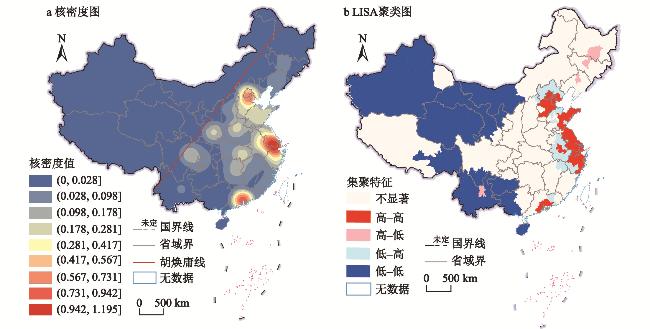
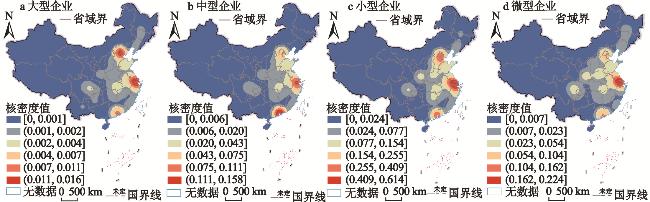
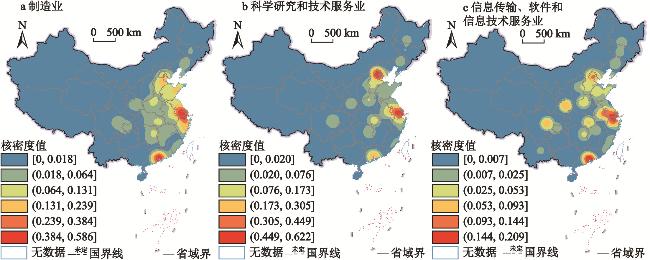
科技型企业是塑造城市创新空间的第一动力,已成为各国提高综合国力的关键力量。本文利用POI地理大数据定量分析中国科技型企业的空间分布特征及其影响因素。研究发现:① 中国科技型企业总体呈现“东强西弱”的梯度递减趋势,符合胡焕庸线分布规律,空间上形成“三核心–两环带–多核点”的集聚模式;② 大型企业集中于长江以北,以长三角和京津冀为核心,中型企业在珠三角及长三角南部占优势,中西部地区则以小微型企业为主;③ 制造业、科学研究和技术服务业、信息传输、软件和信息技术服务业是科技型企业的三大主导行业,制造业呈现以长三角和珠三角为高密度核心区,科学研究和技术服务业形成东部高值聚集、中部哑铃状扩散、西部单核块状分布,信息传输、软件和信息技术服务业主要沿东部沿海、黄河流域地区及长江经济带分布;④ 市场环境、产业政策、经济实力等因素对企业影响显著,其中大型企业更依赖人力资本,中小微企业更依赖于政府政策支持、市场环境和经济环境。各行业均受政策影响最大,制造业还受市场结构和产业布局影响,服务业则高度依赖人才、经济水平和产业环境。
于英杰 , 杜德斌 , 段德忠 . 中国科技型企业的空间分布及影响因素[J]. 地理科学, 2025 , 45(3) : 518 -530 . DOI: 10.13249/j.cnki.sgs.20230587
Technology-oriented enterprises are the primary drivers of urban innovation spaces and have become a key force for countries to enhance their comprehensive national strength. This study utilizes Point of Interest (POI) geographic big data to quantitatively analyze the spatial distribution characteristics and influencing factors of technology-oriented enterprises in China. The findings are as follows: 1) The overall distribution of technology-oriented enterprises in China exhibits a gradient decline from east to west, conforming to the distribution pattern of the Hu Line, with a micro-scale clustering model of “three cores-two rings-multiple nuclei”; 2) Large enterprises are concentrated north of the Yangtze River, mainly in the Yangtze River Delta and Beijing-Tianjin-Hebei region, while medium-sized enterprises dominate in the Pearl River Delta and the southern part of the Yangtze River Delta, and micro-enterprises prevail in the central and western regions; 3) Manufacturing, scientific research and technical services, information transmission, software, and information technology services are the three leading industries among technology-oriented enterprises. Manufacturing is characterized by high-density core areas in the Yangtze River Delta and the Pearl River Delta, scientific research, and technical services form high-value clusters in the east, dumbbell diffusion in the middle, and single-core block distribution in the west. Information transmission, software, and information technology services are primarily distributed along the eastern coastal area , Yellow River Basin and the Yangtze River Economic Belt; 4) Market environment, industrial policy, and economic strength significantly impact these enterprises, with larger enterprises relying more on human capital and small and micro enterprises depending more on government policy support, market environment, and economic conditions. All industries are most affected by policies, with manufacturing also influenced by market structure and industrial layout, and the service industry highly dependent on talent, economic level, and industrial environment.
表1 负二项回归结果Table 1 Negative binomial regression results |
| 模型1 (ENTsum) | 模型2 (ENTmax) | 模型3 (ENTmed) | 模型4 (ENTmin) | 模型5 (ENTmini) | 模型6 (ENTmanu) | 模型7 (ENTsci-ser) | 模型8 (ENTinf-ser) | |
| 注:显著性水平***:P<0.01,**:P<0.05,*:P<0.1;括号内为标准误;ENTsum、ENTmax、ENTmed、ENTmin、ENTmini、ENTmanu、ENTsci-ser、ENTinf-ser分别表示中国各城市科技型企业总数,大型规模企业数,中型规模企业数,小型规模企业数,微型规模企业数,制造业企业数,科学研究和技术服务业企业数,信息传输、软件和信息技术服务业企业数;城市内外交通连通水平(TRA)、市场环境(MAR)、金融环境(FIN)、人力资本(HC)、创新创业环境(ENT)、创新基础设施(INF)、产业环境(IND)、政策环境(POL)、经济实力(ECO);港澳台数据暂缺。 | ||||||||
| TRA | –0.252 (0.403) | –0.119 (0.384) | –0.352 (0.329) | –0.279 (0.168) | –0.289 (0.364) | –0.097 (0.366) | –0.128 (0.480) | –0.525 (0.474) |
| MAR | 0.652*** (0.909) | 1.531*** (0.763) | 1.257*** (0.254) | 0.542*** (0.199) | 0.584** (0.973) | 0.874*** (0.791) | 0.766*** (0.870) | 0.871** (0.975) |
| FIN | –0.349 (0.275) | –0.499 (0.445) | –0.039 (0.369) | –0.224 (0.466) | –0.319 (0.209) | 0.376 (0.317) | –0.089 (0.339) | 0.352 (0.299) |
| HC | 0.360** (0.217) | 0.803*** (0.237) | 0.616** (0.261) | 0.398 (0.125) | 0.423 (0.349) | 0.493** (0.580) | 0.650*** (0.187) | 0.554*** (0.158) |
| ENT | 0.447 (0.594) | 0.673 (0.532) | 0.277 (0.287) | 0.783 (0.146) | 0.253 (0.329) | 0.259 (0.145) | 0.368 (0.389) | 0.681** (0.399) |
| INF | 0.755* (0.702) | 0.528* (0.486) | 0.343 (0.297) | 0.279 (0.521) | 0.577 (0.618) | 0.873 (0.672) | 0.220 (0.758) | 0.754 (0.162) |
| IND | 0.579*** (0.419) | 1.397*** (0.473) | 0.644** (0.497) | 0.616 (0.511) | 0.712 (0.431) | 0.616*** (0.386) | 0.269** (0.455) | 0.423*** (0.425) |
| POL | 0.761*** (0.261) | 0.826*** (0.885) | 1.152*** (0.205) | 1.559*** (0.216) | 1.187*** (0.245) | 1.309*** (0.121) | 1.273*** (0.219) | 1.336** (0.377) |
| ECO | 0.348*** (0.679) | 0.358** (0.366) | 0.548 (0.387) | 0.475** (0.461) | 0.275*** (0.506) | 0.259** (0.609) | 0.382*** (0.107) | 0.292** (0.141) |
| 常数项 | 1.070 (0.319) | –1.954 (0.336) | 0.705 (0.388) | 1.845 (0.368) | 0.884 (0.083) | 1.054 (0.077) | 0.819 (0.254) | −0.385 (0.369) |
| 样本数 | 296 | 296 | 296 | 296 | 296 | 296 | 296 | 296 |
| Prob>chi2 | 0.000 | 0.000 | 0.000 | 0.000 | 0.000 | 0.000 | 0.000 | 0.000 |
| Loglikelihood | – | – | – | – | – | – | – | – |
| [1] |
杜德斌. 全球科技创新中心动力与模式[M]. 上海: 人民出版社, 2015
Du Debin. Power and mode of global science and technology innovation center. Shanghai: People’s Publishing House, 2015.
|
| [2] |
Acs Z J, Audretsch D B. Entrepreneurship, innovation and technological change[J]. Foundations and Trends in Entrepreneurship, 2005, 1(4): 149-195.
|
| [3] |
Carree M A, Thurik A R. The impact of entrepreneurship on economic growth[M]. New York: Springer, 2010: 557-594.
|
| [4] |
钟业喜, 傅钰, 郭卫东, 等. 中国上市公司总部空间格局演变及其驱动因素研究[J]. 地理科学, 2018, 38(4): 485-494.
Zhong Yexi, Fu Yu, Guo Weidong et al. Spatial pattern evolution and driving factors of China’s listed companies. Scientia Geographica Sinica, 2018, 38(4): 485-494.
|
| [5] |
刘硕, 李治堂. 创新型城市建设国际比较及启示[J]. 科研管理, 2013, 34(S1): 58-64.
Liu Shuo, Li Zhitang. International comparison of innovative city construction and inspiration. Science Research Management, 2013, 34(S1): 58-64.
|
| [6] |
韦伯. 工业区位论[M]. 李刚剑, 译. 北京: 商务印书馆, 1997
Weber A. Industrial location theory. Translated by Li Gangjian. Beijing: Commercial Press, 1997.
|
| [7] |
廖什. 经济空间秩序[M]. 王守礼, 译. 北京: 商务印书馆, 1995
Losch A. The economics of location. Translated by Wang Shouli. Beijing: Commercial Press, 1995.
|
| [8] |
马晓敏, 张志斌, 公维民, 等. 兰州市都市型工业空间分布及区位选择[J]. 世界地理研究, 2023, 32(4): 119-131.
Ma Xiaomin, Zhang Zhibin, Gong Weimin et al. Analysis of spatial distribution and location selection of urban industries in Lanzhou. World Regional Studies, 2023, 32(4): 119-131.
|
| [9] |
Castellani D, Lavoratori K, Perri A et al. International connectivity and the location of multinational enterprises’ knowledge-intensive activities: Evidence from US metropolitan areas[J]. Global Strategy Journal, 2022, 12(1): 82-107.
|
| [10] |
Mudambi R, Narula R, Santangelo G D. Location, collocation and innovation by multinational enterprises: A research agenda[J]. Industry and Innovation, 2018, 25(3): 229-241.
|
| [11] |
Csete M, Szabó M. How the spatial distribution of the Hungarian TOP 500 companies affects regional development: An examination of income generation at subnational scale[J]. Regional Statistics, 2014, 4(1): 40-60.
|
| [12] |
马静涵, 刘天宝. 全球创新1000强上市公司的行业特征与空间格局[J]. 经济地理, 2021, 41(1): 121-130.
Ma Jinghan, Liu Tianbao. Industry characteristics and spatial pattern of the top 1000 global innovation listed companies. Economic Geography, 2021, 41(1): 121-130.
|
| [13] |
姚康. 基于企业视角的兰州市制造业地理集中与集聚研究[D]. 兰州: 兰州大学, 2010
Yao Kang. Research on geographical concentration and agglomeration of industries in Lanzhou: An empirical study basied on enterprise perspective. Lanzhou: Lanzhou University, 2010.
|
| [14] |
王璐茜, 徐维祥, 唐根年, 等. 中国制造业和服务业大型企业的时空格局演化及其关联性——基于500强企业的分析[J]. 科技管理研究, 2021, 41(10): 105-111.
Wang Luqian, Xu Weiyang, Tang Gennian et al. Spatial-temporal evolution and correlation of large-scale enterprises in China: Based on the analysis of top 500 manufacturing and service enterprises. Science and Technology Management Research, 2021, 41(10): 105-111.
|
| [15] |
Haitao M, Weid Y, Xiaodong H et al. The innovation networks shaped by large innovative enterprises in urban China[J]. Journal of Geographical Sciences, 2023, 33(3): 599-617.
|
| [16] |
Barkhatov V, Belova I, Bents D. Large-sized enterprises in Russia: An analysis of federal districts[J]. Procedia-Social and Behavioral Sciences, 2018, 238: 303-312.
|
| [17] |
Yudenko M, Polovnikova N, Chikisheva N et al. International practice of fast-growing innovative companies[J]. Chinese Business Review, 2017, 16(10): 496-503.
|
| [18] |
Pinkovetskaya J S, Meliksetyan N, Pavlyuk A V et al. Small and medium-sized enterprises in the Russian federation: Regularities of spatial distribution[J]. Journal of Advanced Research in Law and Economics, 2019, 10(2): 640-652.
|
| [19] |
Murigi M W. Factors influencing spatial distribution of small and medium size enterprises within Nairobi county, Kenya[D]. Nairobi: University of Nairobi, 2016.
|
| [20] |
傅十和, 洪俊杰. 企业规模、城市规模与集聚经济——对中国制造业企业普查数据的实证分析[J]. 经济研究, 2008, 43(11): 112-125.
Fu Shihe, Hong Junjie. Firm size city size and agglomeration economies—Evidence from China manufacturing census. Economic Research Journal, 2008, 43(11): 112-125.
|
| [21] |
宋华盛, 张敏. 中国IT产业省区分布及其决定因素[J]. 浙江学刊, 2015 2 187-194.
Song Huasheng, Zhang Min. The distribution of China’s IT industry by province and region and its determinants. Zhejiang Academic Journal, 2015 2 187-194.
|
| [22] |
方远平, 陆莲芯, 毕斗斗, 等. 珠江三角洲港资服务业企业的空间格局及影响因素研究[J]. 地理科学, 2020, 40(9): 1421-1428.
Fang Yuanping, Lu Lianxin, Bi Doudou et al. The distribution and influencing factors of Hong Kong-funded service companies in the Pearl River Delta. Scientia Geographica Sinica, 2020, 40(9): 1421-1428.
|
| [23] |
丁建军, 刘贤, 王淀坤, 等. 国家级专精特新“小巨人”企业空间分布及其影响因素[J]. 经济地理, 2022, 42(10): 109-118.
Ding Jianjun, Liu Xian, Wang Diankun et al. Spatial distribution and influencing factors of China’s national-level “little giant” enterprises. Economic Geography, 2022, 42(10): 109-118.
|
| [24] |
李德瑜. 中国大型企业总部地理集聚——以制造业和服务业500强企业为例[J]. 哈尔滨工业大学学报(社会科学版), 2011, 13(6): 41-46.
Li Deyu. Geographic concentration of headquarter of large enterprises in China—An example of Top 500 enterprises in manufacturing and service industries. Journal of Harbin Institute of Technology (Social Sciences Edition), 2011, 13(6): 41-46.
|
| [25] |
林兰. 重化工业集群式创新机制与空间响应研究[J]. 地理学报, 2016, 71(8): 1400-1415.
Lin Lan. Innovation dynamics and spatial response of heavy-chemical industry: Rethinking the cluster innovation. Acta Geographica Sinica, 2016, 71(8): 1400-1415.
|
| [26] |
陆大道. 工业区的工业企业成组布局类型及其技术经济效果[J]. 地理学报, 1979, 34(3): 248-264
Lu Dadao. Locational patterns of grouping firms in industrial district and their techno-economic effect?. Acta Geographica Sinica, 1979, 34(3): 248-264.
|
| [27] |
Chen D, Wang G, Yuan Z et al. Study on the spatial pattern and influencing factors of China’s new energy vehicle industry—Based on data of relevant listed companies from 2008–2021[J]. Sustainability, 2023, 15(4): 1-16.
|
| [28] |
Ženka J, Slach O, Ivan I. Spatial patterns of knowledge-intensive business services in cities of various sizes, morphologies and economies[J]. Sustainability, 2020, 12(5): 1-19.
|
| [29] |
杨凡, 杜德斌, 段德忠, 等. 城市内部研发密集型制造业的空间分布与区位选择模式——以北京、上海为例[J]. 地理科学, 2017, 37(4): 492-501.
Yang Fan, Du Debin, Duan Dezhong et al. The intra-metropolitan location of R&D-intensive manufacturing in Beijing and Shanghai. Scientia Geographica Sinica, 2017, 37(4): 492-501.
|
| [30] |
刘青, 李贵才, 仝德, 等. 基于ESDA的深圳市高新技术企业空间格局及影响因素[J]. 经济地理, 2011, 31(6): 926-933.
Liu Qing, Li Guicai, Tong De et al. The spatial pattern and influence factors of high-tech firms in Shenzhen based on ESDA. Economic Geography, 2011, 31(6): 926-933.
|
| [31] |
袁丰, 魏也华, 陈雯, 等. 苏州市区信息通讯企业空间集聚与新企业选址[J]. 地理学报, 2010, 65(2): 153-163.
Yuan Feng, Wei Yehua, Chen Wen et al. Spatial agglomeration and new firm formation in the information and communication technology industry in Suzhou. Acta Geographica Sinica, 2010, 65(2): 153-163.
|
| [32] |
余颖, 刘青, 李贵才. 深圳高新电子信息企业空间格局演化及其影响因素[J]. 世界地理研究, 2020, 29(3): 557-567.
Yu Ying, Liu Qing, Li Guicai. The spatial evolution of Shenzhen high-tech electronic information technology agglomeration pattern and locational determinants. World Regional Studies, 2020, 29(3): 557-567.
|
| [33] |
刘婧, 甄峰, 张姗琪, 等. 新一代信息技术企业空间分布特征及影响因素——以南京市中心城区为例[J]. 经济地理, 2022, 42(2): 114-123+211.
Liu Jing, Zhen Feng, Zhang Shanqi et al. Spatial distribution characteristics and influencing factors of new-generation information technology companies: A case of Nanjing central city. Economic Geography, 2022, 42(2): 114-123+211.
|
| [34] |
高敏雪, 孙庆慧, 胡强, 等. 大中小微企业规模划型统计标准的实证研究[J]. 数量经济技术经济研究, 2022, 39(2): 164-181.
Gao Minxue, Sun Qinghui, Hu Qiang et al. An empirical study on the statistical standard for the size classification of large, medium small and micro-sized enterprises. Journal of Quantitative & Technological Economics, 2022, 39(2): 164-181.
|
| [35] |
亚当·斯密. 国民财富的性质和原因的研究[M]. 郭大力, 等译. 北京: 商务印书馆, 1986
Adam Smith. An inquiry into the nature and causes of the wealth of nations. Translated by Guo Dali et al. Beijing: Commercial Press, 1986.
|
| [36] |
Florida R. The rise of the creative class[M]. New York: Basic Books, 2002.
|
| [37] |
郭细根. 创新型企业空间分布及其影响因素研究——来自全国676家创新型试点企业的数据分析[J]. 科技进步与对策, 2016, 33(15): 62-67.
Guo Xigen. The spatial distribution of innovative enterprises and its influencing factors—Data from the national 676 innovative pilot enterprises data. Science & Technology Progress and Policy, 2016, 33(15): 62-67.
|
| [38] |
于英杰, 吕拉昌. 中国城市知识创新职能空间分异及其影响因素[J]. 地理学报, 2023, 78(2): 315-333.
Yu Yingjie, Lyu Lachang. Spatial pattern of urban knowledge innovation function in China and its influencing factors. Acta Geographica Sinica, 2023, 78(2): 315-333.
|
| [39] |
赵涛, 刘文光, 边伟军. 区域科技创业生态系统的结构模式与功能机制研究[J]. 科技管理研究, 2011, 31(24): 78-82.
Zhao Tao, Liu Wenguang, Bian Weijun. Study on structural model and functional mechanism of regional hi-tech entrepreneurial ecosystem. Science and Technology Management Research, 2011, 31(24): 78-82.
|
| [40] |
楚天骄, 宋韬. 中国独角兽企业的空间分布及其影响因素研究[J]. 世界地理研究, 2017, 26(6): 101-109.
Chu Tianjiao, Song Tao. Spatial distribution and influence factors of unicorn companies in China. World Regional Studies, 2017, 26(6): 101-109.
|
| [41] |
于英杰, 吕拉昌. 中国城市创新基础设施的时空特征及影响因素——基于291个地级及以上城市数据的实证分析[J]. 科技管理研究, 2021, 41(16): 9-19.
Yu Yingjie, Lyu Lachang. Spatial and temporal characteristics of China’s urban innovation infrastructure and its influencing factors: Empirical analysis based on the data of 291 prefecture level and above cities. Science and Technology Management Research, 2021, 41(16): 9-19.
|
| [42] |
李嘉晨, 任文慧. 长三角时尚企业分布特征及其影响因素[J]. 经济地理, 2022, 42(10): 137-145.
Li Jiachen, Ren Wenhui. Distribution characteristics and influencing factors of fashion enterprises in Yangtze River Delta. Economic Geography, 2022, 42(10): 137-145.
|
| [43] |
刘乐, 盛科荣, 王传阳. 中国科技型初创企业的时空格局及影响因素研究——基于创业生态系统视角[J]. 地球信息科学学报, 2023, 25(2): 340-353.
Liu Le, Sheng Kerong, Wang Chuanyang. The spatial-temporal patterns and influencing factors of China’s tech start-ups: A study based on the entrepreneurial ecosystem. Journal of Geo-Information Science, 2023, 25(2): 340-353.
|
| [44] |
肖凡, 王姣娥, 黄宇金, 等. 中国高新技术企业分布影响因素的空间异质性与尺度效应[J]. 地理研究, 2022, 41(5): 1338-1351.
Xiao Fan, Wang Jiao’e, Huang Yujin et al. Exploring the spatial and scale variation of factors affecting the geography of high-techenterprises in China. Geographical Research, 2022, 41(5): 1338-1351.
|
| [45] |
周晓艳, 侯美玲, 李霄雯. 独角兽企业内部联系视角下中国城市创新网络空间结构研究[J]. 地理科学进展, 2020, 39(10): 1667-1676.
Zhou Xiaoyan, Hou Meiling, Li Xiaowen. Spatial structure of urban innovation network based on the Chinese unicorn company network. Progress in Geography, 2020, 39(10): 1667-1676.
|
/
| 〈 |
|
〉 |