



基于水适应性的山地型传统村落空间形态及景观模式研究——以湘西保靖县为例
|
谢谦(1988—),男,湖南长沙人,讲师,博士,主要从事传统村落可持续发展研究。E-mail:814473954@qq.com |
收稿日期: 2024-11-30
修回日期: 2025-03-30
网络出版日期: 2025-09-25
基金资助
国家自然科学基金项目(42301277)
国家自然科学基金项目(42471277)
教育部人文社会科学项目(22YJC850014)
教育部人文社会科学项目(23YJE850001)
湖南省自然科学基金项目资助(2023JJ4007)
版权
Spatial morphological characteristics and landscape mode of mountainous traditional village from perspective of water adaptability: Taking Baojing County, Xiangxi as an Example
Received date: 2024-11-30
Revised date: 2025-03-30
Online published: 2025-09-25
Supported by
National Natural Science Foundation of China(42301277)
National Natural Science Foundation of China(42471277)
Humanities and Social Science Foundation of Ministry of Education(22YJC850014)
Humanities and Social Science Foundation of Ministry of Education(23YJE850001)
Natural Science Foundation of Hunan(2023JJ4007)
Copyright
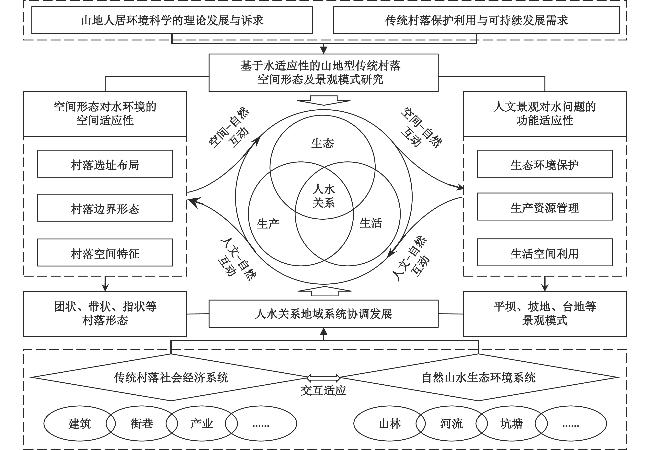
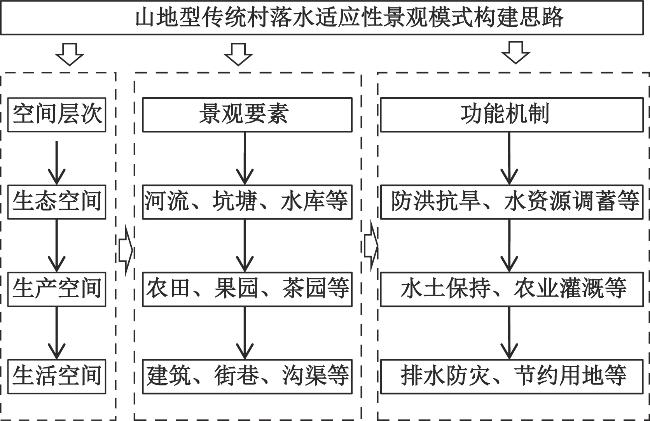
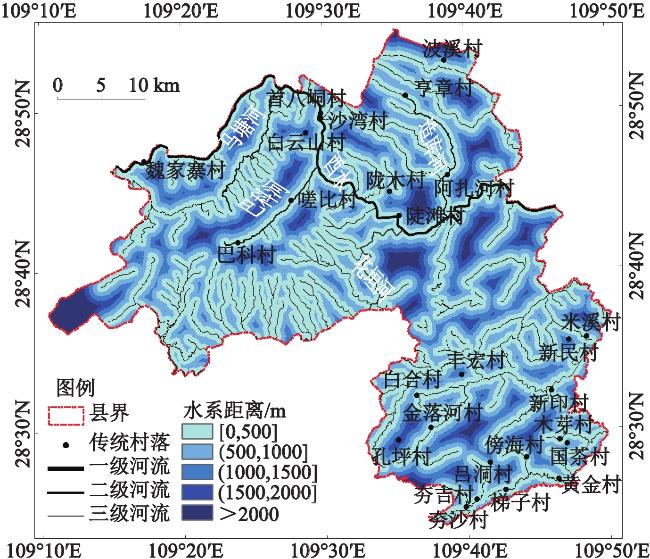
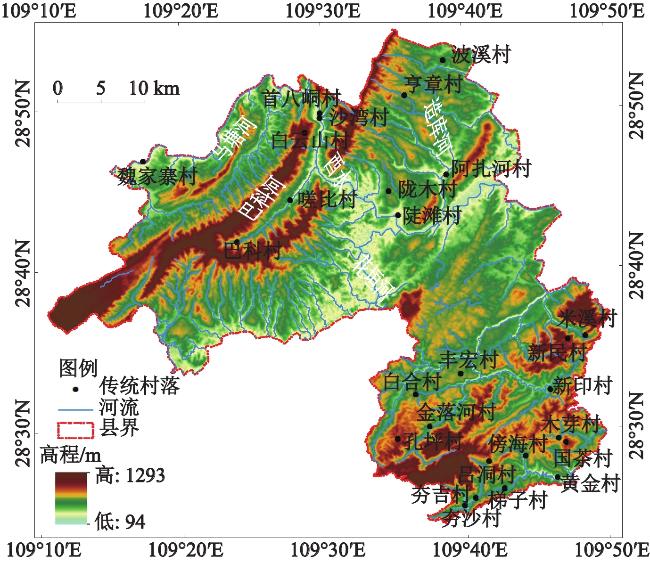
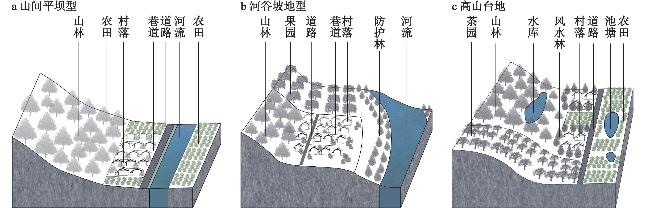
中国传统村落数量众多,大部分集中分布在山地、丘陵地带,是农耕文化与生态文化的有机融合。为了探究与水共生的生态智慧,以山地型传统村落为研究对象,运用空间分析、形态量化、景观图示等方法,建立传统村落水适应性空间形态及景观模式研究框架,并以湘西保靖县为例,进一步梳理传统村落与水环境交互适应的组织结构及景观差异,构建由空间分布、形态格局、景观模式等组成的内容体系。研究发现:①保靖县传统村落大都遵循了“择水而居,负阴抱阳”的选址原则,兼顾取水、用水与防洪安全;②在复杂的水环境影响下,保靖县传统村落形成了带状、团状、指状等多种形态格局,水适应性特征差异也十分明显;③以山间平坝、河谷坡地、山腰台地为典型地貌,归纳得出保靖县传统村落应对旱涝威胁的3种水适应性景观模式:“林−村−田−河”的平坝景观模式,“林−园−村−河”的坡地景观模式,“林−村−田−塘”的台地景观模式。可见,水适应性山地型传统村落空间建设提现了沿水而居的选址理念,因地制宜的空间形态,抗洪防旱的景观模式。
谢谦 , 杨立国 , 裴习君 , 龚文静 . 基于水适应性的山地型传统村落空间形态及景观模式研究——以湘西保靖县为例[J]. 地理科学, 2025 , 45(9) : 2068 -2080 . DOI: 10.13249/j.cnki.sgs.20250003
There are numerous traditional villages in China. Most of them are concentrated in mountainous and hilly areas, which are the organic integration of agricultural and ecological culture. During the formation and development of village, cherishing water resources has always been the core idea of adapting and changing the environment. Based on the traditional ecological thoughts, spatial planning concepts, and landscape adaptability theories, the water adaptive research framework of spatial morphological characteristics and landscape mode in the mountainous tradintional villages can be constructed by the methods such as spatial analysis, morphological quantification and landscape visualization. Taking Baojing County in Xiangxi as an example, the differences of water adaptability in villages can be sorted out, including spatial distribution, morphological pattern and landscape pattern. The result shows that: 1) Traditional villages are usually located in relatively low altitude river valleys, exhibiting obvious characteristics such as living by water, facing the sun, and building on gentle slopes. They are not only convenient for water use, but also effective in flood control and drainage, water and soil conservation, which reflects the wisdom of site selection for harmonious coexistence between humans and water. 2) Under the influence of complex water environmental factors, traditional villages can be classified into 3 typical spatial forms: belt shaped, cluster shaped, and finger shaped. With the development of the economy and society, the village space structure exhibits distinct differentiation characteristics. For example, the villages of belt shaped are usually crossed by a small river, and the development relies on cultivated land economy. The villages of cluster shaped are usually built in the river bay area, and the development relies on forestry economy. The villages of finger shaped are usually far from the river but adjacent to ponds, and the development relies on terrace economy. 3) Based on typical topography, 3 water adaptive landscape models can be summarized to deal with drought and flood, such as “forest-village-farmland-river” in flat area of mountains, “forest-orchard-village-river” on the hillside, “forest-village-farmland-pond” on the mountain plateau.
表1 2024年湘西保靖县传统村落形状指数筛分Table 1 Classification of shape index in traditional village of Baojing County, Xiangxi in 2024 |
| 类型 | 村名 | 长轴/m | 短轴/m | 长宽比 | 类型 | 村名 | 面积/m2 | 周长/m | 形状指数 | |
| 团状倾向村落 | 魏家寨村 | 374 | 366 | | 规则村落 | 魏家寨村 | | | | |
| 波溪村 | 667 | 541 | | 夯沙村 | | | | |||
| 沙湾村 | 441 | 233 | | 沙湾村 | | 929 | | |||
| 孔坪村 | 505 | 473 | | 亨章村 | | | | |||
| 国茶村 | 491 | 457 | | 梯子村 | | 1827 | | |||
| 白合村 | 601 | 503 | | 巴科村 | | | | |||
| 丰宏村 | 731 | 570 | | 金落河村 | | | | |||
| 新民村 | 438 | 332 | | 新印村 | | | | |||
| 白云山村 | 418 | 290 | | 首八峒村 | | | | |||
| 陇木村 | 584 | 367 | | 磋比村 | | 1828 | | |||
| 米溪村 | 264 | 196 | | 指状村落 | 孔坪村 | | | | ||
| 带状倾向村落 | 亨章村 | 632 | 278 | | 国茶村 | | 1801 | | ||
| 梯子村 | 706 | 297 | | 白合村 | | | | |||
| 巴科村 | 549 | 223 | | 米溪村 | | 993 | | |||
| 金落河村 | 716 | 268 | | 波溪村 | | | | |||
| 新印村 | 446 | 117 | | 丰宏村 | | | | |||
| 首八峒村 | | 243 | | 新民村 | | | | |||
| 吕洞村 | | 659 | | 白云山村 | | | | |||
| 陡滩村 | 654 | 262 | | 陇木村 | | 2043 | | |||
| 磋比村 | 753 | 146 | | 木芽村 | | | | |||
| 夯沙村 | 858 | 393 | | 傍海村 | | | | |||
| 黄金村 | 616 | 229 | | 吕洞村 | | | | |||
| 阿扎河村 | 431 | 160 | | 黄金村 | | | | |||
| 夯吉村 | | 558 | | 阿扎河村 | | | | |||
| 傍海村 | | 472 | | 夯吉村 | | | | |||
| 木芽村 | 963 | 455 | | 陡滩村 | | 1826 | |
表2 2024年湘西保靖县传统村落边界形态分类Table 2 Classification of boundary form in traditional village of Baojing County, Xiangxi in 2024 |
| λ值 | S值 | 村落类型 | 村落实例 |
| 注:λ为边界长宽比,S为形状指数。 | |||
| λ<2 | S<1.5 | 团状村落 | 魏家寨村、沙湾村 |
| S≥1.5 | 团状倾向的指状村落 | 国茶村、孔坪村、白合村、米溪村、波溪村、丰宏村、新民村、白云山村、陇木村 | |
| λ≥2 | S<1.5 | 带状村落 | 夯沙村、梯子村、巴科村、金落河村、新印村、首八峒村、磋比村、亨章村 |
| S≥1.5 | 带状倾向的指状村落 | 吕洞村、黄金村、阿扎河村、夯吉村、傍海村、木芽村、陡滩村 | |
表3 2024年湘西保靖县传统村落空间形态的水适应性特征Table 3 Spatial morphological characteristics of traditional village in water adaptation of Baojing County, Xiangxi in 2024 |
| 村落类型 | 带状村落 | 团状村落 | 指状村落(团状倾向) | 指状村落(带状倾向) |
| 注:图中蓝色部分是河流水体;灰色线条是山体;灰色方块是房屋;黑色是道路,粗线条为主路,细线条为支路。 | ||||
| 典型案例示意图 | 夯沙村 | 魏家寨村 | 国茶村 | 吕洞村 |
| 空间形态 | 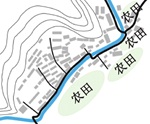 | 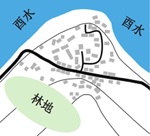 | 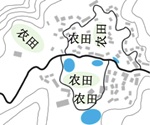 | 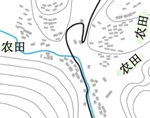 |
| 水适应性特征 | 沿水而建、农田绕宅、 田水相依 | 坐山而居、林地庇村、 林水相依 | 村居绕塘、宅高田低、 山地梯田 | 据山傍水、宅田并置、 山地梯田 |
| [1] |
张艳涛, 王婧薇. 人类生态文明的中国叙事——兼论中国式现代化蕴含的独特生态观[J]. 门大学学报(哲学社会科学版), 2024, 74(6): 11-19.
Zhang Yantao, Wang Jingwei. The Chinese narrative of human ecological civilization: With a discussion of the unique ecological perspective in the Chinese path to modernization Journal of Xiamen University (Arts & Social Sciences), 2024, 74(6): 11-19.
|
| [2] |
曾慧子, 张超, 赵鸣. 湖南沅水流域水系影响下的传统聚落选址与形态特征研究[J]. 代城市研究, 2020(3): 54-59.
Zeng Huizi, Zhang Chao, Zhao Ming. The research on site selection and morphological characteristics of traditional settlements under the influence of water of Yuanshui River in Hunan Modern Urban Research, 2020(3): 54-59.
|
| [3] |
赵思文, 胡希军, 陈琳, 等. “因航而兴”的湖南沅水流域古城镇空间分布特征及影响因素[J]. 济地理, 2022, 42(6): 72-82.
Zhao Siwen, Hu Xijun, Chen Lin et al. Spatial distribution features and influencing factors of Ancient Towns prospered by shipping in Yuanshui River basin of Hunan Economic Geography, 2022, 42(6): 72-82.
|
| [4] |
陈义勇, 俞孔坚. 古代“海绵城市”思想——水适应性景观经验启示[J]. 国水利, 2015(17): 19-22.
Chen Yiyong, Yu Kongjian. Thought of ancient “sponge city”: Experiences of applying water-adaptive landscape China Water Resources, 2015(17): 19-22.
|
| [5] |
王越, 林箐. 传统城市水适应性空间格局研究——以济南为例[J]. 景园林, 2018, 25(9): 40-44.
Wang Yue, Lin Qing. Water adaptive spatial structure of traditional urban areas—Case study of Jinan Landscape Architecture, 2018, 25(9): 40-44.
|
| [6] |
Li Zhe, Huang Si, Wang Han et al. Digital analysis of the water layout ecological wisdom in traditional Chinese rural settlements: A case study of Liukeng Village in Jiangxi Province[J]. Journal of Resources and Ecology, 2022, 13(3): 371-381.
|
| [7] |
肖逸, 赵兵, 毛钦艺. 传统江南理水的生态智慧[J]. 国园林, 2017, 33(7): 70-74.
Xiao Yi, Zhao Bin, Mao Qinyi. The ecological wisdom in the south of the Yangtze River syncretized with the notion of dredging and utilization of Water Chinese Landscape Architecture, 2017, 33(7): 70-74.
|
| [8] |
叶洁楠, 濮依. 复杂适应系统理论视角下传统村落的空间形态演化与适应性发展研究——以浙江诸葛村为例[J]. 京农业大学学报(社会科学版), 2024, 24(6): 109-120.
Ye Jienan, Pu Yi. Research on the spatial morphological evolution and adaptive development of traditional villages from the perspective of complex adaptive systems theory: A case study of Zhuge Village in Zhejiang Journal of Nanjing Agricultural University (Social Sciences Edition), 2024, 24(6): 109-120.
|
| [9] |
周梅子, 贺勇, 陈钰凡, 等. 水系影响下的浙江萧山地区乡村聚落空间形态与生成机制研究[J]. 代城市研究, 2024(4): 42-49.
Zhou Meizi, He Yong, Chen Yufan et al. Study on the spatial form and generation mechanism of rural settlement in Xiaoshan area, Zhejiang under the influence of water system Modern Urban Research, 2024(4): 42-49.
|
| [10] |
吕龙. 大运河江苏段沿线典型传统村落空间形态特征与影响因素及其启示[J]. 然资源学报, 2024, 39(8): 1993-2007.
Lyu Long. Spatial morphological traits, influencing factors and implications of typical traditional villages situated along the Jiangsu section of the Grand Canal Journal of Natural Resources, 2024, 39(8): 1993-2007.
|
| [11] |
叶茂盛, 李早. 基于聚类分析的传统村落空间平面形态类型研究[J]. 业建筑, 2018, 48(11): 50-55+80.
Ye Maosheng, Li Zao. A typological study of the traditional villages spatial plan form based on the clustering analysis Industrial Construction, 2018, 48(11): 50-55+80.
|
| [12] |
李澜, 任福, 陈茜茜, 等. GIS支持的湖北省土家语地名景观特征分析[J]. 国地名, 2014(7): 57-60.
Li Lan, Ren Fu, Chen Qianqian et al. Spatial features of Tujia ethnic group place names landscape based on GIS technology in Hubei Province China Place Name, 2014(7): 57-60.
|
| [13] |
俞晓莹, 罗艳菊, 蓝万炼. 基于GIS的土地利用景观格局分析——以湖南省保靖县为例[J]. 南农业大学学报(自然科学版), 2009, 35(5): 580-582.
Yu Xiaoying, Luo Yanju, Lan Wanlian. Landscape pattern of land-use based on GIS: Taking Baojin County, Hunan as an example Journal of Hunan Agricultural University (Natural Sciences), 2009, 35(5): 580-582.
|
| [14] |
龚熊波, 杨波, 刘雨先, 等. 湘西州山区土地利用类型的地形梯度效应与景观格局分析[J]. 态科学, 2020, 39(4): 137-144.
Gong Xiongbo, Yang Bo, Liu Yuxian et al. Topographic gradient effect and landscape pattern analysis of land use types in mountainous areas of Xiangxi Prefecture Ecological Science, 2020, 39(4): 137-144.
|
| [15] |
李振民, 石磊, 张冲昊. 社会–生态视角下县域乡村地域系统脆弱性评价与差异化应对策略[J]. 济地理, 2022, 42(5): 175-184.
Li Zhenmin, Shi Lei, Zhang Chonghao. Vulnerability assessment and differentiated response strategies of rural territorial systems at the county level from the socio-ecological perspective Economic Geography, 2022, 42(5): 175-184.
|
| [16] |
翟海国. 传统村落保护与发展评价体系构建与实证——以河南省黄河流域传统村落为例[J]. 域研究与开发, 2024, 43(3): 117-122.
Zhai Haiguo. Construction and empirical study of the evaluation system for the protection and development of traditional villages: Taking the traditional Chinese village in the Yellow River basin of Henan Province as example Areal Research and Development, 2024, 43(3): 117-122.
|
| [17] |
房艳刚, 毕晓普, 刘建志. 基于多源数据的村庄类型判别研究——以吉林省前郭县和靖宇县的比较分析为例[J]. 理科学, 2023, 43(3): 541-551.
Fang Yangang, Bi Xiaopu, Liu Jianzhi. Classification of villages based on multi-source data: A case comparison of Qianguo and Jingyu counties in Jilin Province Scientia Geographica Sinica, 2023, 43(3): 541-551.
|
| [18] |
何小芊, 厉峰, 高军波, 等. 基于地理网格的中国传统村落空间分布及影响因素[J]. 理科学, 2024, 44(6): 995-1004.
He Xiaoqian, Li Feng, Gao Junbo et al. Spatial distribution and influencing factors of Chinese traditional villages based on geographic grid Scientia Geographica Sinica, 2024, 44(6): 995-1004.
|
| [19] |
宋玢, 任云英, 冯淼. 黄土高原沟壑区传统村落的空间特征及其影响要素——以陕西省榆林市国家级传统村落为例[J]. 域研究与开发, 2021, 40(2): 162-168.
Song Bin, Ren Yunying, Feng Miao. Spatial characteristics and influencing factors of traditional villages in Loess Plateau Gully area: A case of national traditional villages in Yulin City of Shanxi Province Areal Research and Development, 2021, 40(2): 162-168.
|
| [20] |
赵子玉, 孔亚暐, 关增达, 等. 流域村落空间形态特征及形成机制研究——以黄河三角洲为例[J]. 市规划, 2023, 47(10): 69-81.
Zhao Ziyu, Kong Yawei, Guan Zengda et al. A study on spatial morphological characteristics and formation mechanism of watershed villages: Taking the Yellow River Delta as an example City Planning Review, 2023, 47(10): 69-81.
|
| [21] |
庞博宇, 曹海婴, 宣晓东, 等. 在地成形——基于形态参数的晋东南山地传统村落形态地形影响机制解析[J]. 筑学报, 2024(S2): 66-71.
Pang Boyu, Cao Haiying, Xuan Xiaodong et al. Geoforming analysis of topographic influence mechanism of traditional village form in mountainous areas of southeast Shanxi based on morphological parameters Architectural Journal, 2024(S2): 66-71.
|
| [22] |
潘莹, 段佳卉, 施瑛. 广东汉民系传统聚落典型防灾景观模式研究[J]. 方建筑, 2021(3): 130-136.
Pan Ying, Duan Jiahui, Shi Ying. Research on the typical disaster prevention landscape model of the traditional settlement of the Han Clan in Guangdong South Architecture, 2021(3): 130-136.
|
| [23] |
靳程, 杨永川, 周礼华, 等. 村落风水林助力山地乡村生物多样性保护——以金钱松为例[J]. 西植物, 2023, 43(8): 1437-1445.
Jin Cheng, Yang Yongchuan, Zhou Lihua et al. Village Fengshui forests contribute to the biodiversity conservation in mountainous villages: A case study of Pseudolarix amabilis Guihaia, 2023, 43(8): 1437-1445.
|
| [24] |
柴力行, 蔡勃伟, 黄耿志. 脱贫攻坚与乡村振兴有效衔接背景下脱贫县发展类型与路径[J]. 理科学, 2024, 44(11): 1997-2006.
Chai Lixing, Cai Bowei, Huang Gengzhi. Identifying development types and paths of poverty-eliminated counties for the effective connection between poverty alleviation and rural revitalization Scientia Geographica Sinica, 2024, 44(11): 1997-2006.
|
| [25] |
张琳, 苗晏凯, 朱莉梅, 等. 国土空间治理视角下浙江传统村落与自然景观耦合的地方性特征研究[J]. 国园林, 2023, 39(4): 20-26.
Zhang Lin, Miao Yankai, Zhu Limei et al. Natural landscape associated features and localities of Zhejiang traditional villages from the perspective of territorial spatial governance Chinese Landscape Architecture, 2023, 39(4): 20-26.
|
/
| 〈 |
|
〉 |