



地缘结构:理论基础、概念及其分析框架
|
胡志丁(1986-),男,江西上饶人,博士,研究员,博导,主要从事全球化与地缘环境研究。E-mail: huzhiding2007@126.com |
收稿日期: 2018-06-10
要求修回日期: 2018-09-02
网络出版日期: 2019-07-10
基金资助
国家自然科学基金项目资助(41871152)
国家自然科学基金项目资助(41661033)
版权
Geo-structure: Theoretical Basis, Concept and Analytical Framework
Received date: 2018-06-10
Request revised date: 2018-09-02
Online published: 2019-07-10
Supported by
National Natural Science Foundation of China(41871152)
National Natural Science Foundation of China(41661033)
Copyright
胡志丁 , 陆大道 . 地缘结构:理论基础、概念及其分析框架[J]. 地理科学, 2019 , 39(7) : 1045 -1054 . DOI: 10.13249/j.cnki.sgs.2019.07.002
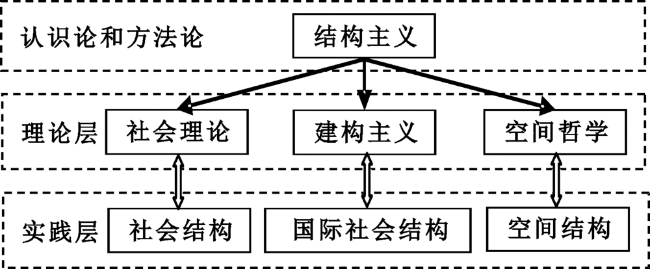
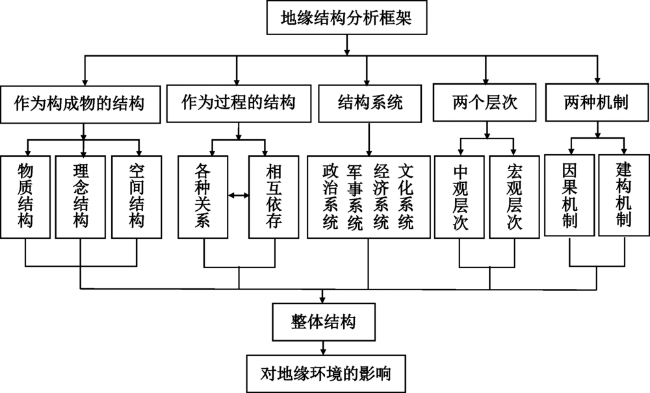
With the diversification of the research paradigm and methods of human geography, the research perspectives and methods of geopolitics, as an important branch of human geography, also become diversified. Especially since the 1960s, the structural turn of geopolitics has led to a number of important research results in geopolitics. However, on the whole, the study of geographical structure is too simple and immature. Drawing on the latest progress of structuralism in philosophy and related disciplines, especially the study of social theory on social structure, international relations on international social structure and geography on spatial structure, this article discusses the theoretical basis, concept and analytical framework of geo-structure. The analytical framework of the geostructure consists of 5 parts: structure as a component, structure as a process, structure system, 2 levels of structure and 2 mechanisms of action. The contents that constitute the geo-structure can be roughly divided into 3 kinds, namely, material structure, conceptual structure and spatial structure. The structure as a process focuses on exploring the relationships and their interdependence within the structure, and the impact of these changes on the identities and interests of geo-bodies, which means that the structure itself is changing. The geo-structural system has not been seriously studied. But with the advent of the geo-economic era, the transformation of Hobbes culture to Lockean culture, especially the interdependence under various relations, makes the international anarchic society move towards a structural system composed of politics, military, economy and culture. The 2 levels of the geopolitical structure and the 2 mechanisms are closely linked, reflecting the relationship between geo-bodies and the geopolitical structure in which the geopolitical body is placed. Each part of the geo-structure should form a whole in order to explore its impact. In the end, some problems in using geo-structure and the current international situations are briefly discussed in this study.
Key words: geopolitics; geopolitical body; geo-structure; structuralism; constructivism; space philosophy
表1 社会结构发展阶段、代表人物与核心观点Table 1 Social structure development stage, representative personage and core viewpoint |
| 发展阶段 | 代表人物 | 核心观点 |
|---|---|---|
| 早期 | 孔德 | 社会是一种有规律的结构,它与生物有机体有极大的相似性,是一个由各种要素组成的整体。社会结构:人-家庭-阶级或种族-城市和社区。 |
| 斯宾塞 | 他提出了宏观结构的总体规模、复杂性和差异性的问题,并在区分结构与功能的基础上,引入功能需求的概念。社会是由“支持”“分配”“调节”三大系统组成的结构。 | |
| 涂尔干 | 提出3个基本假设:① 社会是一个实体,是不可化约的;② 社会的各个部分可以满足社会实体的基本需求;③ 功能需求是社会需求。社会结构分成2种类型:一种以低度分工为基础构成的机械团结类型;一种以高度分工和广泛的相互依赖为基础构成的有机团结类型。 | |
| 马克思 | 一是将“结构”看作关系总和;二是把社会结构视为矛盾关系体;三是社会结构变化的动力来源于社会内部的矛盾运动。 | |
| 帕森斯时代 | 帕森斯 | 社会结构是具有不同基本功能的、多层面的次系统所形成的一种“总体社会系统”,包含执行“目的达成”“适应”“整合”“模式维护”4项基本的完整系统。 |
| 列维-斯 特劳斯 | 所谓结构是那种决定历史、社会与文化中的诸具体事件和行为的基本的规则整体。这种规则整体就是深层结构。结构也指现象的表面秩序,是基本精神过程的表层显现。深层结构决定表层秩序。 | |
| 后帕森斯时代 | 阿尔都塞 | 多元决定论的结构因果观:社会整体是一个复杂的、有结构的统一体,它由许多层次组成,经济基础仅仅是其中的一个层次,只是在最终起决定作用。其他层次仍有相对的独立、自主性。 |
| 吉登斯 | 结构是潜在于社会系统不断再造过程中的规则和资源。结构恰似某种抽象的规则,是能够使某种构造性行为成为可能的虚幻的存在。资源属于行动的外在条件,是行动者用于具体行为的材料。结构的二重性:社会结构既是由人类的行动建构起来的,同时又是人类行动得以建构的条件和中介。 | |
| 后结构主义时期 | 福科 | 语言决定了主体,决定了主体行动的取向,也就决定了社会结构。透过话语,揭示了隐藏在其后的深层结构——权力关系。权力通过一系列复杂的程序和隐藏的手段,来控制、选择、组织和传播作为话语形式的知识。这种知识构成了认知范畴,实际上又制约着一个时代的知识和认识方式的那些结构。 |
| 布希亚 | 符号本身拥有了自己的生命,并建构出1种新的社会秩序,而由模型、符码、符号来形塑其结构。后结构景观是:符号取代并超越了现实,使得现实与非现实的界限消失。大众拒绝由这些符号构成的社会规范,导致社会性的消失,整个社会终结。 |
| [1] |
[
|
| [2] |
汤茂林 . 中国人文地理学研究方法多样化问题[J]. 地理研究, 2009,28(4):865-882.
[
|
| [3] |
|
| [4] |
周尚意, 杨鸿雁, 孔翔 . 地方性形成机制的结构主义与人文主义分析——以798和M50两个艺术区在城市地方性塑造中的作用为例[J]. 地理研究, 2011,30(9):1566-1576.
[
|
| [5] |
冯健, 赵楠 . 后现代地理语境下同性恋社会空间与社交网络——以北京为例[J]. 地理学报, 2016,71(10):1815-1832.
[
|
| [6] |
蔡运龙, 叶超, 马润潮 , 等. 马克思主义地理学及其中国化:“跨国、跨界、跨代”知识行动[J]. 地理研究, 2016,35(7):1205-1229.
[
|
| [7] |
万智巍, 贾玉连, 洪祎君 , 等. 基于历史地图与遥感影像的近百年来长江荆江段河道演变[J]. 地理科学, 2019,39(4):696-704.
[
|
| [8] |
陆大道, 杜德斌 . 关于加强地缘政治地缘经济研究的思考[J]. 地理学报, 2013,68(6):723-727.
[
|
| [9] |
|
| [10] |
|
| [11] |
|
| [12] |
|
| [13] |
|
| [14] |
陆俊元 . 从自然主义到结构主义: 地缘政治学方法论演变[J]. 人文地理, 2007,22(5):107-109.
[
|
| [15] |
|
| [16] |
[
|
| [17] |
[
|
| [18] |
姚晓瑞 . 中国古代地缘政治空间结构过程及模式研究[J]. 人文地理, 2008,23(1):69-73.
[
|
| [19] |
王铮, 韩钰, 胡敏 , 等. 地理本性进化与全球地缘政治经济基础探析[J]. 地理学报, 2016,71(6):940-955.
[
|
| [20] |
王铮, 韩钰, 胡敏 , 等. 面向全球经济治理的世界地缘政治经济结构探析[J]. 中国科学院院刊, 2015,30(6):824-838.
[
|
| [21] |
宋伟 . 关于地缘政治结构的理论:批判与建设[J].世界经济与政治, 2002(2):71-75.
[
|
| [22] |
皮亚杰 . 结构主义[M]. 北京: 商务印书馆, 1984:iv.
[
|
| [23] |
尚杰 . 从结构主义到后结构主义[J].世界哲学, 2004(3):48-60.
[
|
| [24] |
高宣扬 . 结构主义[M]. 上海: 上海交通大学出版社, 2017.
[
|
| [25] |
张祖林, 孙爱军 . 结构主义与结构主义地理学[J]. 自然辩证法研究, 1996,12(2):28-32.
[
|
| [26] |
[
|
| [27] |
[
|
| [28] |
[
|
| [29] |
[
|
| [30] |
[
|
| [31] |
[
|
| [32] |
郭树勇, 叶凡美 . 试论建构主义国关理论及其社会学渊源[J].国际观察, 2002(1):1-6.
[
|
| [33] |
冯雷 . 当代空间批判理论的四个主题——对后现代空间论的批判性重构[J].中国社会科学, 2008(3):40-52.
[
|
| [34] |
王圣云 . 空间理论解读:基于人文地理学的透视[J]. 人文地理, 2011,26(1):15-18.
[
|
| [35] |
殷洁, 张京祥, 罗小龙 . 重申全球化时代的空间观:后现代地理学的理论与实践[J]. 人文地理, 2010,25(4):12-17.
[
|
| [36] |
姚华松, 许学强, 薛德升 . 人文地理学研究中对空间的再认识[J]. 人文地理, 2010,25(2):8-12.
[
|
| [37] |
[
|
| [38] |
胡志丁, 葛岳静, 徐建伟 , 等. 空间与经济地理学理论构建[J]. 地理科学进展, 2012,31(6):751-760.
[
|
| [39] |
腾堂伟, 覃柳婷, 胡森林 . 长三角地区众创空间的地理分布及影响机制[J]. 地理科学, 2018,38(8):1266-1272.
[
|
| [40] |
李小建 . 经济地理学[M]. 北京: 高等教育出版社, 2009.
[
|
| [41] |
[
|
| [42] |
|
| [43] |
吴殿廷, 赵林, 张明 , 等. 三角稳定原理与中国的外交策略[J]. 北京师范大学(自然科学版), 2015,51(1):100-106.
[
|
| [44] |
[
|
| [45] |
[
|
| [46] |
|
| [47] |
|
| [48] |
|
| [49] |
|
| [50] |
[
|
| [51] |
|
| [52] |
[
|
| [53] |
胡志丁, 刘玉立, 胡浩 , 等. 建构的世界经济地理格局——以战后日本崛起为例[J]. 经济地理, 2012,32(10):7-13.
[
|
| [54] |
爱德华 W 苏贾.后现代地理学——重申批判社会理论中的空间[M]. 王文斌, 译.北京:商务印书馆, 2007.
[
|
| [55] |
林利民 . 世界地缘政治新变局与中国的战略选择[J].现代国际关系, 2014(1):1-9.
[
|
| [56] |
胡志丁, 陆大道, 杜德斌 , 等. 未来十年中国地缘政治学重点研究方向[J]. 地理研究, 2017,36(2):205-214.
[
|
/
| 〈 |
|
〉 |