



东北三省流动人口居留意愿的空间差异及影响因素
|
古恒宇(1994-),男,广东河源人,博士研究生,研究方向为区域分析与规划、人口地理学。E-mail: henry.gu@pku.edu.cn |
收稿日期: 2018-07-19
要求修回日期: 2019-04-22
网络出版日期: 2020-04-09
基金资助
国家社会科学基金项目(17ZDA055)
国家自然科学基金项目(71733001)
国家留学基金委公派联合培养博士研究生项目(201906010255)
版权
Spatial Difference and Influencing Factors of Floating Population’s Settlement Intention in the Three Provinces of Northeast China
Received date: 2018-07-19
Request revised date: 2019-04-22
Online published: 2020-04-09
Supported by
National Social Science Fundation of China(17ZDA055)
National Natural Science Foundation of China(71733001)
China Scholarship Council Foundation(201906010255)
Copyright
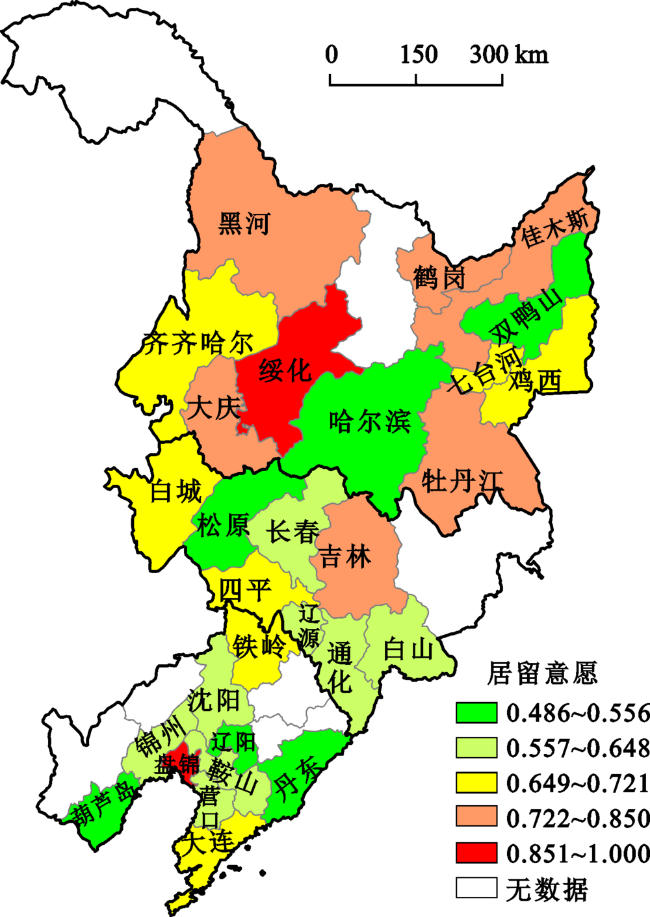
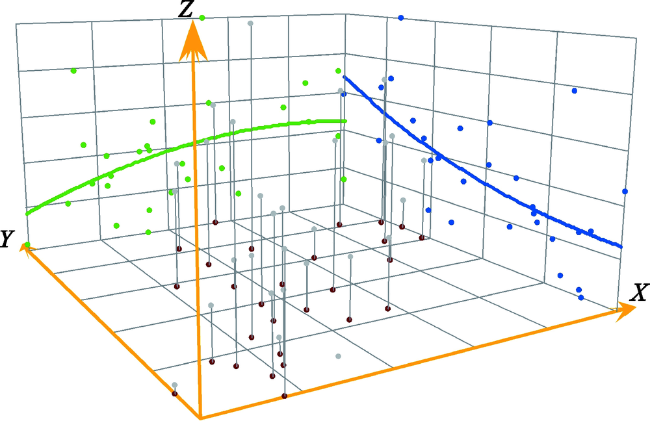
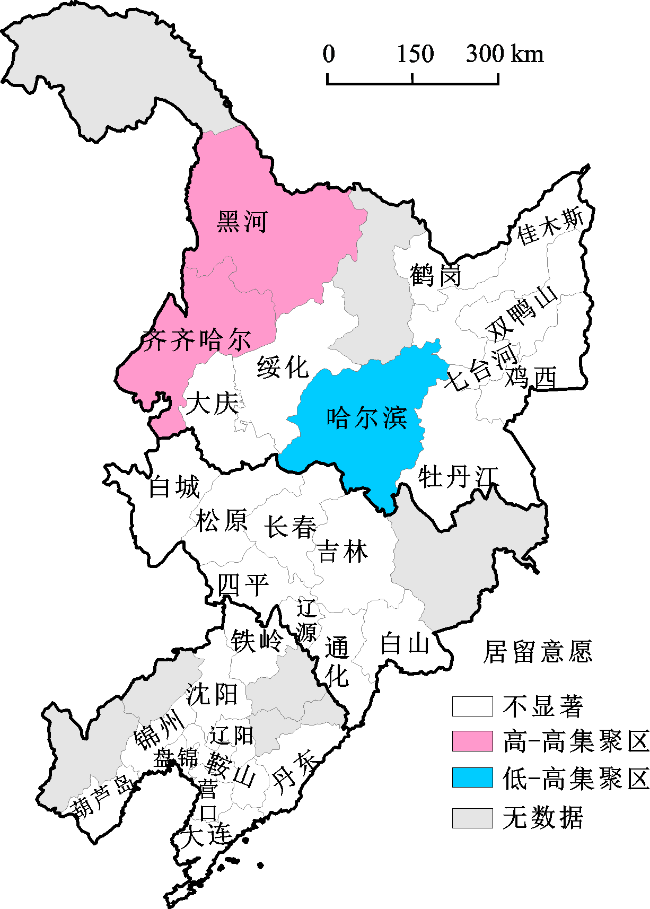
基于2015年流动人口动态监测数据,综合运用空间自相关分析,趋势面分析等技术,结合二元Logistic回归模型,对东北三省流动人口居留意愿的空间分布和影响因素特征展开研究。主要发现:① 东北三省流动人口居留意愿呈现出“北高南低,东高西低”的空间格局特征,南北方向上的分异比东西方向大;② 流动人口居留意愿在空间上属于随机分布,齐齐哈尔市和黑河市位于高-高集聚区,哈尔滨市位于低-高集聚区。随着城市规模的增加,流动人口居留意愿呈现出先升后降的特征;③ 个体因素方面,农业户口流动人口、在婚流动人口、高学历流动人口、“80后”流动人口的居留意愿更强;④ 经济特征方面,收入与住房支出分别对居留意愿产生正向和负向影响;⑤ 社会因素方面,流入时间越长、职业类别为“专业技术及办事人员”与“商业服务人员”、就业身份为雇主、参加城镇职工医疗保险的流动人口居留意愿更强。
古恒宇 , 李琦婷 , 沈体雁 . 东北三省流动人口居留意愿的空间差异及影响因素[J]. 地理科学, 2020 , 40(2) : 261 -269 . DOI: 10.13249/j.cnki.sgs.2020.02.011
In recent years, the three provinces of Northeast China (Liaoning, Heilongjiang, and Jilin) have suffered from economic decline and labor force loss. Supported by the China migrants dynamic survey in 2015, the present study aims to examine the spatial pattern and driving forces of the settlement intention of the floating migrants in the three provinces of Northeast China. Spatial autocorrelation analysis and trend analysis methods are applied to characterize the spatial pattern of the settlement intention at the city level, and a binary logistic model is constructed to detect the drivers of the settlement intention at the micro-level. According to the aboveanalyses, the main findings of our research are as follows: 1) The spatial distribution of the settlement intention of the floating population in three northeastern provinces presents a characteristic of “higher in the north and lower in the south”. Besides, the settlement intention has a more significant spatial variation in the north-south direction, yet the spatial variation degree is weaker in the east-west direction. 2) The spatial autocorrelation is insignificant in the spatial pattern of floating migrants’ settlement intention in the three provinces of Northeast China. Qiqihar City and Heihe City are detected as the High-Low cluster areas, while Haerbin City is detected as the High-High cluster area. With the increase in the size of cities, the settlement intention of the floating population shows the trend of first rising and then declining. From the perspective of the city level, the settlement intention of the floating population in sub-provincial cities is higher than that of ordinary prefecture-level cities in the three provinces of Northeast China. 3) Individual, economic, and social factors show significant effects on the settlement intention of floating migrants in the three provinces of Northeast China. In terms of individual factors, the model results indicate that migrants with agricultural hukou, migrants who are married, highly educated migrants, and ‘80s’ migrants have a stronger willingness to stay in destination cities. 4) For economic factors, income level has a significantly positive relationship with the settlement intention of the floating population, while housing expenditure has a negative effect. 5) Considering social factors, the results show that migrants with longer duration of staying, migrants whose occupation categories are professional or technical personnel and business service personnel, migrants whose employment status is the employer, and migrants participating in urban employee medical insurance have a stronger settlement intention.
表1 东北三省不同规模城市流动人口居留意愿Table 1 Floating population’s settlement intention of cities of different sizes in the three provinces of Northeast China |
| 城市规模 | 人口规模 | 城市名称 | 居留意愿 |
|---|---|---|---|
| 小城市 | 20~50万人 | 黑河、白城、辽源、通化、铁岭 | 0.670 |
| 中等城市 | 50~100万人 | 鹤岗、鸡西、佳木斯、牡丹江、七台河、双鸭山、绥化、白山、四平、松原、丹东、葫芦岛、锦州、辽阳、盘锦、营口 | 0.679 |
| 大城市 | 100~500万人 | 大庆、哈尔滨、齐齐哈尔、吉林、长春、鞍山、大连 | 0.681 |
| 特大城市 | 500~1000万人 | 沈阳 | 0.637 |
表2 自变量及其解释Table 2 Description of independent variables |
| 变量类型 | 变量名称 | 变量解释 |
|---|---|---|
| 个体因素 | 性别 | 虚拟变量:男性=0;女性=1 |
| 户口类型 | 虚拟变量:农业=0;非农业=1 | |
| 婚姻状况 | 虚拟变量:不在婚(含未婚、离婚、丧婚)=0,在婚(含初婚、再婚)=1 | |
| 年龄 | 分类变量:25岁以下;25~35岁;35~45岁;45岁及以上 | |
| 教育程度 | 分类变量:未上过学及小学;初中;高中/中专;大专及以上; | |
| 经济因素 | 收入 | 连续变量:上个月或上次就业的月收入(万元) |
| 住房支出 | 连续变量:房租/房贷(千元) | |
| 社会因素 | 流入时间 | 连续变量:居民流入地年数 |
| 职业类别 | 分类变量:专业技术及办事人员(“国家机关、党群组织、企事业单位负责人”“专业技术人员”、“公务员、办事人员和有关人员”);商业服务业人员(“经商”“商贩”“餐饮”“家政””“保洁”“保安”“装修”“其他商业、服务业人员”);农业及产业工人(“农、林、牧、渔、水利业生产人员”、“生产”、“运输”“建筑”“其他生产、运输设备操作人员及有关人员”),无固定职业及其他 | |
| 就业身份 | 分类变量:雇员;雇主;自营劳动者及其他 | |
| 社会保险 | 分类变量:合作医疗保险(含新型农村合作医疗保险、城乡居民合作医疗保险、城镇居民医疗保险);城镇职工医疗保险(含公费医疗);无医疗保险 |
表3 二元Logistic模型实证结果Table 3 Results of the binary Logistic model |
| 变量 | 占比(%) | 回归 系数 | 优势比 | |
|---|---|---|---|---|
| 个体因素 | 性别(男性) 女性 | 58 42 | 0.083 | 1.086 |
| 户口类型(非农业) 农业 | 24 76 | 0.228** | 1.255 | |
| 婚姻状况(未婚) 在婚 | 28 72 | 0.713** | 2.041 | |
| 年龄(25岁以下) 25~35岁 | 1136 | 0.173* | 1.188 | |
| 35~45岁 | 30 | 0.132 | 1.141 | |
| 45岁及以上 | 23 | 0.052 | 1.053 | |
| 受教育程度(未上过学及小学) 初中 | 10 57 | -0.066 | 0.936 | |
| 高中中专 | 21 | -0.005 | 0.995 | |
| 大专及以上 | 12 | 0.266* | 1.305 | |
| 经济因素 | 收入(万元) | - | 0.973** | 2.646 |
| 住房支出(千元) | - | -0.131** | 0.877 | |
| 社会因素 | 流入时间 | - | 0.118** | 1.126 |
| 职业类别(无固定工作及其他) 专业技术及办事人员 | 3 9 | 0.491** | 1.634 | |
| 商业服务业人员 | 64 | 0.299* | 1.348 | |
| 农业及产业工人 | 24 | 0.195 | 1.215 | |
| 就业身份(雇员) 雇主 | 62 8 | 0.501** | 1.650 | |
| 自营劳动者含其他 | 30 | 0.163** | 1.177 | |
| 社会保险(无医疗保险) 合作医疗保险 | 16 71 | 0.199** | 0.820 | |
| 城镇职工医疗保险 | 13 | 0.613** | 1.846 | |
| 常数项 | 1.200** | 0.301 |
注:*、** 为P≤0.05、P≤0.01;-连续变量无法计算占比;空白项为对照组无回归系数。 |
| [1] |
国家卫生和计划生育委员会流动人口司. 中国流动人口发展报告(2017)[M]. 北京: 中国人口出版社, 2017.
[ Department of Floating Population, National Health and Family Planning Commission. Report on China's migrant population development(2017). Beijing: China Population Publishing House, 2017.]
|
| [2] |
邵琳 . 人力资本与区域经济增长[J]. 人口学刊, 2014,36(2):74-81.
[
|
| [3] |
付占辉, 梅林, 刘艳军 , 等. 东北三省城乡收入差距空间格局及其分异机制研究[J]. 地理科学, 2019,39(9):1473-1483.
[
|
| [4] |
国务院人口普查办公室, 国家统计局人口和就业统计司. 中国 2010 年人口普查资料[M]. 北京: 中国统计出版社, 2012.
[ Population Census Office under the State Council, Department of Population and Employment Statistics National Bureau of Statistics. Tabulation on the population census of the people's republic of China. Beijing: China Statistics Press, 2012.]
|
| [5] |
|
| [6] |
|
| [7] |
|
| [8] |
|
| [9] |
|
| [10] |
古恒宇, 肖凡, 沈体雁 , 等. 中国城市流动人口居留意愿的地区差异与影响因素——基于2015 年流动人口动态监测数据[J]. 经济地理, 2018,38(11):22-29.
[
|
| [11] |
李树茁, 王维博, 悦中山 . 自雇与受雇农民工城市居留意愿差异研究[J]. 人口与经济, 2014(2):12-21.
[
|
| [12] |
侯建明, 李晓刚 . 我国流动老年人口居留意愿及其影响因素分析[J]. 人口学刊, 2017(6):62-70.
[
|
| [13] |
蔚志新 . 分地区流动人口居留意愿影响因素比较研究——基于全国5城市流动人口动态监测调查数据[J]. 人口与经济, 2013(4):12-20.
[
|
| [14] |
杨东亮 . 东北流出流入人口的城市居留意愿比较研究[J]. 人口学刊, 2016,38(5):34-44.
[
|
| [15] |
|
| [16] |
|
| [17] |
|
| [18] |
|
| [19] |
林李月, 朱宇 . 中国城市流动人口户籍迁移意愿的空间格局及影响因素——基于2012 年全国流动人口动态监测调查数据[J]. 地理学报, 2016,71(10):1696-1709.
[
|
| [20] |
|
| [21] |
古恒宇, 孟鑫, 沈体雁 , 等. 中国城市流动人口居留意愿影响因素的空间分异特征[J]. 地理学报, 2020,75(2):240-254.
[
|
| [22] |
古恒宇, 刘子亮, 沈体雁 . 中国省际流动人口户籍迁移意愿的空间格局及影响机制分析[J]. 地理科学, 2019,39(11):1702-1710.
[
|
| [23] |
|
| [24] |
|
| [25] |
|
| [26] |
|
| [27] |
|
| [28] |
林李月, 朱宇, 柯文前 . 居住选择对流动人口城市居留意愿的影响——基于一项对福建省流动人口的调查[J]. 地理科学, 2019,39(9):1464-1472.
[
|
| [29] |
朱竑, 张博, 马凌 . 新型城镇化背景下中国流动人口研究:议题与展望[J]. 地理科学, 2019,39(1):1-11.
[
|
/
| 〈 |
|
〉 |